

Menu

VRF System Installation in Austin | Minimize Downtime with Precision Commercial HVAC Engineering

All Pro HVAC Austin delivers turnkey variable refrigerant flow installation for commercial properties across Austin, engineered to maintain business continuity while meeting Texas energy code requirements and delivering zone-level climate control at scale.

Slider Image 1
Slider Image 2
Slider Image 3
Slider Image 4
Slider Image 5
Slider Image 7
Slider Image 8
Slider Image 9
Slider Image 10
Slider Image 11

Why Commercial Buildings in Austin Demand VRF Technology

Austin's explosive commercial growth has created a demand for HVAC systems that can scale with evolving business needs. Traditional packaged rooftop units struggle to deliver the flexibility modern commercial spaces require. Multi-tenant office buildings, medical clinics, and tech campuses need zone-level control without sacrificing efficiency.

Variable refrigerant flow installation solves this. VRF systems use refrigerant as the primary heat transfer medium, allowing simultaneous heating and cooling across different zones. One exterior space in a downtown high-rise may need cooling while an interior conference room requires heat. VRF handles both loads without compromise.

Austin's summer heat drives commercial cooling loads above 95 degrees for extended periods. A properly engineered VRF HVAC installation maintains stable indoor conditions while reducing energy consumption by 30 to 40 percent compared to conventional systems. The inverter-driven compressors modulate capacity to match real-time demand, eliminating the waste inherent in constant-speed equipment.

Texas energy code amendments for commercial buildings have tightened efficiency requirements. VRF systems meet these mandates while providing the operational flexibility businesses need. VRV system installation also reduces the mechanical footprint, freeing valuable square footage for revenue-generating use.

Commercial VRF installation requires precise refrigerant piping design, branch circuit calculations, and integration with building management systems. The technology is complex, but the operational benefits are measurable. Lower utility costs, reduced maintenance intervals, and granular climate control translate directly to improved tenant satisfaction and lower operating expense ratios.

Why Commercial Buildings in Austin Demand VRF Technology
How All Pro HVAC Austin Engineers VRF AC System Installation for Commercial Performance

How All Pro HVAC Austin Engineers VRF AC System Installation for Commercial Performance

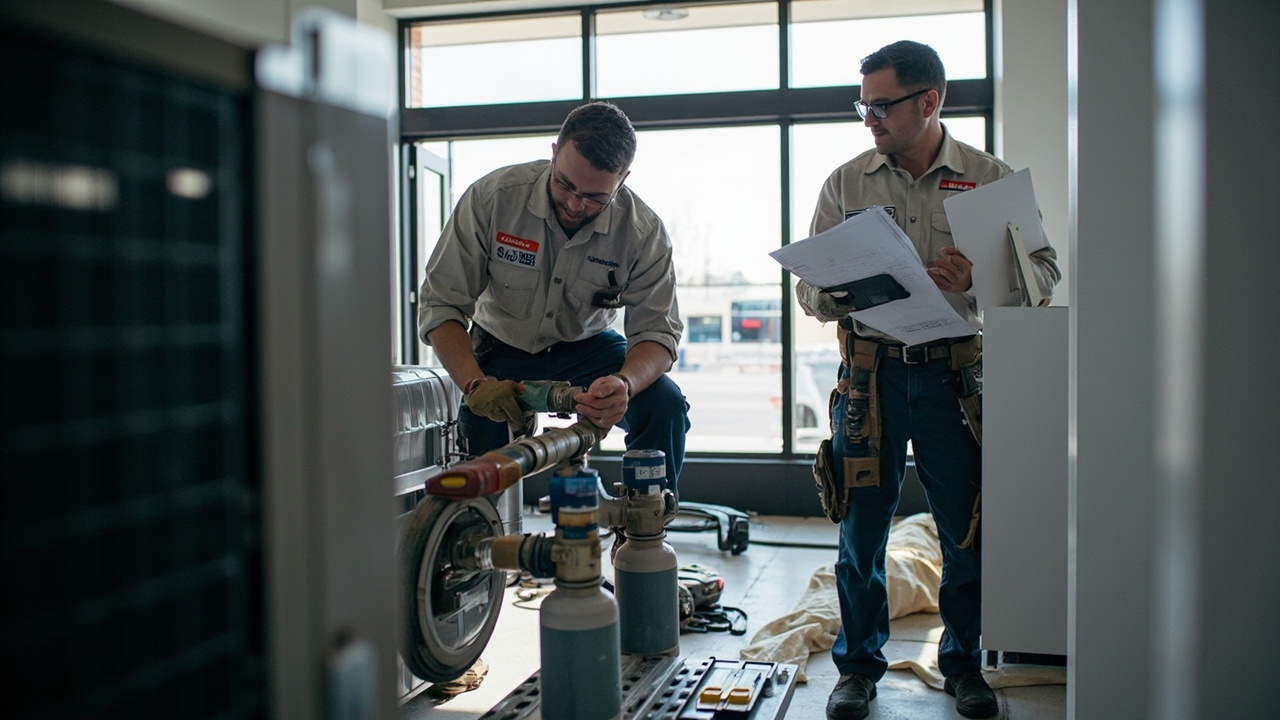
VRF system installation is not a plug-and-play process. It requires load calculations, refrigerant pipe sizing, condensate management planning, and electrical coordination. All Pro HVAC Austin begins every commercial VRF installation with a full mechanical load analysis tied to occupancy patterns, building orientation, and internal heat gains.

We calculate cooling and heating loads for each zone independently. A conference room with 20 occupants and video equipment generates different heat loads than a private office. VRF technology allows us to address these variations with a single outdoor unit serving multiple indoor air handlers. This reduces the number of roof penetrations, simplifies maintenance access, and lowers installation costs compared to installing separate split systems for each zone.

Refrigerant piping design is critical. We route copper lines to minimize pressure drop, eliminate oil trapping, and ensure proper refrigerant return to the compressor. Branch boxes distribute refrigerant to individual zones, and we size these components based on simultaneous load factors. Oversizing leads to poor part-load efficiency. Undersizing causes capacity shortfalls during peak conditions.

Control integration separates competent VRF HVAC installation from systems that underperform. We integrate indoor units with building automation systems, allowing facility managers to monitor performance, adjust setpoints, and receive maintenance alerts remotely. This level of control reduces service calls and extends equipment life.

Austin's commercial construction often involves tight schedules and phased occupancy. We coordinate VRF AC system installation with electrical contractors, low-voltage teams, and general contractors to avoid delays. Our crews prefabricate piping assemblies when possible, reducing field labor and ensuring consistent quality. The result is a system commissioned on time and ready to perform from day one.

How We Execute Commercial VRF Installation from Design Through Commissioning

VRF System Installation in Austin | Minimize Downtime with Precision Commercial HVAC Engineering
01

Engineering and Load Analysis

We calculate thermal loads for each zone using ACCA Manual N principles, accounting for building envelope performance, solar heat gain, occupancy schedules, and equipment heat output. This analysis determines outdoor unit capacity, indoor unit selection, and refrigerant pipe sizing. We model part-load performance to verify efficiency across operating conditions, ensuring the system meets both peak demand and typical operating scenarios.
02

System Installation and Piping

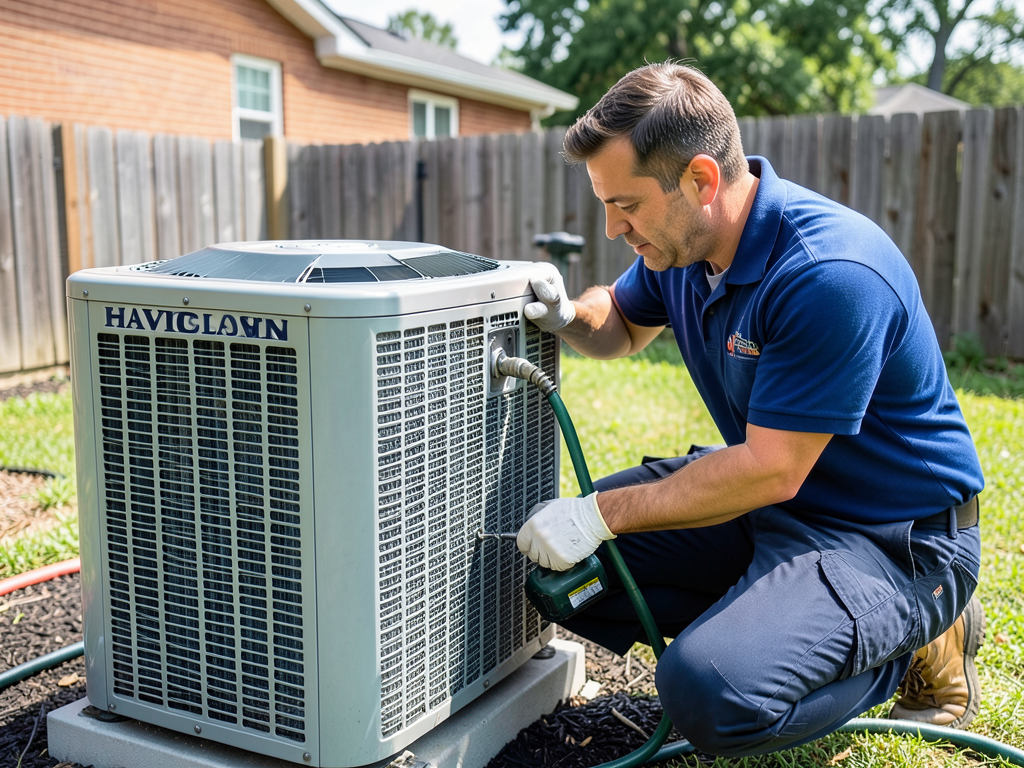
Our crews install outdoor units with vibration isolation and clearance for service access. We route refrigerant lines through existing chases or coordinate new penetrations with structural and architectural plans. Each joint is brazed with nitrogen purge to prevent oxidation. We pressure-test the system at 500 psi, hold for 24 hours, and evacuate to 500 microns before charging with refrigerant. Indoor units are mounted, leveled, and connected to ductwork or direct-mount grilles.
03

Commissioning and System Validation

We energize the system and verify refrigerant charge using subcooling and superheat measurements. Each zone is tested for airflow, temperature differential, and control response. We program setpoints, configure occupancy schedules, and integrate with building management systems. Our technicians train facility staff on system operation, filter replacement procedures, and basic troubleshooting. You receive full as-built documentation, including refrigerant piping isometrics and control sequences.

Why Austin Businesses Choose All Pro HVAC Austin for Variable Refrigerant Flow Installation

Commercial HVAC failures disrupt operations, damage inventory, and drive tenants to competitors. You need a contractor who understands the stakes and delivers systems engineered for reliability. All Pro HVAC Austin has installed VRF systems in medical offices, multi-story office buildings, and retail centers across the Austin metro.

We know Austin's commercial building stock. Many properties downtown were built before modern energy codes and rely on aging rooftop units that cycle frequently and waste energy. VRF retrofits allow you to modernize climate control without full mechanical system replacement. We design around existing electrical service, structural load limits, and occupied space constraints.

Texas energy code compliance is non-negotiable. Our designs meet or exceed ASHRAE 90.1 requirements for commercial buildings. We document equipment efficiency ratings, control sequences, and ventilation rates for permit submittal. This eliminates costly re-work and keeps projects on schedule.

Local utility rebate programs incentivize high-efficiency commercial HVAC upgrades. We identify applicable rebates during the design phase and complete required documentation for submission. This reduces your upfront capital cost and shortens payback periods.

All Pro HVAC Austin employs NATE-certified technicians trained on VRF system diagnostics, refrigerant management, and control programming. We stock critical replacement parts locally, reducing downtime when service is needed. Our service agreements include seasonal inspections, filter replacement, and priority response for system failures.

Austin's commercial real estate market is competitive. Tenants expect reliable climate control and low operating costs. A properly installed VRF system delivers both while reducing your building's carbon footprint and utility expense. We engineer systems that perform for the long term, not just pass inspection.

What to Expect When All Pro HVAC Austin Installs Your Commercial VRF System

Project Timeline and Coordination

Commercial VRF installation timelines depend on building size, system complexity, and whether the project is new construction or retrofit. A typical 10,000 square foot office build-out requires two to three weeks from equipment delivery to final commissioning. We provide a detailed schedule during the engineering phase and update you on progress weekly. Our project managers coordinate with general contractors, electricians, and building owners to minimize disruption to occupied spaces. We schedule noisy work during off-hours when required and maintain clean work areas to avoid impacting daily operations.

Engineering Review and Equipment Selection

Before installation begins, we review architectural and mechanical plans to identify conflicts, verify equipment placement, and confirm electrical service capacity. We select outdoor and indoor units based on calculated loads, noise requirements, and aesthetic preferences. You receive submittal drawings showing equipment locations, refrigerant piping routes, and control wiring. We coordinate these submittals with your design team and make revisions as needed. This upfront planning eliminates field surprises and ensures the system integrates seamlessly with your building's mechanical, electrical, and structural systems.

System Performance and Efficiency

A properly commissioned VRF system delivers precise zone control and measurable energy savings. You will notice quieter operation compared to traditional rooftop units, as inverter-driven compressors ramp smoothly rather than cycling on and off. Indoor units respond to thermostat calls within seconds, maintaining tight temperature tolerances. Energy consumption drops during part-load conditions, which represent the majority of operating hours in Austin's climate. You receive commissioning reports documenting refrigerant charge, airflow measurements, and control programming. These reports verify the system performs as designed and provide a baseline for future service.

Service Support and Preventive Maintenance

VRF systems require less maintenance than conventional equipment, but regular inspections extend equipment life and prevent failures. All Pro HVAC Austin offers service agreements that include biannual inspections, filter replacement, coil cleaning, and refrigerant level checks. Our technicians monitor system performance using onboard diagnostics and address minor issues before they escalate. You receive detailed service reports after each visit, documenting findings and recommendations. If a component fails, we stock common replacement parts locally and dispatch technicians within hours. Service agreements also include priority scheduling and discounted labor rates.

Frequently Asked Questions

You Have Questions,
We Have Answers

What is a VRF installation? +

A VRF installation involves deploying a Variable Refrigerant Flow system that uses refrigerant as the primary cooling and heating medium. One outdoor condensing unit connects to multiple indoor air handlers via refrigerant piping. Each zone operates independently with precise temperature control. The installation requires routing refrigerant lines, electrical wiring, condensate drainage, and mounting indoor units. In Austin, installers account for high cooling loads and electrical service capacity. VRF systems work well in multi-tenant buildings, office complexes, and facilities requiring simultaneous heating and cooling across different zones without ductwork.

How much does it cost to install a VRF system? +

VRF system costs vary based on building size, number of indoor units, refrigerant line length, and equipment brand. Commercial installations in Austin typically scale with tonnage and zone complexity. Factors include structural modifications, electrical upgrades, controls integration, and startup commissioning. Multi-story buildings require additional line set insulation and vertical piping considerations. Energy savings offset initial investment over time through reduced operating costs. Request detailed proposals comparing equipment specifications, installation scope, and projected energy performance. Local Austin contractors familiar with commercial building codes provide accurate estimates based on site assessment and load calculations.

What are the drawbacks of VRF HVAC? +

VRF systems require specialized technicians familiar with refrigerant-based controls and diagnostics. Repair costs exceed traditional systems due to proprietary components and complex electronics. Refrigerant leaks in long line sets prove difficult to locate and expensive to repair. Oil management issues arise in systems with extensive vertical piping. Control system failures affect multiple zones simultaneously. Austin's extreme heat stresses outdoor condensing units during peak summer months. Partial system failures reduce overall capacity until repairs complete. Finding qualified service providers with VRF experience and manufacturer-specific training presents challenges in some markets.

Which is better, split AC or VRF? +

VRF outperforms split AC systems in commercial applications requiring multiple zones with independent control. Split systems serve single zones with one outdoor unit per indoor unit, limiting flexibility. VRF connects numerous indoor units to one outdoor system, reducing rooftop equipment and exterior footprint. Energy efficiency improves through variable-speed compressors and heat recovery capabilities. Split AC costs less upfront for simple applications with few zones. VRF justifies higher initial investment in Austin office buildings, hotels, and multi-tenant spaces where zoning flexibility, energy savings, and reduced infrastructure matter more than first cost.

Can VRF AC be used in homes? +

VRF systems work in residential applications but rarely make economic sense for single-family homes. Multi-unit residential buildings, luxury homes exceeding 5,000 square feet, and properties with complex zoning requirements benefit from VRF technology. Installation costs exceed traditional residential HVAC by significant margins. Austin homeowners with historic properties avoiding ductwork modifications or requiring precise zone control consider VRF. Most residential projects achieve better value with high-efficiency ducted systems or ductless mini-splits. Commercial-grade service requirements and limited residential contractor expertise restrict widespread residential VRF adoption despite technical feasibility.

What are common VRF problems? +

Common VRF problems include refrigerant leaks in brazed joints along extensive piping networks and electronic control board failures due to power surges or component degradation. Compressor oil migration issues occur in systems with significant elevation changes between indoor and outdoor units. Condensate drainage blockages cause water damage when multiple indoor units share drain lines. Communication errors between indoor units and outdoor condensers disrupt zone operation. Austin's electrical storms increase control system vulnerability. Improper refrigerant charging during installation creates capacity and efficiency problems. Dirty filters and coils reduce airflow and heat transfer, triggering fault codes and reducing system performance.

What is the $5000 rule for AC? +

The $5000 rule suggests replacing residential AC units when repair costs exceed $5000 or when the repair cost multiplied by the equipment age in years exceeds $5000. This guideline applies to traditional residential systems, not commercial VRF installations. Commercial decision-making involves lifecycle cost analysis, business interruption costs, and remaining useful life assessment. VRF systems warrant expensive repairs due to higher replacement costs and longer expected service life. Austin building owners evaluate repair costs against energy savings, warranty coverage, and operational criticality rather than residential rules of thumb.

Is VRF better than traditional HVAC? +

VRF surpasses traditional HVAC in energy efficiency, zoning flexibility, and space utilization for commercial applications. Variable-speed compressors modulate capacity to match actual loads, reducing energy waste. Heat recovery models simultaneously heat and cool different zones, capturing waste heat. Installation requires less vertical shaft space without ductwork. Traditional systems cost less upfront and offer simpler service with broader contractor availability. VRF excels in Austin office buildings and hotels with diverse simultaneous loads. Traditional packaged rooftop units remain viable for warehouses, retail spaces, and applications prioritizing simple maintenance and lower first cost over efficiency.

What is the lifespan of a VRF system? +

VRF systems last 15 to 20 years with proper maintenance and favorable operating conditions. Outdoor condensing units in Austin endure thermal cycling, UV exposure, and weather extremes affecting longevity. Indoor air handlers typically outlast outdoor equipment. Service quality and preventive maintenance significantly impact lifespan. Compressor replacement extends system life when other components remain functional. Control systems require updates as technology evolves. Commercial buildings often replace VRF systems based on technology obsolescence or tenant improvement requirements before mechanical failure. Regular refrigerant leak checks, coil cleaning, and filter replacement maximize service life and maintain efficiency.

Does VRF require ductwork? +

VRF systems eliminate traditional ductwork, using refrigerant piping to distribute heating and cooling. Refrigerant lines connect outdoor condensing units to indoor air handlers through small-diameter copper tubing. This approach reduces vertical shaft requirements and ceiling plenum space compared to ducted systems. Some applications combine VRF with dedicated outdoor air systems using minimal ductwork for ventilation compliance. Austin commercial renovations benefit from avoiding asbestos-containing duct demolition and structural modifications. Refrigerant piping flexibility allows routing through tight spaces and penetrations impossible with sheet metal ductwork, simplifying installation in existing buildings with space constraints.

How Austin's Climate and Building Codes Shape VRF System Installation Requirements

Austin's humid subtropical climate creates unique challenges for commercial HVAC systems. Summer temperatures regularly exceed 95 degrees, and humidity levels stay above 60 percent for extended periods. VRF systems manage these conditions efficiently because inverter-driven compressors modulate capacity to match real-time loads. This prevents the overcooling and high indoor humidity that plague conventional systems. Austin's rapid commercial development has also led to mixed-use buildings where retail, office, and residential spaces share mechanical systems. VRF technology allows simultaneous heating and cooling, addressing diverse loads within a single building envelope.

The City of Austin enforces amendments to the International Energy Conservation Code that exceed baseline state requirements. Commercial buildings must meet stricter efficiency targets, and HVAC systems account for the largest share of energy consumption. VRF systems help buildings achieve compliance while reducing operating costs. All Pro HVAC Austin stays current with local code revisions and works directly with city inspectors to streamline permit approval. Our familiarity with Austin's review process eliminates delays and ensures your project meets all regulatory requirements. We also coordinate with Austin Energy for rebate applications, maximizing financial incentives for high-efficiency installations.
HVAC Services in The Austin Area

We are proud to serve the entire area, providing exceptional HVAC services to both residential and commercial clients. Our service area is extensive, ensuring that no matter where you are located, you can count on us for reliable and prompt service. We invite you to view our location on the map and see how conveniently positioned we are to meet all of your heating and cooling needs. We are just a call away.

Address:
All Pro HVAC Austin, 313 E 12th St, Austin, TX, 78701

Additional Services We Offer

Our news updates

Latest Articles & News from The Blogs

How to Spot Hidden Hail Damage on Your AC Unit After an Austin Storm Central Texas hailstorms can wreak havoc…

How to Spot Hidden Hail Damage on Your AC Unit After an Austin Storm

How to Spot Hidden Hail Damage on Your AC Unit After an Austin Storm Central Texas hailstorms can wreak havoc…

Troubleshooting airflow issues in two story homes near Walnut Creek

Why Your Two-Story Home Near Walnut Creek Has Airflow Problems Living in a two-story home near Walnut Creek offers beautiful…

Why your Anderson Mill home might need a 5 inch media filter upgrade

Why your Anderson Mill home might need a 5 inch media filter upgrade Your Anderson Mill home deserves better air…

Contact Us

All Pro HVAC Austin delivers turnkey VRF installation with engineering precision and project accountability. Call (737) 316-0777 to schedule a site evaluation and receive a detailed proposal. We provide load calculations, equipment specifications, and project timelines tailored to your building.