Menu

Emergency Furnace Repair in Austin – 24/7 Response When Your Heat Goes Out

When your furnace fails on the coldest night, you need emergency furnace repair from technicians who arrive fast, diagnose accurately, and restore heat before your pipes freeze or your family suffers.

Slider Image 1
Slider Image 2
Slider Image 3
Slider Image 4
Slider Image 5
Slider Image 7
Slider Image 8
Slider Image 9
Slider Image 10
Slider Image 11

Why Furnace Failures Hit Austin Homes Without Warning

Austin winters may be milder than northern climates, but when a cold front drops overnight temperatures into the 20s, your furnace works harder than you realize. Most heating systems in this region sit idle for nine months a year. That long dormancy causes pilot lights to fail, ignition systems to corrode, and gas valves to stick.

When you flip the thermostat and nothing happens, it is not just uncomfortable. Pipes in uninsulated attics can freeze in hours. Elderly family members and small children face real health risks when indoor temperatures plummet. Austin's aging housing stock, particularly in neighborhoods like Hyde Park and Bouldin Creek, compounds the problem. Many homes still run original furnaces from the 1970s and 1980s. These systems lack modern safety controls and fail without warning.

You need 24 hour furnace repair when the temperature drops. You cannot wait until Monday morning when ice dams form in your attic or when your heating bill triples because a cracked heat exchanger leaks carbon monoxide into your ductwork. Urgent heating repair means a certified technician arrives within the hour, carries the parts your system needs, and restores safe, efficient heat before dawn.

Emergency heater repair is not optional in Austin. One hard freeze can cause thousands in water damage. All Pro HVAC Austin keeps fully stocked service vehicles and maintains on-call crews specifically for these situations. When your furnace quits, you need immediate heating system repair from professionals who know how Austin's unique climate stresses HVAC components.

Why Furnace Failures Hit Austin Homes Without Warning
How We Diagnose and Fix Furnace Failures in the Middle of the Night

How We Diagnose and Fix Furnace Failures in the Middle of the Night

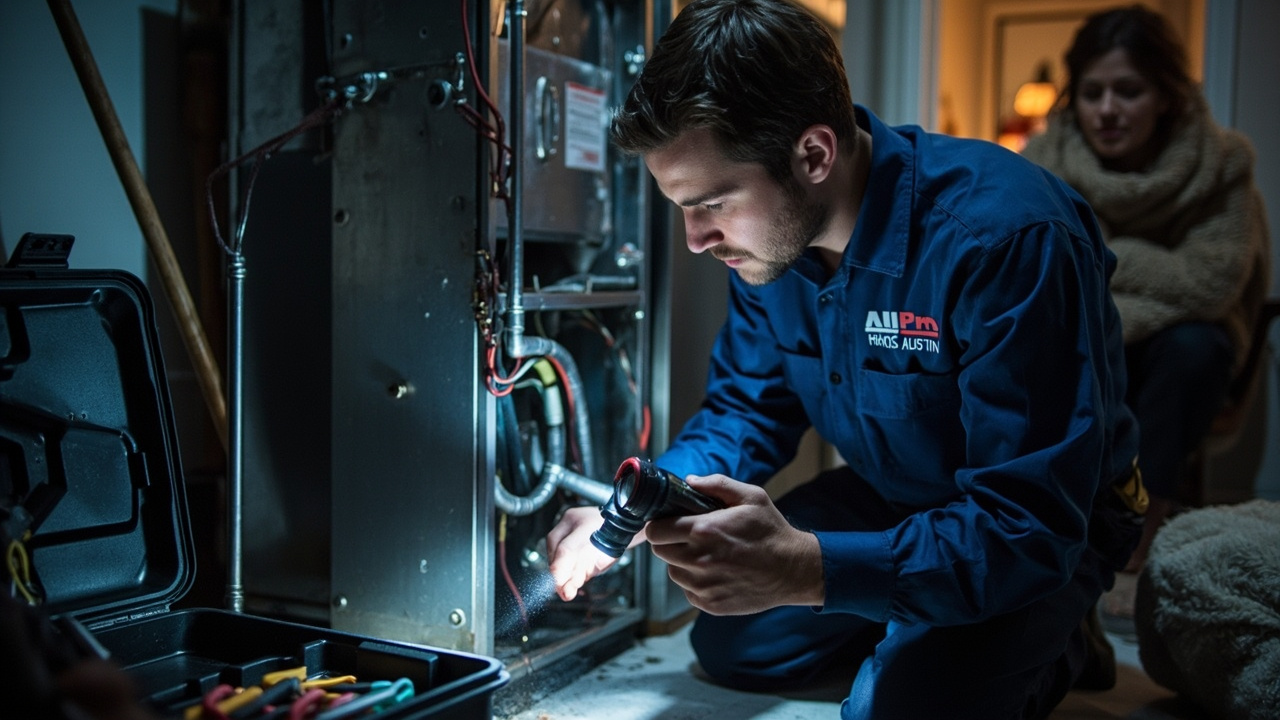
Our 24/7 furnace service starts with dispatch. You call, we answer, and a technician leaves for your home immediately. No answering services. No waiting until morning. We maintain dedicated emergency crews because furnace failures do not respect business hours.

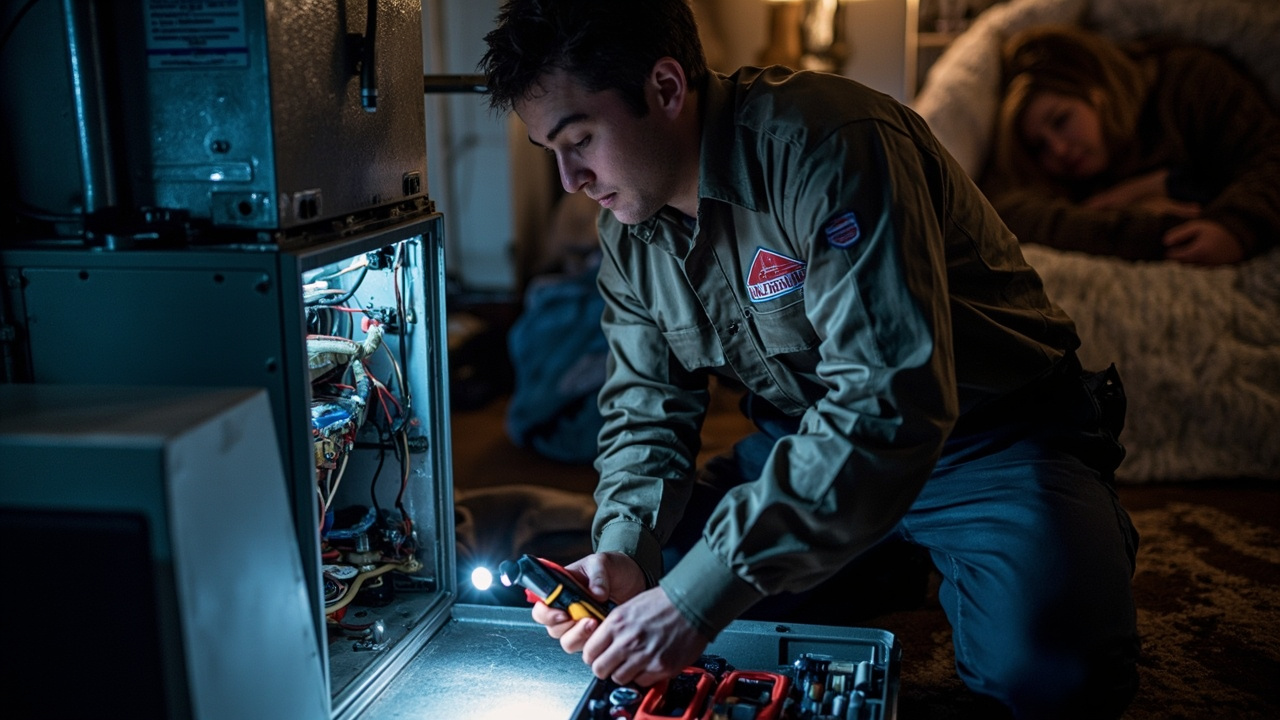
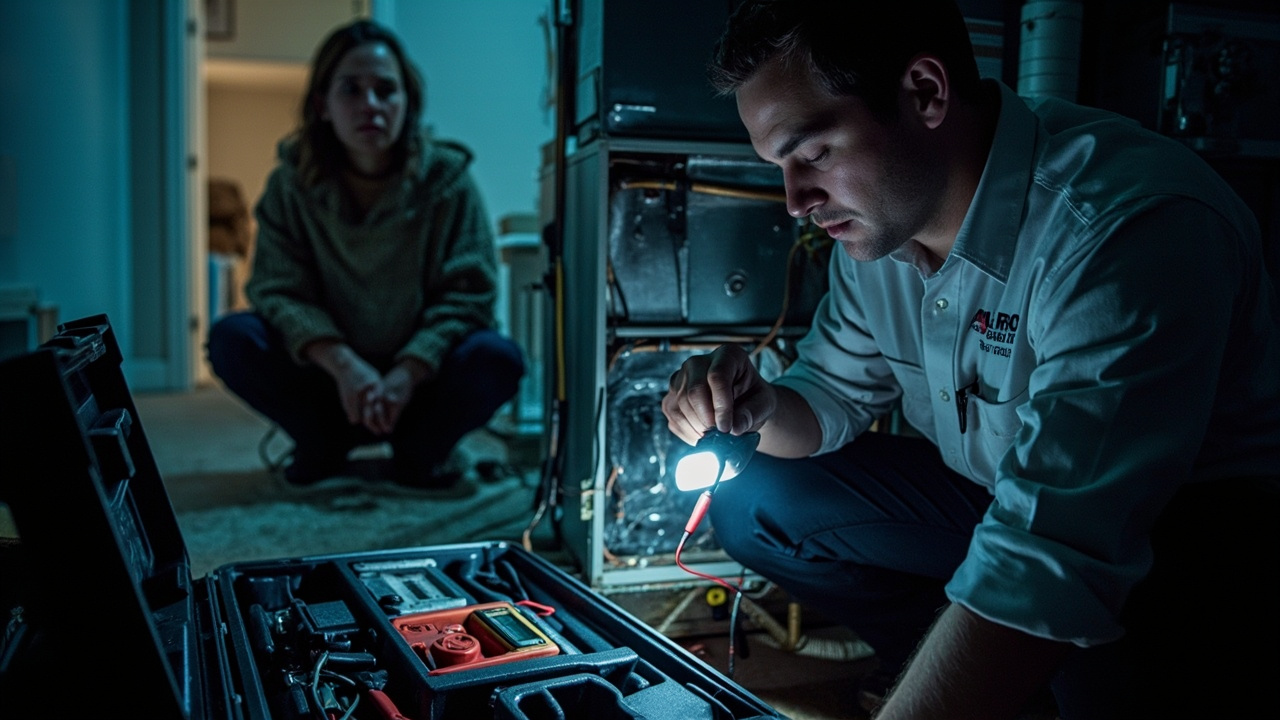
When we arrive, the diagnostic process moves fast. We check thermostat voltage first to rule out simple wiring faults. Then we inspect the ignition system, whether you have a standing pilot, electronic ignition, or hot surface igniter. Most emergency failures trace back to flame sensors coated in carbon buildup or thermocouples that drift out of calibration. We test gas pressure at the manifold because Austin's inconsistent municipal gas pressure can starve burners and trigger safety lockouts.

If your furnace uses a two-stage gas valve, we verify both low-fire and high-fire operation. Single-stage systems are simpler but still fail when the pressure regulator diaphragm cracks. We measure temperature rise across the heat exchanger to confirm it falls within manufacturer specs. Excessive rise signals restricted airflow from a clogged filter or failed blower motor. Insufficient rise points to a cracked heat exchanger, which requires immediate shutdown for safety.

We carry common replacement parts on every truck: flame sensors, thermocouples, blower motors, capacitors, and gas valves. If your system needs a control board or a pressure switch, we stock those too. Our goal is same-visit repair. We understand you need heat now, not a return appointment three days later. When we finish, your furnace cycles properly, maintains consistent temperature, and passes a full combustion analysis to confirm safe operation.

What Happens When You Call for Emergency Heating Repair

Emergency Furnace Repair in Austin – 24/7 Response When Your Heat Goes Out
01

Immediate Dispatch and Arrival

You reach a live technician when you call, not a voicemail system. We collect your address, confirm your symptoms, and dispatch the nearest available truck. Most Austin-area homes receive service within 60 minutes. We call you en route with an estimated arrival time and the technician's name so you know exactly when help arrives.
02

On-Site Diagnosis and Repair

Our technician performs a full system diagnostic using calibrated meters and combustion analyzers. We identify the failed component, explain the repair in plain terms, and provide transparent pricing before we start work. We complete the repair using manufacturer-approved parts and verify proper furnace operation through multiple heating cycles to confirm the fix holds under load.
03

System Testing and Safety Check

After the repair, we test gas pressure, measure airflow, check for carbon monoxide leaks, and confirm your thermostat communicates correctly with the furnace. We verify the blower motor runs at proper amperage and inspect the flue pipe for obstructions. You receive a written report detailing what failed, what we fixed, and any maintenance recommendations to prevent future breakdowns.

Why Austin Homeowners Trust All Pro HVAC for Urgent Heating Repairs

Austin's heating repair landscape is crowded with companies that advertise 24/7 service but route calls to third-party call centers in other states. You need a local team that understands how quickly temperatures drop when a Blue Norther rolls through Central Texas. All Pro HVAC Austin maintains a physical presence in this community. Our technicians live here, know the neighborhoods, and understand the specific challenges Austin homes face.

We see the same patterns every winter. Furnaces in Tarrytown's older homes fail because original ductwork was never sized for modern high-efficiency systems. Homes in Mueller and East Austin experience ignition problems from low gas pressure during peak demand hours. Properties near Lady Bird Lake deal with humidity infiltration that corrodes electrical connections inside furnace cabinets. These are not hypothetical problems. We diagnose and repair them every day.

Our technicians hold NATE certifications and maintain manufacturer-specific credentials for Carrier, Trane, Lennox, and Rheem systems. That specialized training matters when you need emergency heater repair at 2 a.m. A generalist might misdiagnose a failed inducer motor as a pressure switch problem and waste an hour chasing the wrong fix. We identify the root cause immediately because we have seen it before in hundreds of Austin homes.

We also understand local building codes. Travis County requires specific venting configurations for condensing furnaces. If your system was installed incorrectly, we know how to spot it and fix it to code. That knowledge protects you from liability and ensures your furnace operates safely for years after the emergency repair.

What You Can Expect from Our Emergency Furnace Service

Response Time and Availability

We staff emergency crews every night, every weekend, and every holiday. When you call (737) 316-0777, you reach a technician immediately. We do not use answering services or callback queues. Most Austin-area homes receive service within 60 minutes of the initial call. Our trucks carry diagnostic equipment and a full inventory of common replacement parts so we can complete repairs on the first visit. If you call at midnight, we arrive before 1 a.m. and restore heat before you lose another hour of warmth.

Diagnostic Process and Transparency

Our technicians explain what failed and why before starting any repair work. We use digital meters to measure voltage, amperage, and gas pressure. We show you the failed component and explain how it caused your furnace to shut down. You receive upfront pricing with no hidden fees or surprise charges. If the repair requires a part we do not carry on the truck, we give you options: wait for a morning delivery, source the part from a 24-hour supplier, or install a temporary fix to restore heat until we complete the permanent repair.

Quality of Workmanship and Results

We do not patch problems or install aftermarket parts to get your furnace limping through the night. Every repair uses OEM components that meet or exceed manufacturer specifications. We torque gas connections to exact specs, verify flame sensor voltage, and confirm proper ignition timing. After the repair, we run your furnace through multiple heating cycles and measure temperature rise to confirm efficient operation. You receive documentation of all work performed, including before and after diagnostic readings.

Follow-Up and Preventive Maintenance

Emergency repairs fix immediate failures, but they often reveal underlying maintenance issues that will cause future breakdowns. We provide a written report identifying any components showing wear or degradation. You decide whether to address those issues immediately or schedule preventive maintenance during normal business hours. We follow up within 48 hours to confirm your furnace continues to operate correctly. If you experience any problems related to the emergency repair, we return at no additional charge to make it right.

Frequently Asked Questions

You Have Questions,
We Have Answers

How much is an emergency furnace call? +

Emergency furnace calls in Austin typically range from $150 to $300 for the diagnostic visit, depending on time of day and day of week. After-hours, weekend, and holiday calls cost more. This fee usually applies toward repair costs if you approve the work. When your furnace fails during a freeze, speed matters more than saving $50. Look for companies offering 24/7 availability with transparent pricing. Most Austin HVAC contractors waive or reduce trip charges for established customers. Always ask upfront about emergency fees before dispatch.

What is the $5000 rule? +

The $5000 rule helps you decide between repair and replacement. If your furnace repair cost multiplied by the system's age exceeds $5000, replace it. Example: A $400 repair on a 15-year-old furnace equals $6000, so replacement makes sense. A $200 repair on an 8-year-old unit equals $1600, so repair it. This rule accounts for both immediate costs and future reliability. Austin's variable winter temperatures stress aging furnaces. Systems over 15 years old fail more often, leading to multiple emergency calls and wasted money.

What counts as an HVAC emergency? +

An HVAC emergency means immediate threat to safety, health, or property. No heat when temperatures drop below freezing qualifies as emergency in Austin. Carbon monoxide detector alarms, gas smell, electrical burning odor, or visible flames require immediate shutdown and professional help. Frozen pipes from heat loss cause thousands in water damage. Vulnerable residents like elderly, infants, or those with medical conditions face health risks without heat. Loud banging, sparking, or smoke are emergencies. Minor issues like uneven heating or higher bills are not emergencies.

What is the most common furnace failure? +

Thermostat failure causes most furnace problems in Austin homes. Batteries die, wiring corrodes, or settings get bumped. Check your thermostat first before calling. Ignition or pilot control issues rank second. Modern electronic ignitions fail more often than old pilot lights but are safer. Dirty or clogged filters cause overheating and shutdowns, especially during Austin's dusty spring months. Blower motor failure happens in older systems. Cracked heat exchangers are serious but less common. Most failures stem from poor maintenance, not equipment defects.

How to get a new furnace with no money? +

You have options if your furnace dies and money is tight. Many Austin HVAC contractors offer financing through third-party lenders with approved credit. Some manufacturers run promotional zero-interest financing during off-season months. Ask about payment plans. Check if you qualify for weatherization assistance through Austin Energy or Texas LEAP programs for low-income residents. Home equity loans or lines of credit offer lower rates than HVAC financing. Credit cards work as last resort. Get multiple quotes. Consider a mid-efficiency model instead of premium units to reduce upfront costs.

Who should I call to check my furnace? +

Call a licensed HVAC contractor for furnace inspections and repairs. General handymen lack specialized training for combustion systems and safety controls. Look for contractors with NATE certification and good standing with Better Business Bureau. Austin requires permits for furnace replacement, so verify your contractor pulls proper permits. If you smell gas, call your utility company first, then an HVAC contractor. For carbon monoxide concerns, call 911 and evacuate. Schedule annual maintenance checks before winter to catch problems early and avoid emergency calls during freezes.

Is HVAC system cost tax deductible? +

HVAC costs are not tax deductible for most homeowners as personal expenses. However, energy-efficient systems may qualify for federal tax credits up to $2000 under the Inflation Reduction Act through 2032. High-efficiency furnaces meeting specific ENERGY STAR ratings qualify. Austin Energy also offers rebates for qualifying systems, reducing your net cost. Home office deductions allow partial HVAC cost deductions if you legitimately work from home. Rental property owners deduct HVAC expenses as business costs. Keep receipts and consult a tax professional for your specific situation.

How much does it cost to replace an entire HVAC system? +

Complete HVAC system replacement in Austin costs $8000 to $18000 depending on home size, equipment efficiency, and ductwork condition. A 2000-square-foot home averages $12000 to $15000 for mid-efficiency equipment. High-efficiency systems cost more upfront but lower utility bills. Two-story homes and older houses with duct modifications increase costs. Austin's climate allows heat pump systems as alternatives to traditional furnaces and air conditioners. Get three written quotes. Avoid the lowest bid. Quality installation matters more than equipment brand for system longevity and performance.

What are signs my HVAC needs replacing? +

Your HVAC needs replacement when it reaches 15 to 20 years old and requires frequent repairs. Rising energy bills signal declining efficiency. Uneven temperatures between rooms indicate failing equipment or duct problems. Strange noises like grinding or squealing mean worn components. Yellow pilot light flames suggest incomplete combustion and carbon monoxide risk. Excessive dust or humidity reveals poor system performance. Rust or cracks on heat exchanger require immediate replacement for safety. If repair costs exceed half the replacement cost, replace it. Austin's temperature swings accelerate wear on aging systems.

Is a furnace not working an emergency? +

A non-working furnace becomes an emergency when outside temperatures drop below freezing or vulnerable people are present. Austin rarely sees prolonged freezes, but when temperatures hit the 20s, pipes freeze within hours without heat. Elderly residents, infants, and people with health conditions face serious risks in cold homes. If your furnace fails during mild weather, it is not an emergency, but do not wait. Book next-day service before the next cold front arrives. Austin weather changes fast. Address furnace problems immediately to avoid true emergencies later.

How Austin's Freeze-Thaw Cycles Accelerate Furnace Component Failures

Austin experiences dramatic temperature swings that stress furnace components more than steady cold climates. A typical winter week might see afternoon highs near 70 degrees and overnight lows in the 20s. Your furnace cycles on and off dozens of times as temperatures fluctuate. That constant thermal expansion and contraction cracks heat exchangers, loosens electrical connections, and wears out blower motor bearings faster than systems running continuously in colder regions. Homes in neighborhoods like Travis Heights and Zilker deal with additional challenges from pier and beam foundations that allow cold air infiltration, forcing furnaces to work harder during temperature drops.

All Pro HVAC Austin has served this community long enough to understand how local conditions affect heating systems. We know which furnace models perform reliably in Central Texas and which ones fail prematurely from our climate patterns. Our technicians train specifically on the brands most common in Austin homes and stay current on manufacturer technical bulletins addressing regional failure patterns. When you need urgent heating repair, you want a team that has diagnosed the same problem in hundreds of similar homes across West Campus, South Congress, and East Austin. That local expertise means faster diagnosis and more reliable repairs.
HVAC Services in The Austin Area

We are proud to serve the entire area, providing exceptional HVAC services to both residential and commercial clients. Our service area is extensive, ensuring that no matter where you are located, you can count on us for reliable and prompt service. We invite you to view our location on the map and see how conveniently positioned we are to meet all of your heating and cooling needs. We are just a call away.

Address:
All Pro HVAC Austin, 313 E 12th St, Austin, TX, 78701

Additional Services We Offer

Our news updates

Latest Articles & News from The Blogs

How to Spot Hidden Hail Damage on Your AC Unit After an Austin Storm Central Texas hailstorms can wreak havoc…

How to Spot Hidden Hail Damage on Your AC Unit After an Austin Storm

How to Spot Hidden Hail Damage on Your AC Unit After an Austin Storm Central Texas hailstorms can wreak havoc…

Troubleshooting airflow issues in two story homes near Walnut Creek

Why Your Two-Story Home Near Walnut Creek Has Airflow Problems Living in a two-story home near Walnut Creek offers beautiful…

Why your Anderson Mill home might need a 5 inch media filter upgrade

Why your Anderson Mill home might need a 5 inch media filter upgrade Your Anderson Mill home deserves better air…

Contact Us

Your family should not spend another hour in the cold. All Pro HVAC Austin has a technician ready to restore your heat right now. Call (737) 316-0777 and we will dispatch help immediately. We answer 24/7 because furnace failures do not wait for business hours.