
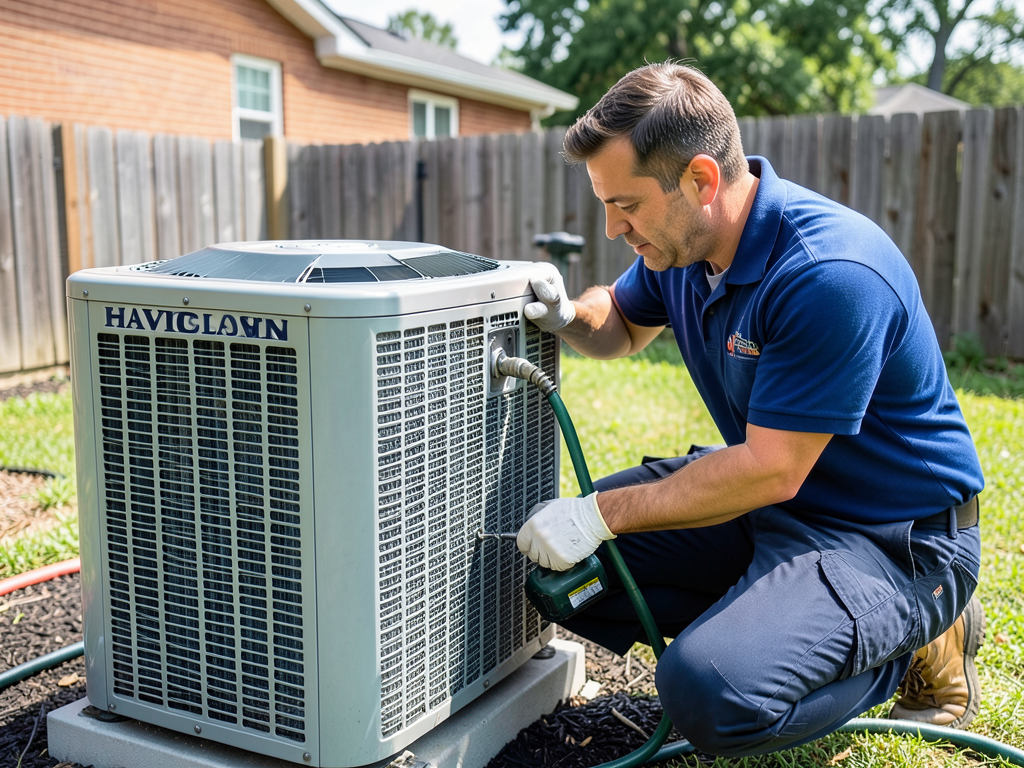
Why You Should Never Use a Pressure Washer on Your Austin AC Unit
Your outdoor AC condenser works hard in Austin’s brutal summer heat, pulling in air through delicate aluminum fins that can be easily damaged. When homeowners grab a pressure washer to blast away dirt, they often don’t realize they’re destroying the very components that keep their home cool. The high-pressure spray can bend fins, crack refrigerant lines, and force water into electrical components, turning a simple cleaning attempt into a costly repair. EPA regulations on refrigerant handling.
The Austin climate makes proper AC maintenance critical. With summer temperatures regularly exceeding 100°F and high humidity levels, your system runs almost constantly. Dust, cottonwood seeds, and pollen from Central Texas vegetation coat the coils, reducing efficiency. But pressure washing isn’t the solution. The force needed to clean effectively will also damage the fragile coil structure, potentially causing refrigerant leaks that can cost hundreds to repair. Emergency AC Repair Services for Homes in West Lake Hills.
Instead of pressure washing, use a garden hose with gentle spray and specialized coil cleaner. This approach removes debris without damaging the system. For Austin homeowners, this means better cooling performance, lower energy bills, and avoiding emergency repairs during heat waves when every degree matters. The small investment in proper cleaning tools pays off in system longevity and efficiency during our long cooling season. Local AC Repair and Cooling Experts in South Lamar and Barton Hills.
Understanding Your AC System’s Vulnerability
AC condenser coils consist of thin aluminum fins attached to copper tubes carrying refrigerant. These fins are typically only 0.006 inches thick – about the thickness of two sheets of paper. The entire cooling process depends on air flowing freely through these fins to dissipate heat. When fins bend or break, airflow becomes restricted, forcing your system to work harder and consume more electricity.. Read more about Spring Cleaning Your HVAC System Specifically for the Central Texas Climate.
Pressure washers typically operate at 1,500 to 3,000 PSI. Even at the lowest setting, this force is enough to instantly deform aluminum fins. Once bent, these fins cannot be properly straightened without specialized tools. The damage creates hot spots in the coil where refrigerant flow becomes restricted, leading to system inefficiency and potential compressor failure.
Beyond physical damage, pressure washing can force water into sealed electrical compartments. Modern AC units contain capacitors, contactors, and control boards that must remain dry. Water intrusion here creates short circuits that can destroy multiple components at once. The repair cost often exceeds the price of a new unit. Modern HVAC Solutions for Historic Homes in Tarrytown and Old West Austin.
The Austin Climate Factor
Austin’s unique environmental conditions accelerate coil contamination. Our hot, dry summers followed by sudden rain create perfect conditions for dust and pollen to bake onto coil surfaces. The Edwards Plateau’s juniper trees produce massive amounts of pollen during winter months, creating a yellow dust that coats everything, including your AC unit.. Read more about The Truth About How Austin Mountain Cedar Impacts Your Outdoor AC Coils.
High humidity compounds the problem. When moisture in the air combines with dust and pollen, it creates a sticky residue that adheres tightly to coil surfaces. This biofilm reduces heat transfer efficiency by up to 30%, forcing your system to run longer cycles and consume more electricity. During peak summer months, this inefficiency can add $50 to $100 to your monthly electric bill.
The local water quality also matters. Austin’s tap water contains minerals that can leave deposits on coils when used for cleaning. These mineral deposits create an insulating layer that further reduces efficiency. Professional coil cleaners use de-mineralized water or special rinsing agents to prevent this buildup. Fast and Professional Furnace Repair in Georgetown During the Winter Chill.
Proper Cleaning Methods That Work
Safe AC coil cleaning starts with the right equipment. A standard garden hose with a fan spray nozzle provides adequate pressure without damaging fins. Pair this with a foaming coil cleaner specifically formulated for HVAC use. These cleaners break down organic contaminants without harming aluminum or copper components.
The cleaning process takes about 30 minutes. First, turn off power at both the thermostat and the disconnect box near the unit. Remove any visible debris by hand – leaves, twigs, and cottonwood seeds often accumulate around the base. Apply the foaming cleaner according to package directions, allowing it to dwell for the recommended time. This dwell time lets the chemical break down stubborn contaminants.
Rinse thoroughly with the garden hose, working from top to bottom at a 45-degree angle. This technique prevents forcing debris deeper into the coil. The water should flow freely through the fins, carrying away dissolved contaminants. After rinsing, allow the unit to dry completely before restoring power. This prevents electrical issues and allows you to inspect for any remaining debris.
Common DIY Mistakes to Avoid
Beyond pressure washing, several other cleaning mistakes can damage your AC system. Using household cleaners like bleach or ammonia can corrode aluminum fins and copper tubing. These chemicals may kill mold but will destroy the coil structure over time. Similarly, using wire brushes or abrasive pads to remove stubborn debris will scratch and weaken the fins.
Many homeowners neglect to turn off power before cleaning. This creates multiple hazards. Live electrical components near water create shock risks. The compressor can be damaged if the system attempts to start while water is present in the refrigerant lines. Always verify power is off using a non-contact voltage tester before beginning any cleaning work.
Another mistake is cleaning only the visible surfaces. Debris often accumulates on the back side of the coil where it’s not visible. This hidden contamination can be just as problematic as surface dirt. Professional cleaning involves removing the top grille to access all coil surfaces, ensuring comprehensive cleaning.. Read more about Why Your Outdoor Kitchen and Grill Might Be Overheating Your AC Unit.
Professional vs. DIY Cleaning
While DIY cleaning works for routine maintenance, certain situations require professional service. If you notice ice buildup on refrigerant lines, hear unusual noises, or detect refrigerant leaks, these indicate problems beyond simple dirt accumulation. Professional technicians have specialized tools to diagnose and repair these issues safely. 24/7 Emergency AC Repair.
Professional cleaning services use high-powered vacuum systems to remove debris from deep within the coil structure. They also apply protective coatings that repel dust and pollen, extending the time between cleanings. These services typically cost $150 to $300 but can improve system efficiency by 15% to 25%, paying for themselves through energy savings.
For Austin’s extreme climate, professionals recommend professional cleaning twice yearly – once before summer heat arrives and again after the spring pollen season. This schedule maintains optimal efficiency when your system works hardest. Between professional cleanings, monthly DIY rinsing with a garden hose helps maintain performance.
Warning Signs Your AC Needs Professional Attention
Certain symptoms indicate problems beyond simple dirt buildup. If your AC runs constantly but fails to cool adequately, this suggests refrigerant issues or compressor problems. Unusual sounds like hissing, bubbling, or clicking often indicate mechanical failures. Ice formation on any part of the system, including refrigerant lines, signals serious problems requiring immediate professional service.
Musty odors from your vents suggest mold growth within the system. This requires professional cleaning with antimicrobial treatments. Visible oil spots around the unit indicate refrigerant leaks, which pose environmental hazards and require EPA-certified technicians to repair. Attempting DIY repairs on these issues can void warranties and create safety hazards.
High indoor humidity levels despite AC operation suggest the system cannot remove moisture effectively. This may indicate dirty coils, but it could also signal refrigerant charge problems or airflow restrictions requiring professional diagnosis. In Austin’s humid climate, maintaining proper dehumidification is crucial for comfort and preventing mold growth.
Protecting Your Investment
Your AC system represents a significant investment, often $5,000 to $10,000 for a complete replacement. Proper maintenance, including avoiding pressure washing, can extend system life from the typical 10-15 years to 15-20 years. This longevity translates to thousands of dollars in avoided replacement costs.
Regular maintenance also preserves warranty coverage. Most manufacturers require annual professional maintenance to keep warranties valid. DIY pressure washing that damages components can void warranties entirely, leaving you responsible for expensive repairs. Keep maintenance records to demonstrate compliance with warranty requirements.
Consider installing a protective cover during off-season months. These covers prevent debris accumulation while allowing proper airflow. However, never cover your unit during active cooling months as this restricts necessary airflow and can cause system damage. Smart landscaping choices, like maintaining 2-3 feet of clearance around the unit, also reduce debris accumulation.
Energy Efficiency Impact
Clean coils can improve AC efficiency by 15% to 30%. In Austin’s climate, where cooling accounts for 60% to 70% of annual electricity use, this translates to substantial savings. A typical 3-ton system running an extra 2-3 hours daily due to dirty coils can add $40 to $80 monthly to summer electric bills.
The environmental impact matters too. Dirty coils force your system to consume more electricity, increasing your carbon footprint. Austin Energy’s power generation includes fossil fuel sources, so improved efficiency directly reduces emissions. Clean systems also reduce strain on the electrical grid during peak demand periods, helping prevent brownouts.
SEER2 ratings (the current efficiency standard) assume clean, properly maintained systems. Dirty coils can reduce actual performance below the rated efficiency, meaning you’re not getting the energy savings you paid for when purchasing a high-efficiency unit. Regular cleaning ensures you receive the expected performance and cost savings.
Local Resources and Support
Austin Energy offers rebates for high-efficiency AC systems and smart thermostats that optimize cooling schedules. These programs can offset the cost of professional maintenance or system upgrades. Check their website for current incentives, which often change seasonally based on energy demand and environmental goals.
The City of Austin’s Climate Protection Plan includes goals for reducing energy consumption in residential buildings. Proper AC maintenance contributes to these citywide objectives while saving individual homeowners money. Some neighborhoods have active community groups sharing maintenance tips and contractor recommendations specific to local conditions.
Local HVAC contractors familiar with Austin’s specific challenges can provide targeted advice. They understand how our soil conditions, pollen patterns, and water quality affect system performance. Building relationships with reputable local service providers ensures you receive appropriate maintenance recommendations rather than one-size-fits-all solutions.
Frequently Asked Questions
Can I use a pressure washer on low setting?
No. Even at the lowest setting, pressure washers generate enough force to damage AC fins. The fins are too delicate to withstand any significant water pressure. Always use a garden hose with gentle spray for cleaning.
How often should I clean my AC coils?
In Austin’s climate, clean outdoor coils twice yearly – once before summer and again after the spring pollen season. Check monthly during heavy use periods and rinse if you notice visible debris accumulation.
What happens if I damage my AC with a pressure washer?
Pressure washing can bend fins, crack refrigerant lines, and force water into electrical components. This damage often requires professional repair or complete coil replacement, costing hundreds to thousands of dollars.
Can I clean indoor evaporator coils myself?
Indoor coil cleaning is more complex and typically requires removing access panels. While possible for experienced DIYers, indoor cleaning often requires specialized no-rinse cleaners and carries risks of damaging sensitive components. Consider professional service for indoor cleaning.
Does cleaning really improve efficiency that much?
Yes. Clean coils can improve system efficiency by 15% to 30%. In Austin’s hot climate, this translates to significant energy savings and improved cooling performance during peak summer months.
Take Action to Protect Your AC System
Your air conditioner works hard to keep your Austin home comfortable through our intense summer heat. Don’t let a simple cleaning mistake turn into an expensive repair. Put away that pressure washer and invest in proper cleaning tools and techniques instead. Your system will thank you with better performance, lower energy bills, and longer life.
For professional AC maintenance or if you’ve accidentally damaged your unit with improper cleaning, call (737) 316-0777 today. Our experienced technicians understand Austin’s unique climate challenges and can restore your system to peak efficiency. Don’t wait until the next heat wave hits – schedule your inspection now and stay cool all summer long.
Remember, proper maintenance isn’t just about comfort – it’s about protecting your investment and avoiding emergency repairs during the hottest days of the year. Make the right choice for your AC system and your wallet by avoiding pressure washing and choosing professional care instead. For more information, visit U.S. Department of Energy AC maintenance guide.
{
“@context”: “https://schema.org”,
“@type”: “BlogPosting”,
“headline”: “Why You Should Never Use a Pressure Washer on Your Austin AC Unit”,
“description”: “Pressure washers can destroy your AC coils and void warranties. Learn why soft cleaning is essential in Austin’s harsh climate to protect your cooling system.”,
“wordCount”: 2069,
“datePublished”: “2026-06-10T12:31:00.000Z”,
“dateModified”: “2026-06-10T12:31:00.000Z”,
“inLanguage”: “en-US”,
“mainEntityOfPage”: {
“@type”: “WebPage”,
“@id”: “https://allprohvacaustin.com”
},
“publisher”: {
“@type”: “LocalBusiness”,
“name”: “All Pro HVAC Austin”,
“url”: “https://allprohvacaustin.com”
},
“author”: {
“@type”: “Organization”,
“name”: “All Pro HVAC Austin”,
“url”: “https://allprohvacaustin.com”
},
“image”: {
“@type”: “ImageObject”,
“url”: “https://allprohvacaustin.com/wp-content/uploads/2026/03/why-you-should-never-use-a-pressure-washer-on-your-1.png”
}
}
{
“@context”: “https://schema.org”,
“@type”: “HVACBusiness”,
“name”: “All Pro HVAC Austin”,
“url”: “https://allprohvacaustin.com”,
“address”: {
“@type”: “PostalAddress”,
“addressLocality”: “Austin”
},
“areaServed”: {
“@type”: “City”,
“name”: “Austin”
}
}
{
“@context”: “https://schema.org”,
“@type”: “FAQPage”,
“mainEntity”: [
{
“@type”: “Question”,
“name”: “Can I use a pressure washer on low setting?”,
“acceptedAnswer”: {
“@type”: “Answer”,
“text”: “No. Even at the lowest setting, pressure washers generate enough force to damage AC fins. The fins are too delicate to withstand any significant water pressure. Always use a garden hose with gentle spray for cleaning.”
}
},
{
“@type”: “Question”,
“name”: “How often should I clean my AC coils?”,
“acceptedAnswer”: {
“@type”: “Answer”,
“text”: “In Austin’s climate, clean outdoor coils twice yearly – once before summer and again after the spring pollen season. Check monthly during heavy use periods and rinse if you notice visible debris accumulation.”
}
},
{
“@type”: “Question”,
“name”: “What happens if I damage my AC with a pressure washer?”,
“acceptedAnswer”: {
“@type”: “Answer”,
“text”: “Pressure washing can bend fins, crack refrigerant lines, and force water into electrical components. This damage often requires professional repair or complete coil replacement, costing hundreds to thousands of dollars.”
}
},
{
“@type”: “Question”,
“name”: “Can I clean indoor evaporator coils myself?”,
“acceptedAnswer”: {
“@type”: “Answer”,
“text”: “Indoor coil cleaning is more complex and typically requires removing access panels. While possible for experienced DIYers, indoor cleaning often requires specialized no-rinse cleaners and carries risks of damaging sensitive components. Consider professional service for indoor cleaning.”
}
},
{
“@type”: “Question”,
“name”: “Does cleaning really improve efficiency that much?”,
“acceptedAnswer”: {
“@type”: “Answer”,
“text”: “Yes. Clean coils can improve system efficiency by 15% to 30%. In Austin’s hot climate, this translates to significant energy savings and improved cooling performance during peak summer months.”
}
}
]
}
{
“@context”: “https://schema.org”,
“@type”: “BreadcrumbList”,
“itemListElement”: [
{
“@type”: “ListItem”,
“position”: 1,
“name”: “Home”,
“item”: “https://allprohvacaustin.com”
},
{
“@type”: “ListItem”,
“position”: 2,
“name”: “Blog”,
“item”: “https://allprohvacaustin.com/blog”
},
{
“@type”: “ListItem”,
“position”: 3,
“name”: “Why You Should Never Use a Pressure Washer on Your Austin AC Unit”
}
]
}
{
“@context”: “https://schema.org”,
“@type”: “Service”,
“serviceType”: “HVAC”,
“provider”: {
“@type”: “LocalBusiness”,
“name”: “All Pro HVAC Austin”,
“url”: “https://allprohvacaustin.com”
},
“areaServed”: {
“@type”: “City”,
“name”: “Austin”
},
“description”: “Pressure washers can destroy your AC coils and void warranties. Learn why soft cleaning is essential in Austin’s harsh climate to protect your cooling system.”
}