Menu

Emergency Carbon Monoxide Leak Detection in Austin – Same-Day Response, 24/7 Availability

Carbon monoxide leak detection you can count on when every second matters. All Pro HVAC Austin dispatches certified technicians to your location fast, with specialized CO gas detection service that identifies leaks before they turn deadly.

Slider Image 1
Slider Image 2
Slider Image 3
Slider Image 4
Slider Image 5
Slider Image 7
Slider Image 8
Slider Image 9
Slider Image 10
Slider Image 11

Why Carbon Monoxide Emergencies Demand Immediate Action in Austin Homes

You smell nothing. You see nothing. But carbon monoxide is already filling your home, and your family is in danger.

Austin's aging HVAC systems and unsealed ductwork create a perfect storm for CO buildup. When your furnace heat exchanger cracks during a cold snap, or your water heater exhaust vents into your attic instead of outside, carbon monoxide seeps into your living space. Unlike other Texas cities where homes stay open year-round, Austin residents seal up during our humid summers and chilly winters, trapping contaminated air inside.

You might feel dizzy. Someone in your household complains of headaches. Your kids seem unusually tired. These symptoms mimic the flu, but they signal something far more dangerous. Carbon monoxide binds to hemoglobin faster than oxygen, starving your organs of what they need to function. Within hours, a slow leak becomes a medical crisis.

Professional CO leak inspection is not something you schedule next week. Emergency carbon monoxide testing happens now, before exposure progresses from nausea to unconsciousness. Austin's residential building stock includes thousands of homes built in the 1970s and 1980s, many with original HVAC equipment that has never been properly inspected for exhaust integrity. If your CO detector alarmed, or if multiple people in your home feel sick simultaneously, you need urgent carbon monoxide check service immediately.

All Pro HVAC Austin responds to CO emergencies 24/7 because we understand that carbon monoxide does not wait for business hours. Our technicians carry calibrated detection equipment that measures CO concentrations in parts per million, pinpointing the exact source so we can stop the leak and restore safety to your home.

Why Carbon Monoxide Emergencies Demand Immediate Action in Austin Homes
How Professional Carbon Monoxide Detection Works in Austin Properties

How Professional Carbon Monoxide Detection Works in Austin Properties

Carbon monoxide leak testing requires specialized equipment and systematic methodology. We do not rely on your detector alarm alone. We verify and quantify.

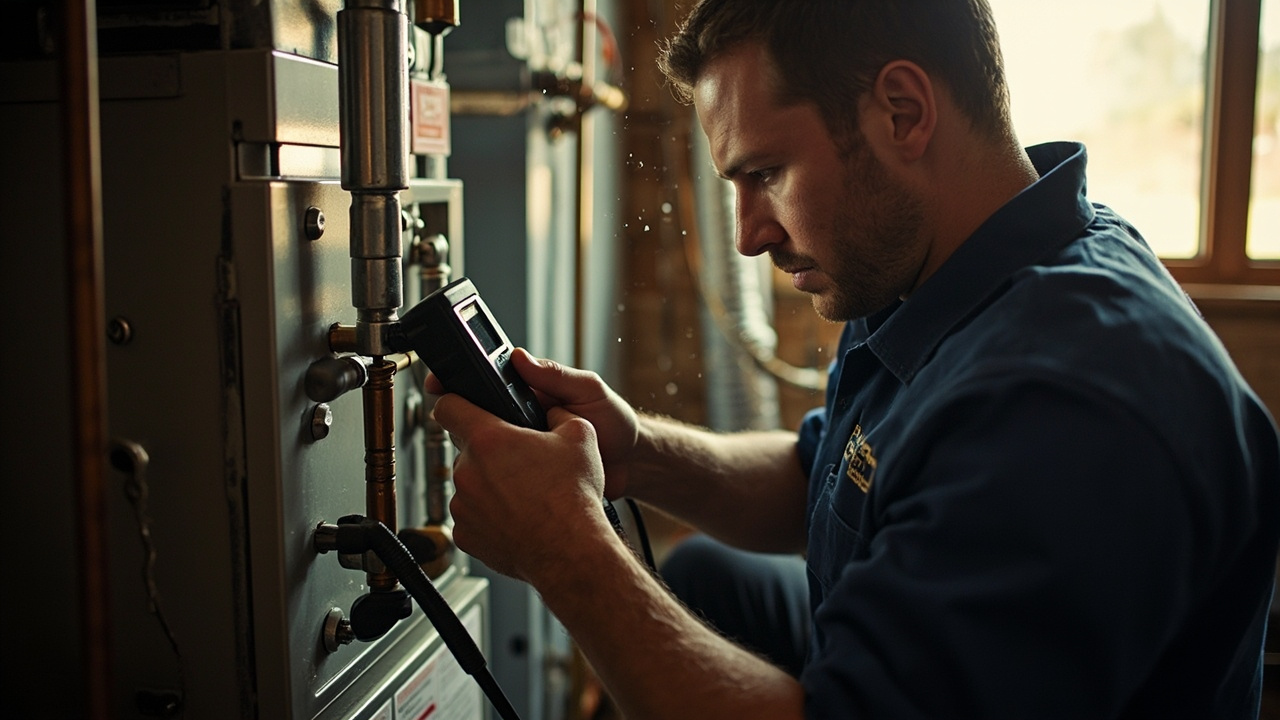
Our technicians arrive with multi-gas analyzers calibrated to detect CO concentrations as low as 1 part per million. We start by evacuating your home and ventilating the space, then methodically test ambient air levels in each room. High readings near your HVAC return grille indicate a furnace problem. Elevated CO near your water heater closet points to venting failure. Kitchen concentrations suggest gas range combustion issues.

Once we isolate the affected zone, we perform source identification testing. For furnaces, we inspect the heat exchanger for cracks using a combustion analyzer inserted directly into the flue. A cracked heat exchanger allows exhaust gases to mix with circulating air, sending CO through your ductwork to every room. We check for proper draft using a draft gauge, because inadequate chimney draft causes backdrafting where combustion gases spill into your home instead of venting outside.

For water heaters, we verify flue pipe integrity and check for blockages. Austin's hard water creates mineral buildup that can obstruct exhaust vents. Birds nest in uncapped termination points. Loose connections allow gases to escape before reaching the exterior.

CO gas detection service includes testing your HVAC system under load. We fire up your furnace and monitor exhaust gas composition in real time. A properly functioning system produces minimal CO. Elevated readings indicate incomplete combustion caused by dirty burners, insufficient airflow, or mechanical failure.

We document everything with precise measurements. You receive a detailed report showing CO levels at each test point, the identified source, and required repairs to eliminate the hazard. This is not guesswork. This is diagnostic certainty backed by calibrated instruments and technical expertise.

What Happens During Your Emergency CO Response

Emergency Carbon Monoxide Leak Detection in Austin – Same-Day Response, 24/7 Availability
01

Immediate Dispatch and Assessment

When you call, we dispatch a certified technician to your Austin location immediately. You receive an estimated arrival time within minutes. Our technician arrives with professional CO detection equipment and begins ambient air testing throughout your home to measure contamination levels and determine if immediate evacuation is necessary. We contact emergency services if concentrations exceed safe thresholds.
02

Source Identification Testing

After ventilating your home, we perform systematic testing of every combustion appliance. Our multi-gas analyzer measures CO output from your furnace, water heater, gas range, and fireplace. We inspect heat exchangers, flue pipes, and venting systems for cracks, blockages, or separation. Thermal imaging reveals hidden exhaust leaks inside walls or attics. We identify the exact source and failure mechanism.
03

Safety Restoration and Verification

Once we locate the leak, we either repair the failed component immediately or safely disable the equipment until permanent repair is completed. We retest ambient air levels to verify CO has dissipated and perform final combustion analysis to confirm safe operation. You receive written documentation of findings, repairs performed, and clearance to re-occupy your home. We test your CO detectors before we leave.

Why Austin Residents Trust All Pro HVAC for CO Emergencies

Carbon monoxide emergencies require more than generic HVAC knowledge. You need technicians who understand how Austin's specific conditions contribute to CO hazards.

We know that Central Texas clay soil causes foundation shifting that separates flue pipes from chimneys. We have seen hundreds of Austin homes where settling created a gap in the exhaust connection, allowing combustion gases to vent into the attic. We inspect these connection points because we understand local construction challenges.

We know that Austin's high humidity promotes condensation inside metal flue pipes, leading to corrosion and perforation. Older homes in neighborhoods like Hyde Park and Bouldin Creek often have original galvanized venting that has rusted through after decades of exposure. We check for this specific failure mode because we work in these homes every day.

We understand that Austin's building boom in the 1980s created thousands of homes with atmospheric draft water heaters installed in interior closets with inadequate combustion air. When you run your bathroom exhaust fan, kitchen hood, or dryer, you create negative pressure that prevents proper venting. We test for backdrafting under realistic operating conditions, not just static scenarios.

All Pro HVAC Austin maintains calibrated detection equipment certified to industry standards. Our technicians complete ongoing training in combustion analysis and gas detection protocols. We do not send generalists to CO calls. We send specialists who understand the chemistry of incomplete combustion and the mechanics of venting failure.

We respond 24/7 because CO leaks do not schedule themselves. We arrive fast because we staff dedicated emergency technicians throughout the Austin metro. We fix the problem correctly because we have diagnosed these failures hundreds of times in local homes with local conditions.

When your family's safety is at stake, you need expertise, speed, and certainty. You need professionals who have seen every CO scenario Austin properties can produce.

What to Expect During Emergency CO Detection Service

Response Time and Availability

We dispatch emergency technicians immediately upon your call. Most Austin-area properties receive service within one to two hours, depending on your specific location and current call volume. We maintain emergency crews 24 hours a day, 365 days per year, including holidays. You speak directly with our dispatch team when you call, not an answering service. We provide real-time arrival updates via text message. If your situation is life-threatening with symptoms of CO poisoning, we instruct you to evacuate immediately and contact 911 while we respond to secure your property and identify the source.

Detection Process and Diagnostics

Our technician performs ambient air testing in every room of your home, documenting CO concentrations with calibrated instruments. We test each combustion appliance individually, measuring exhaust gas composition and verifying proper draft. For furnaces, we inspect heat exchangers using borescope cameras and combustion analyzers. For water heaters, we check flue integrity and termination points. We use thermal imaging to detect hidden exhaust leaks in walls or ceilings. The entire diagnostic process typically takes 60 to 90 minutes, depending on home size and number of appliances. You receive detailed findings before we discuss repair options.

Resolution and Safety Clearance

Once we identify the CO source, we explain the failure mechanism and required repairs. For immediate hazards like cracked heat exchangers, we disable the equipment and provide temporary heating alternatives. For repairable issues like loose flue connections or blocked vents, we often complete repairs on-site during the emergency visit. After repairs, we retest all combustion appliances and verify ambient CO levels have returned to zero. We test your CO detectors to confirm they are functioning properly. You receive written documentation clearing your home for safe occupancy. We do not leave until you understand what failed, why it happened, and what we did to fix it.

Follow-Up and Prevention

After resolving the immediate emergency, we provide recommendations for preventing future CO hazards. This includes annual combustion appliance inspections, heat exchanger integrity testing, and flue system maintenance. For homes with recurring backdrafting issues, we recommend combustion air modifications or power-vented equipment upgrades. We schedule a follow-up inspection to verify repairs are holding and your system continues operating safely. Many Austin homeowners enroll in our preventive maintenance program, which includes annual CO testing as part of routine HVAC service. Prevention is always less expensive than emergency response, and it keeps your family safe year-round.

Frequently Asked Questions

You Have Questions,
We Have Answers

How do you tell if you have a carbon monoxide leak? +

You cannot see or smell carbon monoxide. Watch for physical symptoms like sudden headaches, dizziness, nausea, or confusion in multiple household members. Check your fuel-burning appliances for yellow or flickering flames instead of blue. Look for excessive moisture on windows or walls near gas appliances. If your CO detector alarms, evacuate immediately. In Austin's older homes, aging furnaces and water heaters increase risk. Do not try to diagnose the source yourself. Get everyone outside, call 911, then contact an HVAC technician for emergency inspection once cleared to re-enter.

Can you stay in a house with a carbon monoxide leak? +

No. Evacuate immediately if you suspect a carbon monoxide leak. CO poisoning worsens by the minute. Even low levels cause brain damage or death with prolonged exposure. You cannot tough it out or wait until morning. Get everyone, including pets, outside to fresh air. Call 911 from outside the home. Do not re-enter until emergency responders clear the property and a certified HVAC technician identifies and repairs the source. Austin's sealed homes trap CO faster due to energy-efficient construction. Your life is not worth the risk. Leave now.

Does CO rise or fall? +

Carbon monoxide mixes evenly with air. It does not rise like helium or sink like propane. This makes CO dangerous throughout your entire home, from basement to attic. In Austin homes with central HVAC systems, CO spreads quickly through ductwork to every room. Install detectors on each floor, including bedrooms, not just near the ceiling or floor. The gas disperses uniformly regardless of temperature or airflow. This even distribution means you need multiple detectors for full coverage. Do not rely on a single unit to protect your family.

Will a carbon monoxide detector detect a leak? +

Yes, but only if it works properly. Carbon monoxide detectors sound an alarm when CO reaches dangerous levels. Test your detector monthly using the test button. Replace batteries twice yearly. Replace the entire unit every five to seven years as sensors degrade. In Austin's humid climate, moisture can damage detector electronics faster. Install UL-listed detectors on every floor and near sleeping areas. A detector only protects you if it functions. If your alarm sounds, treat it as real. Evacuate first, investigate later with professionals.

What are two warning signs of carbon monoxide? +

Sudden flu-like symptoms without fever are the first warning sign. Headache, dizziness, weakness, nausea, and confusion appear in everyone at home around the same time. The second warning is physical evidence from appliances. Yellow or orange flames instead of blue from your gas furnace, water heater, or stove indicate incomplete combustion producing CO. Soot buildup around appliances also signals danger. Austin homeowners with older HVAC systems face higher risk. If you notice these signs, evacuate and call for help. Do not wait for symptoms to worsen.

Can a phone app detect carbon monoxide? +

No. Phone apps claiming to detect carbon monoxide do not work. Your smartphone lacks the electrochemical or biomimetic sensors required to measure CO gas. These apps are dangerous because they create false security. Only purpose-built carbon monoxide detectors with certified sensors can detect this deadly gas. In Austin, rely on UL 2034-listed plug-in or hardwired detectors placed throughout your home. Apps cannot replace proper detection equipment. Trusting your phone puts your family at fatal risk. Invest in real detectors and professional HVAC inspection, not gimmicks.

How quickly will you know if you have carbon monoxide poisoning? +

Symptoms appear within minutes to hours depending on concentration levels. High CO levels cause symptoms within minutes. Lower levels take hours but are equally deadly. You might feel fine initially, then suddenly collapse. Mild exposure mimics flu symptoms. Headaches and nausea start first. Confusion and loss of consciousness follow. Austin residents often mistake early CO poisoning for cedar fever or seasonal allergies. Do not wait to feel worse. If multiple people feel sick simultaneously, especially near gas appliances, evacuate immediately. Brain damage occurs fast. Every minute counts.

How can I test for CO in my home? +

Install UL-listed carbon monoxide detectors on every level of your home and outside sleeping areas. Test them monthly. For professional verification, schedule an HVAC inspection with combustion analysis equipment. Technicians use specialized meters that measure CO parts per million in real-time. They check furnace heat exchangers, water heaters, and gas connections. In Austin, annual HVAC maintenance should include CO testing, especially before winter when you run heating systems. Never use chemical spot detectors from hardware stores as your only protection. Professional testing plus working detectors give complete coverage.

Will opening windows help with carbon monoxide? +

Opening windows helps dilute carbon monoxide but does not eliminate the danger. Ventilation slows CO buildup but does not stop the leak. You must evacuate and shut off the source. In Austin's mild winters, residents sometimes crack windows instead of fixing faulty heaters. This gamble kills people. Fresh air might reduce symptoms temporarily, but CO continues accumulating from the leak source. Open windows during evacuation to help, but do not stay inside thinking ventilation makes it safe. Leave immediately. Call professionals to find and repair the leak before returning.

Where does carbon monoxide accumulate first? +

Carbon monoxide accumulates first near the leak source, then spreads evenly throughout your home. Check around fuel-burning appliances like furnaces, water heaters, gas stoves, and fireplaces. In Austin homes, attached garages are high-risk areas when vehicles idle. CO from a running car enters living spaces through shared walls and doors. Basements and utility closets with gas equipment trap CO initially before it disperses. However, CO mixes uniformly with air within minutes, reaching every room. This is why you need detectors on multiple floors, not just near appliances.

How Austin's Climate and Housing Stock Create Hidden CO Risks

Austin's temperature swings create unique carbon monoxide hazards. Winter cold snaps force furnaces that have sat idle through mild fall weather into sudden heavy use, stressing aging heat exchangers and revealing cracks that developed over time. Summer humidity causes condensation inside metal flue pipes, accelerating corrosion that eventually perforates exhaust venting. The city's housing stock includes thousands of homes built between 1975 and 1990 with original atmospheric draft water heaters and furnaces that have never been upgraded. These older combustion appliances lack modern safety controls and are far more susceptible to venting failures. Combined with Austin's practice of sealing homes tightly for air conditioning efficiency, these aging systems create elevated CO risk that many homeowners never recognize until an emergency occurs.

All Pro HVAC Austin operates exclusively in the Central Texas region, giving our technicians deep familiarity with local construction methods, common failure patterns, and code requirements specific to Travis County and surrounding areas. We understand how Austin's expansive clay soil affects foundation stability and creates flue separation issues unique to this geology. We know which neighborhoods contain housing stock most vulnerable to CO hazards based on construction era and original equipment specifications. This local expertise allows us to diagnose problems faster and recommend solutions appropriate for Austin conditions. When you call a national chain or out-of-area contractor, you get generic service. When you call All Pro HVAC Austin, you get technicians who have worked in thousands of local homes facing the exact same issues yours faces.
HVAC Services in The Austin Area

We are proud to serve the entire area, providing exceptional HVAC services to both residential and commercial clients. Our service area is extensive, ensuring that no matter where you are located, you can count on us for reliable and prompt service. We invite you to view our location on the map and see how conveniently positioned we are to meet all of your heating and cooling needs. We are just a call away.

Address:
All Pro HVAC Austin, 313 E 12th St, Austin, TX, 78701

Additional Services We Offer

Our news updates

Latest Articles & News from The Blogs

Flexible financing options for Austin families needing a new HVAC system today\n\nReplacing your HVAC system in Austin does not have…

Flexible financing options for Austin families needing a new HVAC system today

Flexible financing options for Austin families needing a new HVAC system today\n\nReplacing your HVAC system in Austin does not have…

Finding a certified Trane repair specialist for your Great Hills home

Finding a certified Trane repair specialist for your Great Hills home When your Trane air conditioner stops working in Great…

Why getting a second opinion on your AC compressor replacement could save you thousands

Why getting a second opinion on your AC compressor replacement could save you thousands If your HVAC technician just told…

Contact Us

Do not wait for symptoms to worsen. Call All Pro HVAC Austin at (737) 316-0777 right now. We dispatch immediately, arrive fast, and locate the source of your carbon monoxide leak with professional detection equipment. Your family's safety is our only priority.