
Picking the right air filter for high-pollen seasons in the Holly District
If you live in the Holly District and struggle with seasonal allergies, you are not alone. Central Texas experiences intense pollen spikes from cedar, oak, and ragweed that can overwhelm standard air filters. Choosing the right filter is about balancing allergen capture with system efficiency. A filter that is too restrictive can strain your blower motor during Austin’s 100-degree summer days, while one that is too basic lets pollen circulate freely through your home.. Read more about How to keep your East Austin home smelling fresh when you have indoor pets.
The key is understanding MERV ratings and how they interact with Austin’s unique climate. The Holly District sits near Lady Bird Lake where humidity levels often exceed 70%, creating conditions where pollen particles clump and stick to filters faster than in drier climates. This means you need a filter that captures fine particles without creating excessive static pressure that forces your HVAC system to work harder.. Read more about Creating a ‘safe breathing zone’ in your home during Texas wildfire season.
Let’s break down exactly what you need to know about picking the right air filter for high-pollen seasons in the Holly District, including specific recommendations for cedar fever defense and maintenance schedules that match Austin’s pollen calendar.. Read more about Survival guide for Cedar Fever and how your HVAC system can help you breathe.
Understanding Austin’s pollen calendar and why it matters for Holly District residents
Austin experiences three major pollen seasons that affect Holly District homes differently than other parts of the city. The proximity to Lady Bird Lake and the combination of urban heat island effects create unique microclimates within the neighborhood.
Cedar fever typically hits from December through February when Juniperus ashei releases microscopic pollen grains measuring just 20-30 microns. These tiny particles can pass through standard fiberglass filters and trigger severe allergic reactions. Oak pollen follows from March through May with larger 40-50 micron grains that create visible yellow dust on cars and outdoor surfaces. Ragweed season extends from August through November with 15-25 micron particles that thrive in Austin’s late summer heat.
The Holly District’s older homes built before 2000 often have HVAC systems with smaller blower motors that cannot handle high-MERV filters during peak cooling season. This creates a dilemma: you need better filtration for health but cannot sacrifice system efficiency when temperatures hit 105 degrees.
MERV ratings explained for Austin’s HVAC systems
MERV stands for Minimum Efficiency Reporting Value and measures how effectively a filter captures particles between 0.3 and 10 microns. For Holly District homes, the choice between MERV 8, 11, and 13 filters involves understanding both allergen capture and system impact.
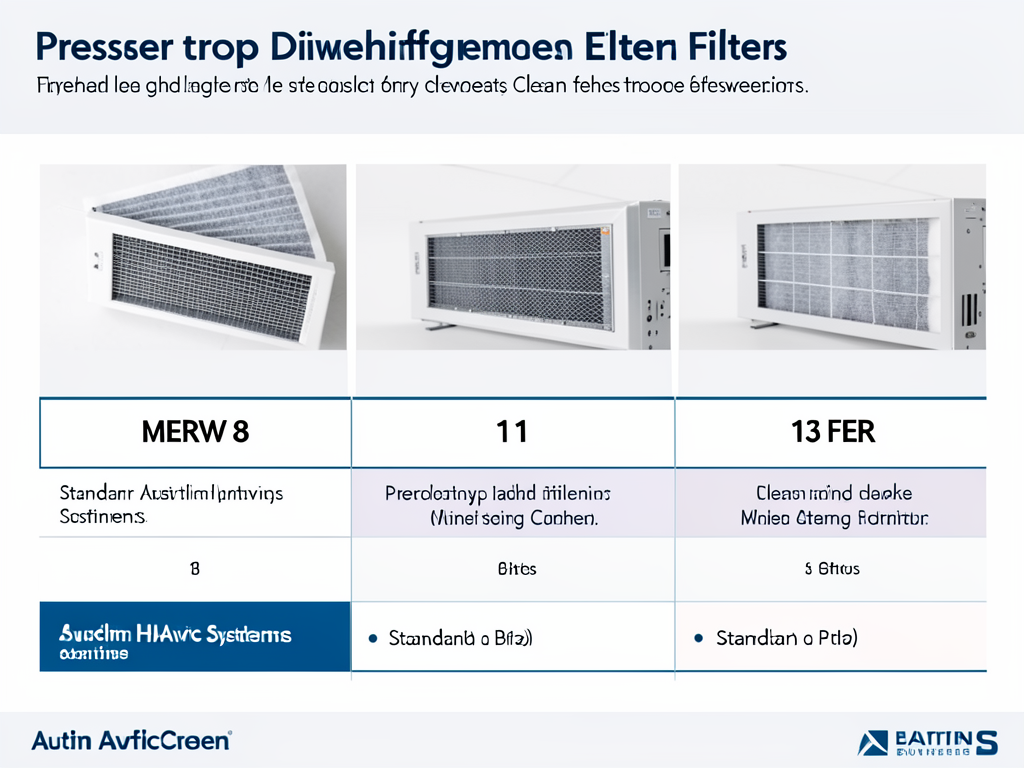
MERV 8 filters capture 90% of particles 3-10 microns but only 20% of particles 1-3 microns. These work well for dust and larger pollen but miss most cedar fever particles. MERV 11 filters capture 85-95% of particles 1-10 microns, providing good cedar and oak pollen protection. MERV 13 filters capture 90% of particles 1-3 microns and 95% of particles 3-10 microns, offering maximum protection but creating significant pressure drop.
Standard Holly District homes built between 1970 and 2000 typically have 1/2 HP blower motors that experience a 0.1-inch water column pressure drop with MERV 8 filters. MERV 11 filters increase this to 0.2 inches, while MERV 13 filters can reach 0.4 inches. Most systems are designed for a maximum of 0.5 inches, meaning MERV 13 filters can push older units to their limits during Austin’s peak cooling season.
Top 3 filter recommendations for Holly District homes
Based on Holly District home ages and Austin’s climate conditions, here are the three best filter options that balance allergen capture with system protection.
For homes built before 1990 with original HVAC systems, MERV 8 pleated filters provide the safest option. These capture oak pollen and dust while maintaining adequate airflow. Brands like Nordic Pure and Filtrete offer antimicrobial treatments that prevent mold growth in Austin’s humid conditions. Replace these every 30-45 days during peak seasons.
Homes built between 1990 and 2010 can typically handle MERV 11 filters year-round. These capture cedar fever particles while maintaining system efficiency. Look for filters with reinforced frames to prevent collapse under pressure. Replace every 60-90 days, but check monthly during cedar season.
Newer homes with variable-speed blowers can use MERV 13 filters during high-pollen months. These provide maximum allergen capture but should be used selectively. Install MERV 13 from December through May for cedar and oak seasons, then switch to MERV 11 for summer and fall. Replace every 30-60 days.

shows the pressure drop differences between MERV ratings on standard Austin HVAC systems.
Professional vs. retail filters: what Holly District homeowners need to know
Big-box store filters often use lower-quality filter media that degrades faster in Austin’s heat and humidity. Professional-grade filters use electrostatically charged media that maintains efficiency longer and resists moisture absorption. Fast and Professional Furnace Repair in Georgetown During the Winter Chill.
Professional filters also feature tighter manufacturing tolerances that prevent air bypass around the filter frame. This is critical in Holly District homes where many have slightly warped filter racks from years of humidity exposure. Retail filters often have 1/8-inch gaps that allow unfiltered air to circulate through your system.
Another key difference is the pressure rating. Professional filters include pressure drop specifications at both initial and loaded conditions. This matters because Austin’s dusty environment causes filters to load faster than national averages. A filter that works fine in Phoenix might restrict airflow dangerously in Austin after just three weeks.
Beyond the basic filter: whole-home air quality solutions
For Holly District residents with severe allergies or asthma, upgrading beyond standard 1-inch filters may provide better relief. Several options work well with Austin’s climate and existing HVAC systems.
4-inch media filters install in the return air plenum and provide MERV 13+ filtration without the pressure drop of 1-inch filters. These have five times the surface area, allowing better airflow while capturing more particles. They cost more upfront but only need replacement every 6-12 months.
UV light systems installed in the air handler kill mold, bacteria, and viruses that pass through filters. This is particularly valuable in Austin where high humidity creates ideal conditions for microbial growth on cooling coils. UV systems work alongside your filter, not as a replacement.
Electronic air cleaners use electrostatic attraction to capture particles as small as 0.1 microns. These install in the return air duct and can achieve MERV 15+ equivalent filtration. However, they require regular cleaning and may produce ozone, which can irritate some respiratory conditions.
How often to change filters during Austin’s peak pollen seasons
Austin’s extended cooling season and high pollen counts mean Holly District homeowners need more frequent filter changes than national averages suggest. The old rule of changing filters every three months does not apply here.
During cedar fever season (December-February), check filters every two weeks. Even MERV 13 filters may need replacement every 30 days when juniper pollen counts exceed 10,000 grains per cubic meter, which happens frequently in January.
Oak pollen season (March-May) requires monthly filter checks. The large pollen grains create visible buildup that restricts airflow quickly. Homes near Lady Bird Lake may experience higher pollen concentrations due to prevailing winds.
Summer months (June-August) see the fastest filter loading due to dust, humidity, and continuous AC operation. Check filters every 30 days regardless of MERV rating. Austin’s combination of construction dust and pollen creates a unique loading pattern that national studies do not capture.. Read more about Why new construction dust in Leander is clogging your filters faster than you think.
Fall ragweed season (September-November) typically requires bi-monthly checks, though some years with high ragweed counts may need monthly changes.
illustrates the filter loading patterns throughout Austin’s year.
The cedar fever defense strategy for Holly District homes
Cedar fever presents unique challenges because Juniperus ashei pollen grains are small enough to pass through many filters yet numerous enough to overwhelm even good filtration systems. Holly District homes need a specific defense strategy.
First, seal your home envelope. Many Holly District homes have older windows and doors that allow pollen infiltration. Check weatherstripping and replace if brittle. Install door sweeps on exterior doors. These simple steps reduce the pollen load on your HVAC system.
Second, create positive pressure during peak cedar season. Run your HVAC fan in the “on” position rather than “auto” to continuously filter indoor air. This prevents pollen from settling on surfaces and maintains consistent filtration.
Third, consider a pre-filter system. Install a cheap fiberglass pre-filter before your main filter during cedar season. This captures the bulk of pollen, extending the life of your expensive pleated filter. Replace pre-filters weekly during January peaks.
Finally, maintain your outdoor unit. Keep vegetation trimmed back at least two feet from the condenser. Clean the condenser coils in late November before cedar season hits. Dirty coils reduce system efficiency when you need it most.
Common filter mistakes Holly District homeowners make
Many Holly District residents sabotage their air quality efforts through simple mistakes. Understanding these pitfalls can save you money and improve your indoor air quality.
The most common mistake is installing the wrong size filter. Many older Holly District homes have non-standard filter racks that require custom sizes. Forcing a standard filter into an improper opening creates gaps that allow unfiltered air to bypass the system entirely.
Another frequent error is ignoring the filter’s pressure rating. Some homeowners install high-MERV filters without checking their system’s static pressure capacity. This forces the blower motor to work harder, reducing efficiency and potentially causing premature failure during Austin’s hottest months.
Many residents also forget about the return air path. A high-efficiency filter cannot compensate for a return air duct that is too small or has excessive bends. This creates system-wide pressure issues that no filter can overcome.
Finally, some homeowners use washable filters incorrectly. These require thorough cleaning and complete drying before reinstallation. Installing a damp filter creates perfect conditions for mold growth, which then circulates through your home.
Professional maintenance: when to call for help
While changing filters is a DIY task, some situations require professional HVAC service. Holly District homes often need expert attention due to their age and Austin’s demanding climate.
Call a professional if you notice weak airflow from vents, unusual system cycling, or if your AC cannot maintain set temperatures during mild weather. These symptoms often indicate filter-related pressure issues that require system diagnosis.
Professional duct cleaning becomes necessary when you see dust accumulation around vents or experience persistent allergy symptoms despite regular filter changes. Austin’s combination of pollen and dust creates unique buildup patterns that standard cleaning cannot address.
System upgrades may be needed if you want higher MERV filtration but have an older system. A professional can measure your static pressure and recommend whether your current system can handle MERV 13 filtration or if you need a blower motor upgrade.
Regular professional maintenance also includes checking for duct leaks, which are common in Holly District’s older homes. Leaky ducts pull unfiltered air from attics and crawl spaces, undermining even the best filter choices.
Call (737) 316-0777 today to schedule your inspection. Our technicians understand the specific challenges Holly District homes face during Austin’s high-pollen seasons.
Frequently Asked Questions
What MERV rating is best for cedar fever in Austin?
MERV 11 or 13 filters work best for cedar fever, but the right choice depends on your HVAC system’s age and capacity. MERV 11 captures most cedar pollen while maintaining good airflow in older systems. MERV 13 provides maximum protection but may strain systems built before 2000.
How often should I change my air filter in the Holly District?
Check filters every 30 days year-round in the Holly District. During cedar fever season (December-February), check every two weeks as pollen counts can require monthly changes even with MERV 13 filters. Summer months also need frequent checking due to dust and humidity.
Can I use a HEPA filter in my home HVAC system?
Standard residential HVAC systems cannot handle true HEPA filters, which create too much pressure drop. However, some systems can accommodate HEPA-like filters with MERV ratings of 16-17. These require variable-speed blowers and may need system modifications to maintain proper airflow.
Why does my filter get dirty so quickly in Austin?
Austin’s combination of high pollen counts, construction dust, and humidity causes filters to load faster than in other climates. The extended cooling season means continuous air circulation, and the clay soil in many areas creates fine dust that passes through standard filters.
Are expensive filters worth it for allergy sufferers?
For severe allergy sufferers in Austin, premium filters with electrostatically charged media can make a significant difference. These capture smaller particles more effectively and resist moisture absorption better than basic pleated filters. The improved air quality often justifies the higher cost.
How do I know if my filter is too restrictive?
Signs of an overly restrictive filter include weak airflow from vents, longer cooling cycles, ice formation on the evaporator coil, and unusual system noises. If your system struggles to maintain temperature on mild days, your filter may be creating too much pressure drop.
What size filter do I need for my Holly District home?
Many Holly District homes built before 2000 have non-standard filter sizes. Measure the filter rack opening rather than assuming standard dimensions. Common sizes in older homes include 16x25x1, 20x25x1, and custom sizes. Using the wrong size creates air bypass that defeats filtration.
Remember that proper filter selection is just one part of maintaining good indoor air quality. Your HVAC system’s overall condition, duct integrity, and home envelope all play crucial roles in how effectively you can manage Austin’s challenging pollen seasons.
For personalized recommendations specific to your Holly District home, call (737) 316-0777. We provide free consultations to help you choose the right filter strategy for your specific HVAC system and allergy needs.
{
“@context”: “https://schema.org”,
“@type”: “BlogPosting”,
“headline”: “Picking the right air filter for high-pollen seasons in the Holly District”,
“description”: “Austin HVAC expert guide to choosing MERV 8-13 filters for Cedar Fever and Oak pollen in Holly District. Improve IAQ without straining your system.”,
“wordCount”: 2259,
“datePublished”: “2026-03-18T16:07:00.000Z”,
“dateModified”: “2026-03-18T16:07:00.000Z”,
“inLanguage”: “en-US”,
“mainEntityOfPage”: {
“@type”: “WebPage”,
“@id”: “https://allprohvacaustin.com”
},
“publisher”: {
“@type”: “LocalBusiness”,
“name”: “All Pro HVAC Austin”,
“url”: “https://allprohvacaustin.com”
},
“author”: {
“@type”: “Organization”,
“name”: “All Pro HVAC Austin”,
“url”: “https://allprohvacaustin.com”
},
“image”: {
“@type”: “ImageObject”,
“url”: “https://allprohvacaustin.com/wp-content/uploads/2026/03/picking-the-right-air-filter-for-high-pollen-seaso-1.png”
}
}
{
“@context”: “https://schema.org”,
“@type”: “HVACBusiness”,
“name”: “All Pro HVAC Austin”,
“url”: “https://allprohvacaustin.com”,
“address”: {
“@type”: “PostalAddress”,
“addressLocality”: “Austin”
},
“areaServed”: {
“@type”: “City”,
“name”: “Austin”
}
}
{
“@context”: “https://schema.org”,
“@type”: “FAQPage”,
“mainEntity”: [
{
“@type”: “Question”,
“name”: “What MERV rating is best for cedar fever in Austin?”,
“acceptedAnswer”: {
“@type”: “Answer”,
“text”: “MERV 11 or 13 filters work best for cedar fever, but the right choice depends on your HVAC system’s age and capacity. MERV 11 captures most cedar pollen while maintaining good airflow in older systems. MERV 13 provides maximum protection but may strain systems built before 2000.”
}
},
{
“@type”: “Question”,
“name”: “How often should I change my air filter in the Holly District?”,
“acceptedAnswer”: {
“@type”: “Answer”,
“text”: “Check filters every 30 days year-round in the Holly District. During cedar fever season (December-February), check every two weeks as pollen counts can require monthly changes even with MERV 13 filters. Summer months also need frequent checking due to dust and humidity.”
}
},
{
“@type”: “Question”,
“name”: “Can I use a HEPA filter in my home HVAC system?”,
“acceptedAnswer”: {
“@type”: “Answer”,
“text”: “Standard residential HVAC systems cannot handle true HEPA filters, which create too much pressure drop. However, some systems can accommodate HEPA-like filters with MERV ratings of 16-17. These require variable-speed blowers and may need system modifications to maintain proper airflow.”
}
},
{
“@type”: “Question”,
“name”: “Why does my filter get dirty so quickly in Austin?”,
“acceptedAnswer”: {
“@type”: “Answer”,
“text”: “Austin’s combination of high pollen counts, construction dust, and humidity causes filters to load faster than in other climates. The extended cooling season means continuous air circulation, and the clay soil in many areas creates fine dust that passes through standard filters.”
}
},
{
“@type”: “Question”,
“name”: “Are expensive filters worth it for allergy sufferers?”,
“acceptedAnswer”: {
“@type”: “Answer”,
“text”: “For severe allergy sufferers in Austin, premium filters with electrostatically charged media can make a significant difference. These capture smaller particles more effectively and resist moisture absorption better than basic pleated filters. The improved air quality often justifies the higher cost.”
}
},
{
“@type”: “Question”,
“name”: “How do I know if my filter is too restrictive?”,
“acceptedAnswer”: {
“@type”: “Answer”,
“text”: “Signs of an overly restrictive filter include weak airflow from vents, longer cooling cycles, ice formation on the evaporator coil, and unusual system noises. If your system struggles to maintain temperature on mild days, your filter may be creating too much pressure drop.”
}
},
{
“@type”: “Question”,
“name”: “What size filter do I need for my Holly District home?”,
“acceptedAnswer”: {
“@type”: “Answer”,
“text”: “Many Holly District homes built before 2000 have non-standard filter sizes. Measure the filter rack opening rather than assuming standard dimensions. Common sizes in older homes include 16x25x1, 20x25x1, and custom sizes. Using the wrong size creates air bypass that defeats filtration.”
}
}
]
}
{
“@context”: “https://schema.org”,
“@type”: “BreadcrumbList”,
“itemListElement”: [
{
“@type”: “ListItem”,
“position”: 1,
“name”: “Home”,
“item”: “https://allprohvacaustin.com”
},
{
“@type”: “ListItem”,
“position”: 2,
“name”: “Blog”,
“item”: “https://allprohvacaustin.com/blog”
},
{
“@type”: “ListItem”,
“position”: 3,
“name”: “Picking the right air filter for high-pollen seasons in the Holly District”
}
]
}
{
“@context”: “https://schema.org”,
“@type”: “Service”,
“serviceType”: “HVAC”,
“provider”: {
“@type”: “LocalBusiness”,
“name”: “All Pro HVAC Austin”,
“url”: “https://allprohvacaustin.com”
},
“areaServed”: {
“@type”: “City”,
“name”: “Austin”
},
“description”: “Austin HVAC expert guide to choosing MERV 8-13 filters for Cedar Fever and Oak pollen in Holly District. Improve IAQ without straining your system.”
}