
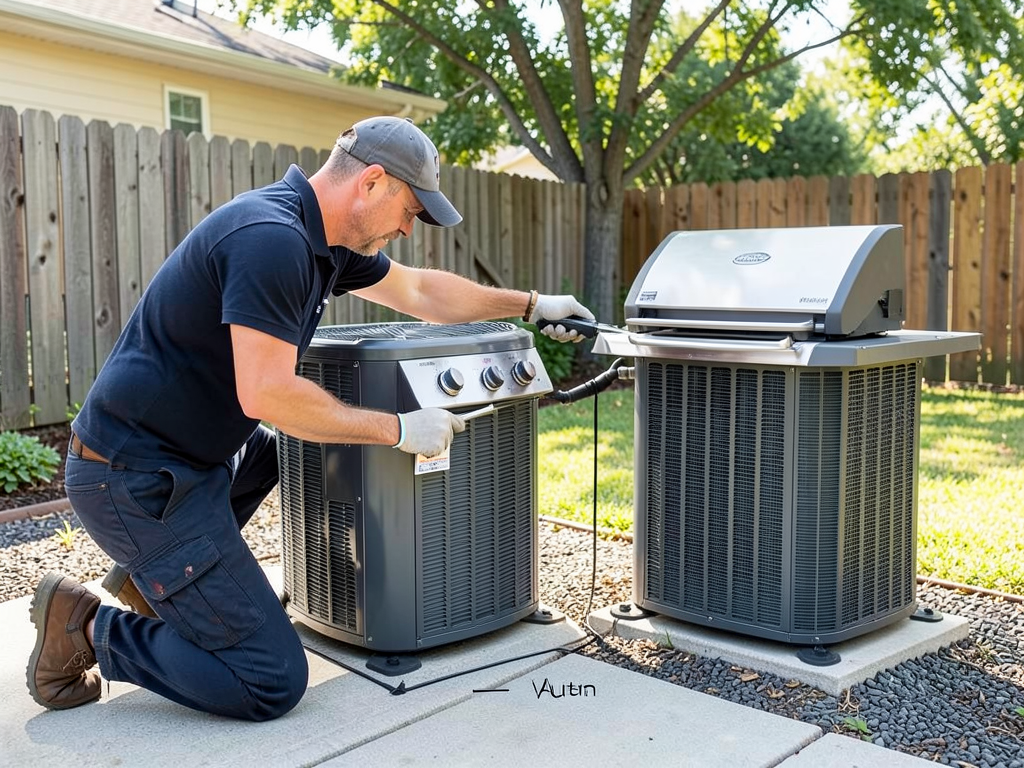
Why Your Outdoor Kitchen and Grill Might Be Overheating Your AC Unit
Building an outdoor kitchen in Austin sounds perfect until you realize your grill might be cooking your AC unit too. Heat from outdoor cooking areas can significantly reduce your air conditioner’s efficiency and lifespan. This guide shows you how to protect both your investment and your comfort.
The Heat Exchange Problem
Central Texas summers already push AC units to their limits. When you add concentrated heat sources like grills and pizza ovens nearby, you create a thermal conflict. Your condenser needs to dissipate heat, but hot air from cooking equipment flows right back toward it. This creates a cycle where your AC works harder while getting less cool air to exchange.
Most homeowners don’t realize that proper spacing isn’t just about convenience. It’s about thermodynamics. Heat rises and spreads, but without adequate clearance, that heat gets trapped in the same air column your AC needs for cooling. The result? Higher energy bills, more frequent repairs, and a system that fails when you need it most. Emergency AC Repair Services for Homes in West Lake Hills.
Manufacturer vs. Austin Building Codes
Outdoor kitchen manufacturers typically recommend minimum clearances, but Austin has specific requirements that supersede general guidelines. The City of Austin Building Inspection Department enforces standards that account for our extreme heat and humidity. City of Austin Building Inspection Department.
According to the International Residential Code adopted by Austin, HVAC equipment needs specific protection from heat sources. For gas grills, the minimum horizontal clearance is 24 inches from any AC unit. Electric grills require 18 inches. These aren’t arbitrary numbers. They’re based on heat dissipation patterns and safety margins.
Austin Energy also provides guidelines for outdoor installations. Their recommendations include maintaining 60 inches of vertical clearance above cooking equipment to allow heat to rise away from HVAC components. This is especially critical for covered patios where heat can become trapped.
Vertical Clearance Challenges
Patio covers and pergolas create unique clearance problems in Austin’s outdoor kitchens. Heat rises, but if it hits a solid surface, it reflects back down. This creates a heat trap that affects both your comfort and your AC efficiency.
For structures with solid roofs, you need at least 72 inches of clearance from the cooking surface to the underside of the roof. This allows heat to dissipate before hitting any barriers. Pergolas with open slats can work with 60 inches because they allow some heat escape.
Material choice matters too. Metal roofs radiate heat downward, while wood or composite materials absorb and slowly release it. In Austin’s climate, metal roofing within 10 feet of an AC unit requires additional clearance or heat shields.
Horizontal Clearance Requirements
Side-to-side spacing depends on your cooking equipment’s BTU rating. Higher BTU means more heat output. A standard propane grill at 40,000 BTU needs 24 inches of clearance. Commercial-grade units exceeding 80,000 BTU require 36 inches or more.
Smokers present a special challenge. These units run for hours at low temperatures, creating a constant heat source. Even at lower temperatures, the prolonged exposure can affect nearby HVAC components. Maintain 30 inches minimum from any AC unit.
Pizza ovens are the most demanding. Wood-fired units can exceed 900 degrees Fahrenheit. The radiant heat extends beyond the immediate cooking area. For these, 48 inches of horizontal clearance is the minimum, with some manufacturers recommending up to 60 inches.
Clearance Quick Reference Table:
| Equipment Type | BTU Range | Minimum Horizontal Clearance | Vertical Clearance Needed |
|---|---|---|---|
| Standard Propane Grill | 30,000-50,000 | 24 inches | 60 inches |
| Electric Grill | N/A | 18 inches | 60 inches |
| Smoker | 15,000-25,000 | 30 inches | 60 inches |
| Wood-Fired Pizza Oven | N/A | 48-60 inches | 72 inches |
| Power Burner | 60,000-90,000 | 36 inches | 60 inches |
The 100-Degree Factor
Austin’s extreme summer temperatures change everything about heat management. When outdoor temperatures exceed 100 degrees, your AC unit already struggles to reject heat. Adding more heat nearby compounds the problem significantly.
During heat waves, AC efficiency drops by up to 30% when surrounded by additional heat sources. The compressor works harder, drawing more electricity and generating more heat internally. This creates a dangerous cycle where the unit can overheat and fail.
Humidity makes it worse. Austin’s moisture-laden air holds heat longer than dry air. When your AC tries to cool humid air that’s already been heated by cooking equipment, it’s like trying to dry a wet towel with a hairdryer on low. The system just can’t keep up.. Read more about Why Your Dryer Vent Is Secretly Killing Your AC Performance.
Pre-Installation Checklist
Before building your outdoor kitchen, run through this checklist to protect your HVAC system:
- Measure existing AC unit dimensions and manufacturer clearance requirements
- Map out heat zones from proposed cooking equipment
- Check local building permits for outdoor kitchen installations
- Plan for adequate ventilation above and around cooking areas
- Consider heat shields or barriers if clearances are tight
- Verify utility connections won’t interfere with AC service access
- Plan for future AC maintenance and repairs
Many Austin homeowners skip this planning phase and end up with expensive retrofits. A few hours of planning can save thousands in repairs and efficiency losses. Local AC Repair and Cooling Experts in South Lamar and Barton Hills.
Accessibility for Service Technicians
Clearance isn’t just about heat. Your HVAC technician needs room to work. Most AC repairs require 30 inches of clearance on all sides for tools, parts, and safe movement.
Consider the full lifecycle. Your outdoor kitchen should allow for:
- Annual maintenance access
- Emergency repair space
- Component replacement room
- Electrical panel access
- Refrigerant line connections
Trapping your AC behind a permanent outdoor kitchen island creates problems when service is needed. Plan removable panels or access doors in your design.
Material Considerations
The materials you choose affect heat management. Non-combustible materials like stone, concrete, and metal can actually help by creating thermal barriers. However, they also retain and radiate heat longer than wood or composite materials.
For tight spaces, consider these solutions:
- Heat-resistant barriers between cooking and AC equipment
- Ventilation gaps in solid surfaces
- Reflective materials to direct heat away from HVAC units
- Strategic landscaping to create natural air circulation
Even small design changes can make a big difference. Angling your grill 45 degrees instead of placing it directly adjacent to your AC unit can improve airflow significantly.
Common Mistakes to Avoid
Homeowners often make these critical errors when planning outdoor kitchens:
- Ignoring manufacturer clearance requirements
- Building too close to existing HVAC equipment
- Creating enclosed spaces without proper ventilation
- Using combustible materials too close to heat sources
- Blocking access to AC service panels
- Underestimating heat output from cooking equipment
- Failing to account for future AC replacement needs
Each of these mistakes can lead to reduced efficiency, higher energy bills, or complete system failure during peak summer months.
When to Call a Professional
If you’re unsure about clearances or have an existing outdoor kitchen that might be affecting your AC, call a licensed HVAC technician. They can assess your specific situation and recommend solutions. Modern HVAC Solutions for Historic Homes in Tarrytown and Old West Austin.
Signs you need professional evaluation:
- AC runs constantly but doesn’t cool effectively
- Energy bills spike during summer months
- Unusual noises from the outdoor unit
- AC cycles on and off frequently
- Ice buildup on refrigerant lines
Don’t wait until your system fails on a 105-degree day. Early intervention prevents costly emergency repairs. Emergency Ductwork Repair.
Protecting Your Investment
Your outdoor kitchen and AC system are both significant investments. Protecting one shouldn’t compromise the other. With proper planning and adherence to clearance guidelines, you can enjoy both without conflict.
Remember that Austin’s climate is unique. What works in cooler climates fails here. The combination of extreme heat, high humidity, and prolonged summer seasons requires extra attention to heat management and equipment spacing.
The best outdoor kitchens in Austin balance aesthetics, functionality, and system protection. They provide the cooking space you want while ensuring your AC can do its job efficiently. This balance isn’t just about comfort. It’s about protecting your investment and avoiding costly repairs.
Call (737) 316-0777 today to schedule your outdoor kitchen HVAC assessment. Our technicians can evaluate your current setup and recommend specific solutions for your home’s unique configuration. Don’t let your dream outdoor kitchen become your AC’s worst nightmare.
Frequently Asked Questions
How close can a grill be to my AC unit?
Standard propane grills need at least 24 inches of horizontal clearance, while electric grills require 18 inches. High-BTU commercial units need 36 inches or more. Always check your specific equipment’s requirements.
Will my outdoor kitchen void my AC warranty?
Not necessarily, but improper installation that causes damage could void coverage. Following manufacturer and local building code clearances protects your warranty and your system.
Can I build a cover over my outdoor kitchen if I have an AC unit nearby?
Yes, but maintain proper vertical clearance. Solid roofs need 72 inches above cooking surfaces, while open pergolas can work with 60 inches. Ensure heat can escape upward without hitting barriers.
What if I already built my outdoor kitchen too close to the AC?
Professional assessment is recommended. Solutions might include heat shields, improved ventilation, or partial reconfiguration. Don’t attempt modifications yourself as you could create safety hazards. Fast and Professional Furnace Repair in Georgetown During the Winter Chill.
Are there specific Austin codes for outdoor kitchens near HVAC equipment?
Austin follows the International Residential Code with local amendments. The City of Austin Building Inspection Department enforces specific clearance requirements that account for our extreme climate conditions.
How does humidity affect the heat from my outdoor kitchen?
High humidity means heat dissipates more slowly. In Austin’s climate, this makes proper clearance even more critical. Moist air holds heat longer, making your AC work harder to reject that accumulated heat.
Should I consider future AC replacement when planning my outdoor kitchen?
Absolutely. Plan for the possibility that your next AC unit might be larger or configured differently. Building in extra space now prevents expensive modifications later.
Can landscaping help with heat management?
Yes. Strategic placement of trees or shrubs can create natural air circulation patterns that help dissipate heat. However, maintain access for AC service and avoid blocking airflow to the unit. For more information, visit ASHRAE Technical Resources.
{
“@context”: “https://schema.org”,
“@type”: “BlogPosting”,
“headline”: “Why Your Outdoor Kitchen and Grill Might Be Overheating Your AC Unit”,
“description”: “Discover how Austin outdoor kitchens can damage AC units. Learn proper clearance distances, building codes, and heat management to protect your HVAC system.”,
“wordCount”: 1693,
“datePublished”: “2026-06-07T11:53:00.000Z”,
“dateModified”: “2026-06-07T11:53:00.000Z”,
“inLanguage”: “en-US”,
“mainEntityOfPage”: {
“@type”: “WebPage”,
“@id”: “https://allprohvacaustin.com”
},
“publisher”: {
“@type”: “LocalBusiness”,
“name”: “All Pro HVAC Austin”,
“url”: “https://allprohvacaustin.com”
},
“author”: {
“@type”: “Organization”,
“name”: “All Pro HVAC Austin”,
“url”: “https://allprohvacaustin.com”
},
“image”: {
“@type”: “ImageObject”,
“url”: “https://allprohvacaustin.com/wp-content/uploads/2026/03/why-your-outdoor-kitchen-and-grill-might-be-overhe-1.png”
}
}
{
“@context”: “https://schema.org”,
“@type”: “HVACBusiness”,
“name”: “All Pro HVAC Austin”,
“url”: “https://allprohvacaustin.com”,
“address”: {
“@type”: “PostalAddress”,
“addressLocality”: “Austin”
},
“areaServed”: {
“@type”: “City”,
“name”: “Austin”
}
}
{
“@context”: “https://schema.org”,
“@type”: “FAQPage”,
“mainEntity”: [
{
“@type”: “Question”,
“name”: “How close can a grill be to my AC unit?”,
“acceptedAnswer”: {
“@type”: “Answer”,
“text”: “Standard propane grills need at least 24 inches of horizontal clearance, while electric grills require 18 inches. High-BTU commercial units need 36 inches or more. Always check your specific equipment’s requirements.”
}
},
{
“@type”: “Question”,
“name”: “Will my outdoor kitchen void my AC warranty?”,
“acceptedAnswer”: {
“@type”: “Answer”,
“text”: “Not necessarily, but improper installation that causes damage could void coverage. Following manufacturer and local building code clearances protects your warranty and your system.”
}
},
{
“@type”: “Question”,
“name”: “Can I build a cover over my outdoor kitchen if I have an AC unit nearby?”,
“acceptedAnswer”: {
“@type”: “Answer”,
“text”: “Yes, but maintain proper vertical clearance. Solid roofs need 72 inches above cooking surfaces, while open pergolas can work with 60 inches. Ensure heat can escape upward without hitting barriers.”
}
},
{
“@type”: “Question”,
“name”: “What if I already built my outdoor kitchen too close to the AC?”,
“acceptedAnswer”: {
“@type”: “Answer”,
“text”: “Professional assessment is recommended. Solutions might include heat shields, improved ventilation, or partial reconfiguration. Don’t attempt modifications yourself as you could create safety hazards. Fast and Professional Furnace Repair in Georgetown During the Winter Chill.”
}
},
{
“@type”: “Question”,
“name”: “Are there specific Austin codes for outdoor kitchens near HVAC equipment?”,
“acceptedAnswer”: {
“@type”: “Answer”,
“text”: “Austin follows the International Residential Code with local amendments. The City of Austin Building Inspection Department enforces specific clearance requirements that account for our extreme climate conditions.”
}
},
{
“@type”: “Question”,
“name”: “How does humidity affect the heat from my outdoor kitchen?”,
“acceptedAnswer”: {
“@type”: “Answer”,
“text”: “High humidity means heat dissipates more slowly. In Austin’s climate, this makes proper clearance even more critical. Moist air holds heat longer, making your AC work harder to reject that accumulated heat.”
}
},
{
“@type”: “Question”,
“name”: “Should I consider future AC replacement when planning my outdoor kitchen?”,
“acceptedAnswer”: {
“@type”: “Answer”,
“text”: “Absolutely. Plan for the possibility that your next AC unit might be larger or configured differently. Building in extra space now prevents expensive modifications later.”
}
},
{
“@type”: “Question”,
“name”: “Can landscaping help with heat management?”,
“acceptedAnswer”: {
“@type”: “Answer”,
“text”: “Yes. Strategic placement of trees or shrubs can create natural air circulation patterns that help dissipate heat. However, maintain access for AC service and avoid blocking airflow to the unit. For more information, visit ASHRAE Technical Resources.”
}
}
]
}
{
“@context”: “https://schema.org”,
“@type”: “BreadcrumbList”,
“itemListElement”: [
{
“@type”: “ListItem”,
“position”: 1,
“name”: “Home”,
“item”: “https://allprohvacaustin.com”
},
{
“@type”: “ListItem”,
“position”: 2,
“name”: “Blog”,
“item”: “https://allprohvacaustin.com/blog”
},
{
“@type”: “ListItem”,
“position”: 3,
“name”: “Why Your Outdoor Kitchen and Grill Might Be Overheating Your AC Unit”
}
]
}
{
“@context”: “https://schema.org”,
“@type”: “Service”,
“serviceType”: “HVAC”,
“provider”: {
“@type”: “LocalBusiness”,
“name”: “All Pro HVAC Austin”,
“url”: “https://allprohvacaustin.com”
},
“areaServed”: {
“@type”: “City”,
“name”: “Austin”
},
“description”: “Discover how Austin outdoor kitchens can damage AC units. Learn proper clearance distances, building codes, and heat management to protect your HVAC system.”
}