
Why Your Dryer Vent Is Secretly Killing Your AC Performance
Your dryer vent might be just a few feet away from your AC condenser and that proximity is costing you money. Lint from the dryer clogs AC coils blocks airflow and forces your system to work harder. In Austin’s hot and humid climate this problem accelerates quickly leading to higher energy bills and premature system failure.
Most homeowners never think about how their dryer and AC interact. But when lint coats condenser coils heat exchange efficiency drops. Your AC runs longer cycles refrigerant pressures climb and the compressor endures extra strain. Over time this can cut your system’s lifespan by years.
How Lint Buildup Destroys Your AC Efficiency
AC condensers rely on clean coils to release heat. When lint from a nearby dryer vent sticks to those coils it acts like insulation. Heat cannot escape efficiently. Your system’s refrigerant pressure rises and the compressor works harder to maintain cooling.
In Austin high humidity makes the problem worse. Lint absorbs moisture and forms a thick felt-like mat on the coils. This blocks more airflow than dry lint would. The result is a noticeable drop in cooling performance and a spike in your energy bill.
Technicians often find condenser coils completely coated in lint during routine maintenance. In some cases the buildup is so severe that the AC cannot keep up with demand on a hot day. Cleaning the coils restores efficiency but the damage to internal components may already be done.
Austin Building Codes: Minimum Clearance Requirements
The City of Austin enforces specific clearance rules for dryer vent termination near mechanical equipment. According to the International Residential Code adopted locally dryer vents must terminate at least three feet from any air intake including AC condenser coils. City of Austin Building Inspection.
Many Austin homes especially in older neighborhoods like Tarrytown and Central Austin were built before these codes were strictly enforced. Builders often placed vents close to condensers to save space. This practice is now considered a safety and efficiency hazard.
If your home was built before 2015 check your vent placement. Even if it meets the old standard upgrading to the current clearance can prevent future problems. A licensed HVAC technician can measure the distance and recommend adjustments if needed.
Signs Your AC Unit is Suffering from Dryer Vent Proximity
Several warning signs point to lint-related AC trouble. Your system runs longer than usual even on mild days. You notice hot air blowing from the vents when the AC is on. The outdoor unit feels hotter than normal to the touch.
Energy bills may rise without a clear explanation. If you check your condenser coils and see a layer of gray or brown fuzz that is lint. In severe cases the coils appear almost completely blocked.
Another sign is short cycling. When the compressor overheats it shuts off early to protect itself. The system then restarts repeating the cycle. This puts extra wear on the motor and reduces cooling efficiency.
Immediate Solutions: From Deflectors to Vent Rerouting
If moving the vent is not an option a vent deflector can help. These angled shields direct lint away from the condenser coils. They are inexpensive and easy to install but they do not eliminate the problem entirely.
For a more permanent fix rerouting the vent is best. This involves cutting a new exit hole in the wall and sealing the old one. The cost depends on the length of the new duct run and whether the path crosses insulation or wiring.
Another option is installing a secondary lint trap near the vent exit. These mesh filters catch lint before it leaves the duct. They require monthly cleaning but can reduce buildup on the AC coils.
Professional Maintenance: Cleaning and Protecting Your Investment
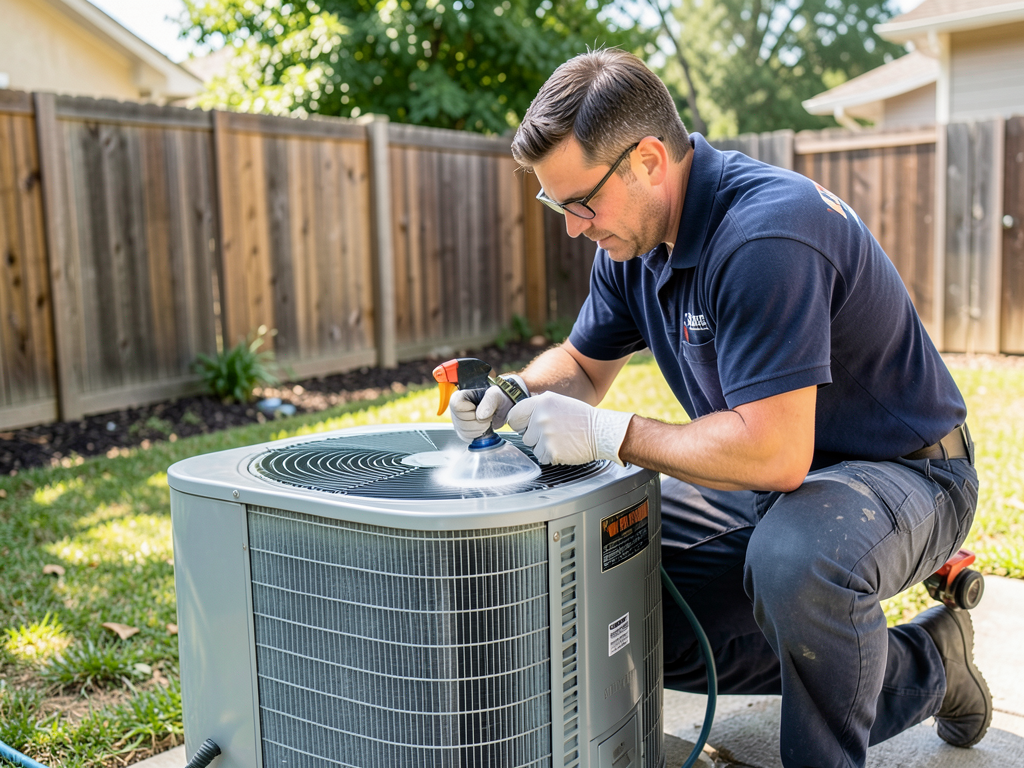
Annual coil cleaning is essential if your dryer vent sits near the AC. A technician uses a high-pressure water spray or a chemical cleaner to remove lint and debris. This service costs far less than replacing a failed compressor.
During maintenance the technician also checks refrigerant levels and inspects the contactor and capacitor. These components can fail when the system runs under stress. Early detection saves money and prevents mid-summer breakdowns.
Some homeowners schedule coil cleaning twice a year in Austin. The extra service visit is worth it during peak pollen and lint seasons. Clean coils also improve indoor air quality by reducing the strain on your system.
Fire Safety and Exhaust Backpressure
Lint is not just an efficiency problem. It is also a fire hazard. When dryer vents terminate too close to the AC lint can accumulate inside the condenser unit. The motor and electrical components generate heat creating a risk of ignition.
Backpressure is another concern. If the vent exit is blocked by the AC or a deflector the dryer must work harder. This can cause the heating element to overheat or the drum belt to wear out faster. Geothermal Heating & Cooling.
Always use rigid or semi-rigid metal duct for the vent run. Flexible plastic ducts trap more lint and are more likely to sag or kink. A properly installed metal duct with few bends reduces both fire risk and backpressure.
Cost-Benefit Analysis: Rerouting vs. Shielding
Vent rerouting costs more upfront but offers long-term savings. A typical rerouting job in Austin ranges from $300 to $800 depending on the complexity. This one-time expense can save you thousands in reduced energy bills and extended AC life.
Shielding options like deflectors or secondary traps cost less but require ongoing maintenance. A deflector might cost $50 and a secondary trap runs about $30. Both need regular cleaning to stay effective.
If your AC is over ten years old rerouting may not be worth the investment. In that case focus on coil cleaning and consider replacing the entire system soon. Newer units are more efficient and can handle minor airflow restrictions better.
SEER2 Impact: How Lint Affects High-Efficiency Units
Modern AC units meet SEER2 standards which require higher efficiency than older models. These systems have tighter tolerances and more sensitive components. Even a small amount of lint buildup can cause a noticeable drop in performance. Modern HVAC Solutions for Historic Homes in Tarrytown and Old West Austin.
A unit rated at 16 SEER might drop to 14 SEER with just a quarter-inch of lint on the coils. That translates to a 10 to 15 percent increase in energy use. In Austin’s summer heat that difference can add $20 to $50 to your monthly bill.
High-efficiency units also use variable-speed compressors. These motors are more efficient but also more prone to overheating if airflow is restricted. Keeping coils clean is critical to protecting your investment.
Annual AC Maintenance for Austin Homeowners
Austin’s climate demands a specific maintenance schedule. Schedule a full system check in early spring before the heat hits. This includes coil cleaning refrigerant check and electrical inspection. In late fall a lighter check ensures the system is ready for the next season.
During the summer check the area around your condenser every month. Remove leaves grass clippings and any visible lint. Keep a two-foot clearance around the unit for proper airflow.
If you use a secondary lint trap clean it every four to six weeks. Mark your calendar or set a phone reminder. A few minutes of maintenance can prevent costly repairs later. Emergency AC Repair Services for Homes in West Lake Hills.
Secondary Lint Traps for Tight Spaces
In homes with limited space moving the vent may not be possible. A secondary lint trap can help. These devices install in the vent line near the exit and catch lint before it reaches the AC.
Choose a trap with a removable screen for easy cleaning. Some models have a clear housing so you can see when it needs attention. Clean the screen every one to two months or more often if you notice lint buildup on the AC coils.
Secondary traps are not a perfect solution. They add slight backpressure to the dryer which can reduce efficiency. But they are better than allowing lint to coat your condenser coils.
Professional Coil Cleaning vs. DIY Rinsing
Many homeowners try to rinse condenser coils with a garden hose. This can remove loose debris but may not clear embedded lint. High-pressure water from a hose can also bend the delicate fins on the coils.
Professional cleaning uses specialized equipment. Technicians apply a foaming cleaner that breaks down lint and grime. They then rinse with controlled pressure to avoid damage. This process restores airflow and improves efficiency. Fast and Professional Furnace Repair in Georgetown During the Winter Chill.
If you must rinse the coils yourself use a low-pressure spray and a mild detergent. Avoid spraying directly into the electrical compartment. Always turn off power to the unit before cleaning.
Micro-Climate Data: Austin’s High Humidity and Lint Clumping
Austin’s humidity averages 65 percent in summer. This moisture causes lint to clump and stick to surfaces. In drier climates lint blows away more easily. Here it forms a stubborn mat that resists airflow.
Pollen from local trees like cedar and oak adds to the problem. When mixed with lint it creates a sticky paste that coats coils. This combination is unique to Central Texas and requires more frequent cleaning than national averages suggest. Local AC Repair and Cooling Experts in South Lamar and Barton Hills.
Understanding your local climate helps you plan maintenance. In Austin schedule coil cleaning in early spring and again in mid-summer. This timing aligns with peak lint and pollen seasons.
Why Your Dryer Vent and AC Unit Don’t Mix
The core issue is physics. Dryers expel warm moist air loaded with lint. AC condensers need cool clean air to release heat. When these airflows collide efficiency drops. The dryer vent acts like a pollution source for the AC.
Even a few feet of separation can make a big difference. The goal is to keep the dryer’s exhaust stream away from the condenser’s intake. This simple change can improve cooling performance and reduce energy use.
If you are building a new home or replacing your AC plan vent placement early. A little extra distance now can save you hundreds in maintenance and energy costs later.
Frequently Asked Questions
How far should my dryer vent be from the AC unit?
Most building codes require at least three feet of clearance. In Austin five feet is safer due to high humidity and pollen. Measure from the vent exit to the nearest part of the condenser.
Can I clean the AC coils myself?
You can rinse loose debris with a garden hose but embedded lint needs professional cleaning. High-pressure spray or chemical cleaners work best. Always turn off power before cleaning.
Will a deflector solve the problem?
A deflector helps but does not eliminate lint buildup. It directs exhaust away from the coils but cannot stop all lint from reaching them. Regular cleaning is still needed.
How often should I clean my AC coils in Austin?
Once a year is the minimum. Twice a year is better if your dryer vent is close or if you notice lint buildup. Spring and mid-summer are ideal times.
Is lint on the coils a fire hazard?
Yes. Lint is flammable and can ignite if it accumulates near hot electrical components. Keeping coils clean reduces both fire risk and efficiency loss.
What if I can’t move the vent?
Install a secondary lint trap and clean it monthly. Combine this with annual professional coil cleaning. These steps reduce but do not eliminate the problem.
Take Action Today
Don’t let your dryer vent silently sabotage your AC. Call (737) 316-0777 today to schedule a professional inspection. We will measure clearance check for lint buildup and recommend the best solution for your home. Protect your comfort and your wallet before the next heat wave hits. For more information, visit Energy.gov AC Maintenance Guide. For more information, visit ASHRAE Technical Resources.
{
“@context”: “https://schema.org”,
“@type”: “BlogPosting”,
“headline”: “Why Your Dryer Vent Is Secretly Killing Your AC Performance”,
“description”: “Discover how lint from your dryer vent clogs AC coils in Austin’s humid climate and learn proven solutions to protect your system and lower energy bills.”,
“wordCount”: 1995,
“datePublished”: “2026-05-29T13:55:00.000Z”,
“dateModified”: “2026-05-29T13:55:00.000Z”,
“inLanguage”: “en-US”,
“mainEntityOfPage”: {
“@type”: “WebPage”,
“@id”: “https://allprohvacaustin.com”
},
“publisher”: {
“@type”: “LocalBusiness”,
“name”: “All Pro HVAC Austin”,
“url”: “https://allprohvacaustin.com”
},
“author”: {
“@type”: “Organization”,
“name”: “All Pro HVAC Austin”,
“url”: “https://allprohvacaustin.com”
},
“image”: {
“@type”: “ImageObject”,
“url”: “https://allprohvacaustin.com/wp-content/uploads/2026/03/why-your-dryer-vent-is-secretly-killing-your-ac-pe-1.png”
}
}
{
“@context”: “https://schema.org”,
“@type”: “HVACBusiness”,
“name”: “All Pro HVAC Austin”,
“url”: “https://allprohvacaustin.com”,
“address”: {
“@type”: “PostalAddress”,
“addressLocality”: “Austin”
},
“areaServed”: {
“@type”: “City”,
“name”: “Austin”
}
}
{
“@context”: “https://schema.org”,
“@type”: “FAQPage”,
“mainEntity”: [
{
“@type”: “Question”,
“name”: “How far should my dryer vent be from the AC unit?”,
“acceptedAnswer”: {
“@type”: “Answer”,
“text”: “Most building codes require at least three feet of clearance. In Austin five feet is safer due to high humidity and pollen. Measure from the vent exit to the nearest part of the condenser.”
}
},
{
“@type”: “Question”,
“name”: “Can I clean the AC coils myself?”,
“acceptedAnswer”: {
“@type”: “Answer”,
“text”: “You can rinse loose debris with a garden hose but embedded lint needs professional cleaning. High-pressure spray or chemical cleaners work best. Always turn off power before cleaning.”
}
},
{
“@type”: “Question”,
“name”: “Will a deflector solve the problem?”,
“acceptedAnswer”: {
“@type”: “Answer”,
“text”: “A deflector helps but does not eliminate lint buildup. It directs exhaust away from the coils but cannot stop all lint from reaching them. Regular cleaning is still needed.”
}
},
{
“@type”: “Question”,
“name”: “How often should I clean my AC coils in Austin?”,
“acceptedAnswer”: {
“@type”: “Answer”,
“text”: “Once a year is the minimum. Twice a year is better if your dryer vent is close or if you notice lint buildup. Spring and mid-summer are ideal times.”
}
},
{
“@type”: “Question”,
“name”: “Is lint on the coils a fire hazard?”,
“acceptedAnswer”: {
“@type”: “Answer”,
“text”: “Yes. Lint is flammable and can ignite if it accumulates near hot electrical components. Keeping coils clean reduces both fire risk and efficiency loss.”
}
},
{
“@type”: “Question”,
“name”: “What if I can’t move the vent?”,
“acceptedAnswer”: {
“@type”: “Answer”,
“text”: “Install a secondary lint trap and clean it monthly. Combine this with annual professional coil cleaning. These steps reduce but do not eliminate the problem.”
}
}
]
}
{
“@context”: “https://schema.org”,
“@type”: “BreadcrumbList”,
“itemListElement”: [
{
“@type”: “ListItem”,
“position”: 1,
“name”: “Home”,
“item”: “https://allprohvacaustin.com”
},
{
“@type”: “ListItem”,
“position”: 2,
“name”: “Blog”,
“item”: “https://allprohvacaustin.com/blog”
},
{
“@type”: “ListItem”,
“position”: 3,
“name”: “Why Your Dryer Vent Is Secretly Killing Your AC Performance”
}
]
}
{
“@context”: “https://schema.org”,
“@type”: “Service”,
“serviceType”: “HVAC”,
“provider”: {
“@type”: “LocalBusiness”,
“name”: “All Pro HVAC Austin”,
“url”: “https://allprohvacaustin.com”
},
“areaServed”: {
“@type”: “City”,
“name”: “Austin”
},
“description”: “Discover how lint from your dryer vent clogs AC coils in Austin’s humid climate and learn proven solutions to protect your system and lower energy bills.”
}