
Variable-speed AC units: What they are and why Cherrywood homeowners are considering them
Variable-speed AC units use inverter-driven compressors that adjust cooling output in small increments instead of cycling on and off at full blast. For Cherrywood renovations, this technology delivers consistent indoor temperatures and superior humidity control during Austin’s brutal summer heat. While single-stage units run at 100% capacity until the thermostat is satisfied, variable-speed systems can operate as low as 25-30% capacity, running longer cycles that remove more moisture from the air. Austin Energy rebate programs.
The technology matters in Cherrywood because many homes here were built in the 1960s and 1970s with original ductwork that struggles with modern cooling demands. Variable-speed units can compensate for these limitations by running longer, quieter cycles that don’t overwhelm undersized ducts. However, the higher upfront cost and complexity of repairs make this decision significant for renovation budgets. Emergency AC Repair Services for Homes in West Lake Hills.
The advantages of variable-speed technology for Cherrywood homes
Variable-speed AC units offer several compelling benefits for Cherrywood renovations. The most noticeable advantage is consistent comfort throughout your home. Instead of the temperature swings common with single-stage units, variable-speed systems maintain your thermostat setting within one or two degrees by making constant micro-adjustments.. Read more about How to protect your HVAC system from those frequent Austin power surges.
Dehumidification performance represents the second major advantage. Central Texas experiences humidity levels that often exceed 70% during summer months. Variable-speed units excel at moisture removal because they run longer cycles at lower speeds, allowing air to pass over cold evaporator coils and release more water vapor. This prevents that sticky feeling common in older Cherrywood homes during August heat waves.
Noise reduction is another significant benefit. Variable-speed units typically operate between 40-60 decibels compared to 70-80 decibels for single-stage units. For Cherrywood’s older homes with bedrooms near outdoor units, this quieter operation means you won’t wake up when the AC kicks on at 2 AM.. Read more about Choosing between whole-house air purifiers and UV lights for Hyde Park homes.
Energy efficiency translates to lower monthly bills. Variable-speed units achieve SEER2 ratings of 18-26 compared to 14-16 for standard units. In Austin’s climate where AC runs 8-9 months per year, this efficiency difference can save $30-50 monthly on electricity bills. Over a 15-year system lifespan, that’s $5,400-9,000 in energy savings. ENERGY STAR HVAC efficiency standards.
The disadvantages: What Cherrywood homeowners need to consider
The higher initial investment represents the most significant barrier. Variable-speed units cost $2,500-4,000 more than comparable single-stage systems. For a complete replacement including installation, Cherrywood homeowners should budget $7,000-12,000 for variable-speed versus $4,500-7,500 for standard units.. Read more about Is it better to replace just the compressor or the entire unit in your North Burnet property?.
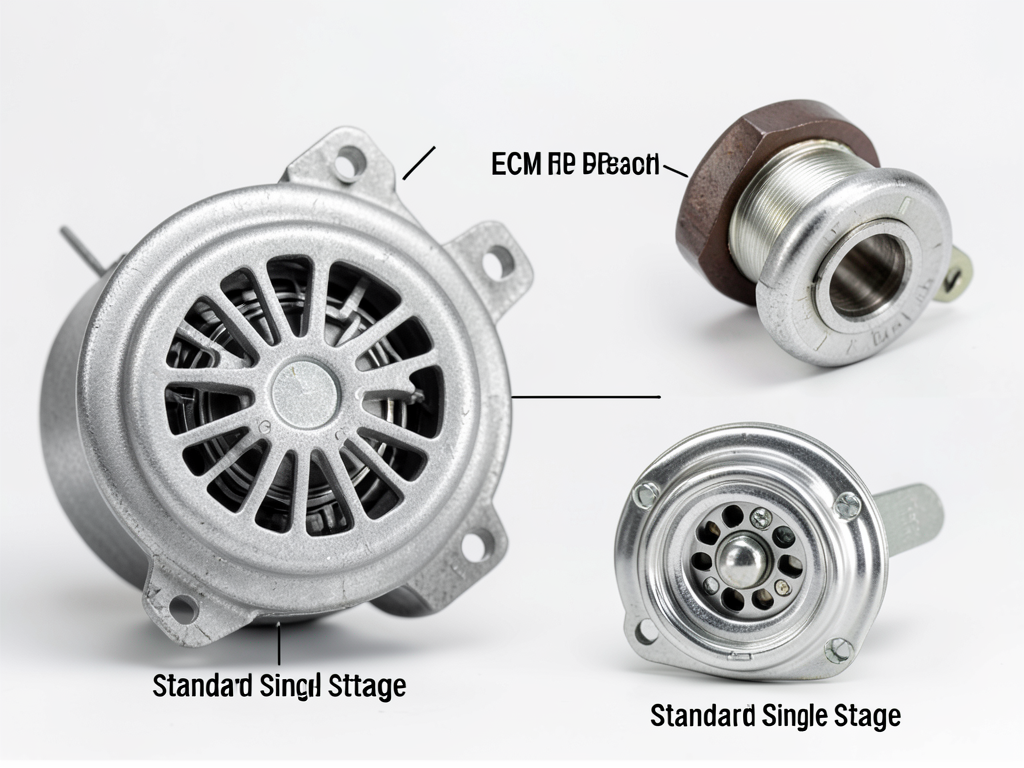
Repair complexity and costs increase with variable-speed technology. The inverter boards and ECM motors require specialized diagnostic tools and training. A simple capacitor replacement on a single-stage unit might cost $150-200, while inverter board repairs can run $400-800. Finding qualified technicians familiar with variable-speed systems in Cherrywood may take longer during peak summer demand. Local AC Repair and Cooling Experts in South Lamar and Barton Hills.
Compatibility issues can arise with existing thermostats and zoning systems. Variable-speed units require communicating thermostats that can cost $300-500 versus $100-150 for standard models. Older Cherrywood homes with outdated wiring may need electrical upgrades to support the sophisticated controls.
The technology’s complexity means more potential failure points. While single-stage units have proven reliability over decades, variable-speed systems have more electronic components that can fail. In Austin’s lightning-prone climate, power surges can damage inverter boards more easily than simple contactors on single-stage units.
Austin Energy rebates and local incentives for variable-speed units
Austin Energy offers substantial rebates for high-efficiency HVAC equipment through their Home Performance with ENERGY STAR program. Variable-speed units with SEER2 ratings of 18+ qualify for rebates of $300-600 depending on the specific model and installation requirements.
The City of Austin’s ECAD ordinance affects older Cherrywood homes undergoing major renovations. Homes built before 2006 must meet current energy efficiency standards when replacing HVAC equipment. Variable-speed units often make compliance easier because they achieve higher efficiency ratings without requiring extensive ductwork modifications. Emergency Ductwork Repair.
PEC (Pedernales Electric Cooperative) members in the greater Austin area may qualify for additional rebates of $200-400 for variable-speed installations. These utility-specific programs change annually, so checking current offerings before purchasing is essential.
Federal tax credits through 2026 provide 30% of the cost for qualifying high-efficiency HVAC equipment, up to $2,000 maximum. Variable-speed heat pumps with SEER2 ratings above 16 and HSPF ratings above 8.2 typically qualify for the full credit amount.
Technical comparison: Single-stage vs. two-stage vs. variable-speed
| Feature | Single-Stage | Two-Stage | Variable-Speed |
|---|---|---|---|
| SEER2 Rating Range | 14-16 | 17-20 | 18-26 |
| Noise Level (dB) | 70-80 | 65-75 | 40-60 |
| Compressor Type | On/Off | High/Low | Inverter-driven |
| Dehumidification | Basic | Moderate | Superior |
| Price Symbol | $$ | $$$ | $$$$ |
Single-stage units operate at full capacity whenever running, cycling on and off to maintain temperature. This creates temperature swings of 3-5 degrees and limited moisture removal. Two-stage units add a low-capacity setting that runs 60-70% of the time, improving efficiency and comfort over single-stage but still cycling between two fixed speeds.
Variable-speed units continuously adjust between 25-100% capacity in 1% increments. This allows them to match cooling output precisely to home demand, running longer cycles at lower speeds that maximize efficiency and comfort. The technology particularly benefits Cherrywood homes where original ductwork may not support the high airflow demands of single-stage units.
Maintenance requirements and longevity in Austin’s climate
Variable-speed units require more frequent maintenance to protect their sophisticated electronics. Annual professional maintenance should include checking inverter board connections, testing capacitor health with specialized meters, and verifying refrigerant charge with digital gauges rather than simple manifold sets. Fast and Professional Furnace Repair in Georgetown During the Winter Chill.
The extreme heat in Austin accelerates wear on all HVAC components. Variable-speed compressors run cooler than single-stage units because they don’t operate at full capacity constantly. This can extend compressor life to 15-20 years versus 12-15 years for single-stage units in our climate.
Electrical surges from summer thunderstorms pose particular risks to variable-speed electronics. Installing whole-house surge protection specifically designed for HVAC equipment costs $300-500 but can prevent expensive inverter board replacements that run $800-1,200.
Filter maintenance becomes more critical with variable-speed units. The longer run times mean filters capture more particulates, requiring changes every 30-60 days instead of every 90 days. High-efficiency HEPA or MERV 13+ filters may be necessary to protect the sophisticated blower motors from dust accumulation.
Making the decision: When variable-speed makes sense for Cherrywood renovations
Variable-speed technology proves most valuable for Cherrywood homes over 2,000 square feet or those with multiple stories. The ability to precisely match cooling output to varying demands across different home zones justifies the higher cost when comfort and efficiency matter most.
Older Cherrywood homes with original ductwork benefit significantly from variable-speed units’ ability to operate at lower airflow rates. This prevents the whistling, rattling, and pressure imbalances common when undersized ducts are forced to handle the high airflow of single-stage units.
Noise-sensitive households should strongly consider variable-speed technology. The whisper-quiet operation particularly benefits homes near busy streets like Manor Road or those with bedrooms adjacent to outdoor equipment pads.
However, budget-conscious renovations on smaller Cherrywood homes may find better value in quality two-stage units. These provide many variable-speed benefits including improved efficiency and comfort at a lower price point of $5,000-8,000 installed.
The decision ultimately depends on your renovation budget, home size, and comfort priorities. For whole-house renovations where HVAC represents a significant investment, variable-speed technology often delivers the best long-term value through energy savings, comfort, and equipment longevity.
Frequently Asked Questions
How much can I save on energy bills with a variable-speed AC unit?
Variable-speed units typically reduce cooling costs by 30-40% compared to single-stage units in Austin’s climate. For a typical Cherrywood home, this translates to $30-50 monthly savings during peak cooling season, or $360-600 annually.
Will my old thermostat work with a variable-speed unit?
No. Variable-speed units require communicating thermostats that can handle the sophisticated controls and diagnostics. Standard thermostats cannot properly control inverter-driven compressors and may cause system damage if used.
How long do variable-speed AC units typically last in Austin?
With proper maintenance, variable-speed units last 15-20 years in Austin’s climate. The cooler operating temperatures and reduced cycling stress extend compressor life compared to single-stage units that typically last 12-15 years locally.
Are variable-speed units worth the extra cost for a small Cherrywood home?
For homes under 1,500 square feet, the benefits may not justify the higher cost. Two-stage units often provide similar comfort improvements at a lower price point. Consider your budget and whether the noise reduction and efficiency gains matter most for your situation.
What maintenance is different for variable-speed versus standard units?
Variable-speed units require checking inverter board connections, testing electronic components with specialized meters, and more frequent filter changes due to longer run times. Annual professional maintenance should include these additional diagnostics beyond standard cleaning and refrigerant checks.
[IMAGE_PLACEHOLDER_3>
Ready to upgrade your Cherrywood home’s cooling system?
Call (737) 316-0777 today to schedule your free consultation. Our experienced technicians will evaluate your home’s specific needs and help you decide whether variable-speed technology makes sense for your renovation budget and comfort goals.
Don’t wait until summer heat waves hit. The best installation slots fill quickly during spring months. Pick up the phone and call (737) 316-0777 before the next 100-degree day arrives.
{
“@context”: “https://schema.org”,
“@type”: “BlogPosting”,
“headline”: “The pros and cons of variable-speed AC units for Cherrywood renovations”,
“description”: “Should you invest in variable-speed AC for your Cherrywood home? Compare comfort, efficiency, and costs specific to Austin’s climate and rebates.”,
“wordCount”: 1536,
“datePublished”: “2026-03-12T09:44:00.000Z”,
“dateModified”: “2026-03-12T09:44:00.000Z”,
“inLanguage”: “en-US”,
“mainEntityOfPage”: {
“@type”: “WebPage”,
“@id”: “https://allprohvacaustin.com”
},
“publisher”: {
“@type”: “LocalBusiness”,
“name”: “All Pro HVAC Austin”,
“url”: “https://allprohvacaustin.com”
},
“author”: {
“@type”: “Organization”,
“name”: “All Pro HVAC Austin”,
“url”: “https://allprohvacaustin.com”
},
“image”: {
“@type”: “ImageObject”,
“url”: “https://allprohvacaustin.com/wp-content/uploads/2026/03/the-pros-and-cons-of-variable-speed-ac-units-for-c-1.png”
}
}
{
“@context”: “https://schema.org”,
“@type”: “HVACBusiness”,
“name”: “All Pro HVAC Austin”,
“url”: “https://allprohvacaustin.com”,
“address”: {
“@type”: “PostalAddress”,
“addressLocality”: “Austin”
},
“areaServed”: {
“@type”: “City”,
“name”: “Austin”
}
}
{
“@context”: “https://schema.org”,
“@type”: “FAQPage”,
“mainEntity”: [
{
“@type”: “Question”,
“name”: “How much can I save on energy bills with a variable-speed AC unit?”,
“acceptedAnswer”: {
“@type”: “Answer”,
“text”: “Variable-speed units typically reduce cooling costs by 30-40% compared to single-stage units in Austin’s climate. For a typical Cherrywood home, this translates to $30-50 monthly savings during peak cooling season, or $360-600 annually.”
}
},
{
“@type”: “Question”,
“name”: “Will my old thermostat work with a variable-speed unit?”,
“acceptedAnswer”: {
“@type”: “Answer”,
“text”: “No. Variable-speed units require communicating thermostats that can handle the sophisticated controls and diagnostics. Standard thermostats cannot properly control inverter-driven compressors and may cause system damage if used.”
}
},
{
“@type”: “Question”,
“name”: “How long do variable-speed AC units typically last in Austin?”,
“acceptedAnswer”: {
“@type”: “Answer”,
“text”: “With proper maintenance, variable-speed units last 15-20 years in Austin’s climate. The cooler operating temperatures and reduced cycling stress extend compressor life compared to single-stage units that typically last 12-15 years locally.”
}
},
{
“@type”: “Question”,
“name”: “Are variable-speed units worth the extra cost for a small Cherrywood home?”,
“acceptedAnswer”: {
“@type”: “Answer”,
“text”: “For homes under 1,500 square feet, the benefits may not justify the higher cost. Two-stage units often provide similar comfort improvements at a lower price point. Consider your budget and whether the noise reduction and efficiency gains matter most for your situation.”
}
},
{
“@type”: “Question”,
“name”: “What maintenance is different for variable-speed versus standard units?”,
“acceptedAnswer”: {
“@type”: “Answer”,
“text”: “Variable-speed units require checking inverter board connections, testing electronic components with specialized meters, and more frequent filter changes due to longer run times. Annual professional maintenance should include these additional diagnostics beyond standard cleaning and refrigerant checks.”
}
},
{
“@type”: “Question”,
“name”: “Ready to upgrade your Cherrywood home’s cooling system?”,
“acceptedAnswer”: {
“@type”: “Answer”,
“text”: “Call (737) 316-0777 today to schedule your free consultation. Our experienced technicians will evaluate your home’s specific needs and help you decide whether variable-speed technology makes sense for your renovation budget and comfort goals.”
}
}
]
}
{
“@context”: “https://schema.org”,
“@type”: “BreadcrumbList”,
“itemListElement”: [
{
“@type”: “ListItem”,
“position”: 1,
“name”: “Home”,
“item”: “https://allprohvacaustin.com”
},
{
“@type”: “ListItem”,
“position”: 2,
“name”: “Blog”,
“item”: “https://allprohvacaustin.com/blog”
},
{
“@type”: “ListItem”,
“position”: 3,
“name”: “The pros and cons of variable-speed AC units for Cherrywood renovations”
}
]
}
{
“@context”: “https://schema.org”,
“@type”: “Service”,
“serviceType”: “HVAC”,
“provider”: {
“@type”: “LocalBusiness”,
“name”: “All Pro HVAC Austin”,
“url”: “https://allprohvacaustin.com”
},
“areaServed”: {
“@type”: “City”,
“name”: “Austin”
},
“description”: “Should you invest in variable-speed AC for your Cherrywood home? Compare comfort, efficiency, and costs specific to Austin’s climate and rebates.”
}