
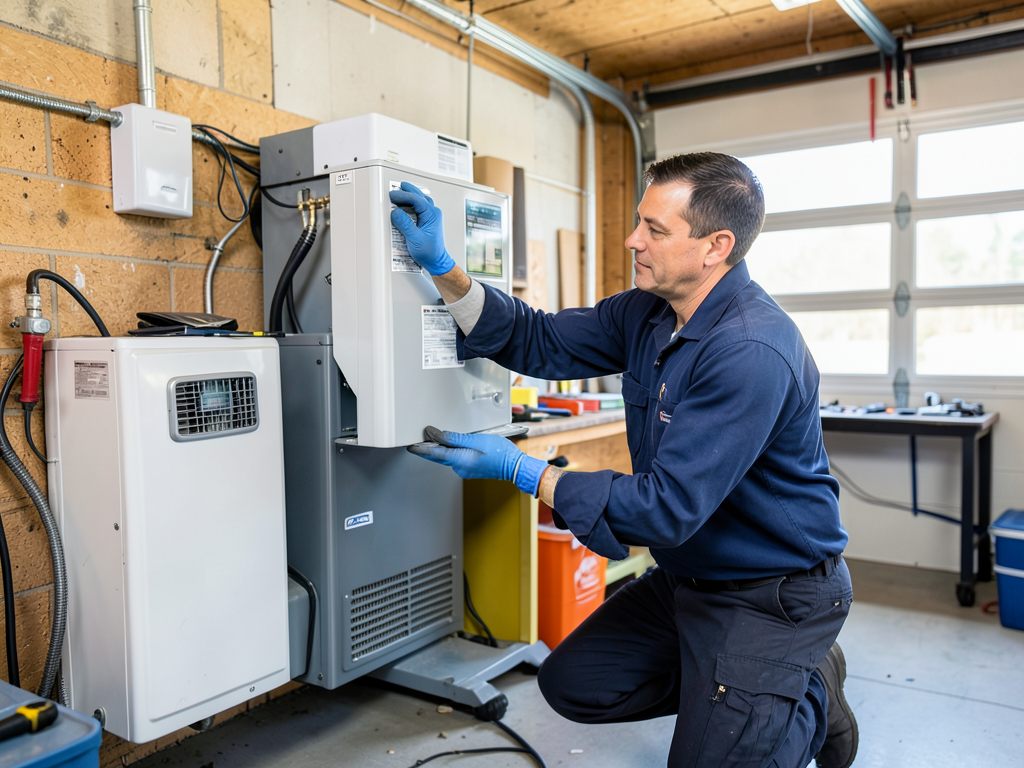
Keeping Your Garage Workshop Cool Without Breaking the Bank in Cedar Park
Your garage workshop in Cedar Park becomes an oven during Texas summers. The concrete floor radiates heat upward while the metal roof traps temperatures that climb past 110 degrees by afternoon. You need a solution that works with Austin’s brutal humidity and intense sun without draining your wallet.
Most Cedar Park homes were not built with workshop cooling in mind. Standard garage construction leaves you with uninsulated walls a single-layer metal door and minimal ventilation. The combination creates what HVAC technicians call a thermal envelope failure. Heat constantly flows in faster than any cooling system can remove it.
The good news is you have options. From simple insulation upgrades that cost under $200 to high-efficiency mini-split systems that pay for themselves in energy savings you can find a solution that fits your budget and cooling needs. Let’s explore what actually works in Cedar Park’s climate.
Understanding Your Garage’s Cooling Challenge
Cedar Park’s climate creates unique cooling problems. Summer temperatures regularly exceed 100 degrees for weeks. The humidity stays above 60 percent most days. Your garage absorbs heat through three main pathways.
- Solar radiation through the roof and door
- Conduction through uninsulated walls
- Infiltration through gaps and poor seals
Most garages have R-values around 3-5 in the walls and door. Compare that to your home’s exterior walls at R-13 or higher. This massive difference explains why your workshop feels like a sauna while your living room stays comfortable.
The west-facing garages in neighborhoods like North Creek and Buttercup Creek suffer worst. Afternoon sun beats directly on the garage door raising interior temperatures by 15-20 degrees compared to east-facing units.
Passive Cooling Solutions First
Before investing in expensive cooling equipment tackle the heat at its source. These passive solutions cost less and reduce the cooling load your active systems must handle. Modern HVAC Solutions for Historic Homes in Tarrytown and Old West Austin.
Garage Door Insulation
Installing an R-8 insulation kit on your garage door costs $150-300 and cuts heat gain by 30 percent. The kits include foam panels that press-fit between door sections. You will notice cooler temperatures within hours of installation.
For Cedar Park’s intense sun choose kits with reflective foil facing outward. This bounces infrared radiation before it enters your workspace. Installation takes about 2-3 hours for most standard doors.
Wall Insulation Upgrades
Most garage walls have no insulation at all. Adding R-13 fiberglass batts costs $0.50-1.00 per square foot. For a typical two-car garage you will spend $200-400 on materials.
Wear gloves and a dust mask when installing fiberglass. Cut batts to fit between studs then secure with wire supports. The improvement in comfort is immediate and dramatic.
Radiant Barrier Installation
Radiant barriers reflect up to 97 percent of radiant heat. Installing foil-faced insulation under your roof deck costs $0.25-0.50 per square foot. For most garages this means $100-200 in materials.. Read more about Why Your Radiant Barrier Might Be Making Your AC Work Harder in Buda.
Stapling the barrier perpendicular to rafters creates air gaps that enhance performance. The barrier works best when combined with ridge vents that allow hot air to escape upward.
Active Cooling Options
Once you have maximized passive cooling active systems can maintain comfortable temperatures. Each option has different costs efficiency levels and installation requirements.
Ductless Mini-Split Systems
Mini-splits provide the best balance of efficiency and cooling power for garage workshops. A 9000 BTU unit costs $800-1200 for the equipment plus $500-800 for professional installation. Fast and Professional Furnace Repair in Georgetown During the Winter Chill.
These systems operate at SEER2 ratings up to 22 meaning they use 30-40 percent less electricity than window units. The indoor unit mounts on the wall while the outdoor condenser sits on the ground nearby.
For Cedar Park’s humidity choose a unit with dehumidification mode. This removes moisture without overcooling preventing that clammy feeling that makes workshops uncomfortable.
Window Air Conditioners
Window units cost $250-600 and install in an afternoon. An 8000 BTU unit handles most one-car garages. Two-car spaces need 12000-15000 BTU.
The main drawback is efficiency. Window units typically operate at SEER2 10-12 using 50 percent more electricity than mini-splits. They also block natural light and create security concerns.
For occasional use window units make sense. For daily workshop sessions the higher operating costs add up quickly.
Portable Air Conditioners
Portable ACs seem convenient but struggle in Texas heat. Most units have 8000-12000 BTU capacity and cost $400-700.
The exhaust hose must vent outside through a window or wall opening. Single-hose models pull conditioned air from your garage to cool the condenser creating negative pressure that draws hot air back in.
Expect these units to run constantly during peak heat using significant electricity while providing marginal cooling improvement.
Cost Comparison Table
| Solution | Initial Cost | Monthly Operating Cost | Expected Lifespan | Best For |
|---|---|---|---|---|
| Garage Door Insulation Kit | $150-300 | $0 | 10-15 years | Budget improvements |
| Wall Insulation Upgrade | $200-400 | $0 | Lifetime of building | Maximum heat reduction |
| Radiant Barrier | $100-200 | $0 | 20+ years | Roof heat gain |
| Window AC Unit | $250-600 | $40-80 | 5-7 years | Occasional use |
| Portable AC | $400-700 | $50-90 | 3-5 years | Temporary solutions |
| Ductless Mini-Split | $1300-2000 | $25-45 | 15-20 years | Daily workshop use |
DIY Installation Tips
Many garage cooling improvements work as weekend projects. Here is what you need to know before starting.
Safety First
Always turn off power at the breaker before working on electrical systems. Use proper safety equipment including gloves eye protection and dust masks when handling insulation.
For electrical work Texas law requires a licensed electrician for new circuits. You can replace existing outlets and switches yourself but do not add new dedicated circuits without permits.
Measuring for Equipment
Calculate your garage’s cooling load using this formula: Length x Width x Height x 4 = BTU requirement. For a 20x20x10 garage that is 16000 BTU minimum.
Add 20 percent for Cedar Park’s intense heat. Your 16000 BTU garage actually needs 19200 BTU capacity. Round up to the next standard size 24000 BTU for this example.
Mounting Considerations
Wall-mounted mini-splits need solid backing. Locate studs with a stud finder then mount brackets into at least two studs. The indoor unit should be at least 6 feet high and away from direct sunlight.
Outdoor condensers need level pads and 12 inches of clearance on all sides. Place them where condensate will not create puddles or ice in winter.
Professional Installation Benefits
While DIY saves money upfront professional installation offers advantages that pay off long-term.
Proper Sizing
HVAC technicians perform Manual J calculations that account for your specific garage’s construction sun exposure and local climate. This prevents buying undersized equipment that runs constantly or oversized units that short-cycle. Local AC Repair and Cooling Experts in South Lamar and Barton Hills.
Short cycling reduces efficiency and equipment life. A properly sized system runs longer cycles at optimal efficiency using less electricity while providing better comfort.
Code Compliance
Texas requires permits for new HVAC installations. Licensed contractors pull permits schedule inspections and ensure work meets City of Cedar Park and Travis County codes.
Non-compliant work can void warranties and create problems when selling your home. Professional installation includes documentation that proves your system meets all requirements.
Warranty Protection
Most manufacturers void warranties on self-installed equipment. Professional installation includes labor warranties of 1-5 years. If something fails you are covered without additional expense.
Maintenance Requirements
All cooling systems need regular maintenance to operate efficiently. Neglecting maintenance increases energy costs and shortens equipment life.
Filter Changes
Change or clean filters every 30-60 days. Dirty filters reduce airflow forcing systems to work harder and use more electricity. Set calendar reminders or use smart thermostats that track filter life.
Coil Cleaning
Outdoor condenser coils collect dust and debris. Clean them annually with a garden hose on gentle spray. Remove leaves and grass clippings from around the unit to maintain proper airflow.
Drain Line Maintenance
Condensate drains can clog with algae and debris. Pour a cup of white vinegar through the drain line every few months to prevent buildup. Clogged drains cause water damage and system shutdowns.
Energy Efficiency Tips
Maximize your cooling investment with these efficiency strategies.
Smart Thermostats
Install a smart thermostat for $100-200. These devices learn your schedule and adjust temperatures automatically. Many offer remote control via smartphone apps.
Set temperatures higher when you are not using the workshop. Each degree increase saves about 3 percent on cooling costs.
Timing Usage
Run cooling systems during off-peak hours when possible. Many Texas utilities offer time-of-use rates with lower costs overnight and on weekends.
Pre-cool your garage before intense work sessions. This reduces the load on your system during the hottest parts of the day.
Sealing Air Leaks
Weatherstrip doors and windows to prevent conditioned air from escaping. Use expanding foam to seal gaps around pipes and wires entering the garage.
Check weatherstripping annually and replace when cracked or compressed. Even small gaps add up to significant energy loss.
Special Considerations for Cedar Park
Cedar Park’s specific conditions affect cooling system performance and longevity.
Humidity Management
Austin’s humidity creates unique challenges. Standard cooling removes moisture as a byproduct but in extremely humid conditions you need dedicated dehumidification.
Look for systems with dry mode or standalone dehumidifiers. These maintain comfort without overcooling which saves energy and extends equipment life.
Soil Movement
Cedar Park’s expansive clay soil shifts with moisture changes. This movement can stress outdoor condenser pads and refrigerant lines.
Install condensers on reinforced concrete pads with proper anchoring. Check alignment annually and adjust as needed to prevent line stress.
Power Quality
Summer thunderstorms and grid fluctuations affect electrical equipment. Install surge protectors on all cooling systems to prevent damage from power spikes.
Consider whole-house surge protection for comprehensive coverage. These devices protect all your electronics from electrical damage.
Cost-Benefit Analysis
Let’s examine the financial impact of different cooling approaches over five years.
| Scenario | Initial Investment | 5-Year Operating Cost | Total 5-Year Cost | Notes |
|---|---|---|---|---|
| DIY Insulation Only | $400 | $0 | $400 | Moderate comfort improvement |
| Window AC + Insulation | $800 | $2400 | $3200 | Good for occasional use |
| Portable AC + Insulation | $900 | $2700 | $3600 | Least efficient option |
| Mini-Split + Insulation | $1700 | $1350 | $3050 | Best long-term value |
The mini-split option costs more upfront but saves $1150 over five years compared to window units. The efficiency difference compounds over time.
Permitting and Regulations
Before installing any cooling system understand local requirements.
City of Cedar Park
The city requires permits for new HVAC installations. This includes mini-splits window units requiring wall modifications and new electrical circuits.
Permit fees range from $50-200 depending on project scope. Inspections ensure work meets current building codes and safety standards.
HOA Restrictions
Many Cedar Park neighborhoods have HOA rules about exterior equipment placement. Some require units to be screened or placed in specific locations.
Check your HOA covenants before purchasing equipment. Violations can result in fines or forced removal of non-compliant installations.
Electrical Requirements
Most cooling systems need dedicated circuits. Mini-splits typically require 20-amp circuits. Window units might share circuits if total loads stay under 80 percent of breaker capacity.
Overloaded circuits create fire hazards. When in doubt install new dedicated circuits with proper gauge wiring.
Making Your Decision
Choose your cooling solution based on these factors.
- How often you use the workshop
- Your budget for initial and ongoing costs
- DIY skill level and available time
- Local climate severity
- Long-term property plans
For daily workshop use in Cedar Park’s intense heat the mini-split plus insulation combination provides the best comfort and efficiency. The higher upfront cost pays for itself through lower operating costs within 2-3 years.
For occasional hobby use window units with basic insulation might suffice. Just understand you will pay more in electricity over time.
Frequently Asked Questions
How much does it cost to cool a garage workshop in Cedar Park?
Costs range from $400 for basic insulation to $2000+ for complete mini-split systems with professional installation. Monthly operating costs vary from $0 insulation only to $45+ for high-efficiency cooling systems.
Can I install a mini-split system myself?
You can handle the indoor and outdoor unit mounting but Texas law requires licensed HVAC contractors for refrigerant line connections and system charging. DIY installation also voids most manufacturer warranties.
What size air conditioner do I need for my garage?
Calculate 4 BTU per cubic foot of space then add 20 percent for Texas heat. A 20x20x10 garage needs about 19000 BTU minimum. Round up to the next standard size 24000 BTU for this example.
Will cooling my garage increase my property taxes?
Adding permanent HVAC can trigger a property tax reassessment in some jurisdictions. The increase is usually minimal compared to the comfort and utility benefits.
How long do garage cooling systems last in Texas heat?
Quality mini-splits last 15-20 years with proper maintenance. Window units typically last 5-7 years. Regular cleaning and timely repairs extend equipment life significantly. EPA Energy Star calculator.
Next Steps
Ready to make your garage workshop comfortable year-round? Start with a simple assessment of your current situation.
Check your garage door for insulation. If it feels hot to touch on sunny days you need an upgrade. Measure your space to determine cooling capacity requirements. Then decide whether DIY or professional installation fits your skills and timeline.
Don’t let another summer pass with an unusable workshop. The right cooling solution transforms your garage from a heat trap into a productive workspace you will enjoy using any time of year.
Call (737) 316-0777 today to schedule your inspection. Our technicians will evaluate your garage’s specific needs and recommend solutions that fit your budget and cooling requirements. We serve all of Cedar Park and surrounding communities with fast professional service.
Pick up the phone and call (737) 316-0777 before the next heat wave hits. Your comfortable workshop is just one call away. For more information, visit U.S. Department of Energy cooling guide.
{
“@context”: “https://schema.org”,
“@type”: “BlogPosting”,
“headline”: “Keeping Your Garage Workshop Cool Without Breaking the Bank in Cedar Park”,
“description”: “Beat the Texas heat in your Cedar Park garage workshop with affordable cooling solutions. Learn DIY options mini-split systems and energy-saving tips that work in our climate.”,
“wordCount”: 2287,
“datePublished”: “2026-04-30T12:33:00.000Z”,
“dateModified”: “2026-04-30T12:33:00.000Z”,
“inLanguage”: “en-US”,
“mainEntityOfPage”: {
“@type”: “WebPage”,
“@id”: “https://allprohvacaustin.com”
},
“publisher”: {
“@type”: “LocalBusiness”,
“name”: “All Pro HVAC Austin”,
“url”: “https://allprohvacaustin.com”
},
“author”: {
“@type”: “Organization”,
“name”: “All Pro HVAC Austin”,
“url”: “https://allprohvacaustin.com”
},
“image”: {
“@type”: “ImageObject”,
“url”: “https://allprohvacaustin.com/wp-content/uploads/2026/03/keeping-your-garage-workshop-cool-without-breaking-1.png”
}
}
{
“@context”: “https://schema.org”,
“@type”: “HVACBusiness”,
“name”: “All Pro HVAC Austin”,
“url”: “https://allprohvacaustin.com”,
“address”: {
“@type”: “PostalAddress”,
“addressLocality”: “Austin”
},
“areaServed”: {
“@type”: “City”,
“name”: “Austin”
}
}
{
“@context”: “https://schema.org”,
“@type”: “FAQPage”,
“mainEntity”: [
{
“@type”: “Question”,
“name”: “How much does it cost to cool a garage workshop in Cedar Park?”,
“acceptedAnswer”: {
“@type”: “Answer”,
“text”: “Costs range from $400 for basic insulation to $2000+ for complete mini-split systems with professional installation. Monthly operating costs vary from $0 insulation only to $45+ for high-efficiency cooling systems.”
}
},
{
“@type”: “Question”,
“name”: “Can I install a mini-split system myself?”,
“acceptedAnswer”: {
“@type”: “Answer”,
“text”: “You can handle the indoor and outdoor unit mounting but Texas law requires licensed HVAC contractors for refrigerant line connections and system charging. DIY installation also voids most manufacturer warranties.”
}
},
{
“@type”: “Question”,
“name”: “What size air conditioner do I need for my garage?”,
“acceptedAnswer”: {
“@type”: “Answer”,
“text”: “Calculate 4 BTU per cubic foot of space then add 20 percent for Texas heat. A 20x20x10 garage needs about 19000 BTU minimum. Round up to the next standard size 24000 BTU for this example.”
}
},
{
“@type”: “Question”,
“name”: “Will cooling my garage increase my property taxes?”,
“acceptedAnswer”: {
“@type”: “Answer”,
“text”: “Adding permanent HVAC can trigger a property tax reassessment in some jurisdictions. The increase is usually minimal compared to the comfort and utility benefits.”
}
},
{
“@type”: “Question”,
“name”: “How long do garage cooling systems last in Texas heat?”,
“acceptedAnswer”: {
“@type”: “Answer”,
“text”: “Quality mini-splits last 15-20 years with proper maintenance. Window units typically last 5-7 years. Regular cleaning and timely repairs extend equipment life significantly. EPA Energy Star calculator.”
}
}
]
}
{
“@context”: “https://schema.org”,
“@type”: “BreadcrumbList”,
“itemListElement”: [
{
“@type”: “ListItem”,
“position”: 1,
“name”: “Home”,
“item”: “https://allprohvacaustin.com”
},
{
“@type”: “ListItem”,
“position”: 2,
“name”: “Blog”,
“item”: “https://allprohvacaustin.com/blog”
},
{
“@type”: “ListItem”,
“position”: 3,
“name”: “Keeping Your Garage Workshop Cool Without Breaking the Bank in Cedar Park”
}
]
}
{
“@context”: “https://schema.org”,
“@type”: “Service”,
“serviceType”: “HVAC”,
“provider”: {
“@type”: “LocalBusiness”,
“name”: “All Pro HVAC Austin”,
“url”: “https://allprohvacaustin.com”
},
“areaServed”: {
“@type”: “City”,
“name”: “Austin”
},
“description”: “Beat the Texas heat in your Cedar Park garage workshop with affordable cooling solutions. Learn DIY options mini-split systems and energy-saving tips that work in our climate.”
}