
How to tell if your AC unit is the wrong size for your Brushy Creek home
Living in Brushy Creek means dealing with Central Texas heat that pushes your AC system to its limits. If your air conditioner runs constantly but never quite cools your home to the set temperature, you might have a sizing problem. An undersized AC unit works overtime trying to cool your space, leading to higher energy bills, uncomfortable humidity levels, and premature system failure. Understanding the warning signs can help you catch this issue before your compressor burns out on the hottest day of summer. Air Conditioning Contractors of America.
The right AC size depends on your home’s specific characteristics, not just square footage. Factors like your home’s orientation, window placement, insulation quality, and even the number of occupants all affect cooling load. Brushy Creek homes built in different eras face unique challenges – from mid-century homes with minimal insulation to newer constructions with large, west-facing windows that create massive afternoon heat gain. When your AC unit is too small for these demands, it can’t keep up with the cooling load, leaving you uncomfortable and wasting energy.
5 Warning Signs Your AC Unit is Too Small
Recognizing these symptoms early can save you from costly repairs and uncomfortable summers. Here are the five most common indicators that your AC system is undersized for your Brushy Creek home. EPA refrigerant regulations.
The Unit Runs Constantly Without Reaching Set Temperature

A properly sized AC unit should cycle on and off throughout the day, running longer during peak heat but still achieving your thermostat setting. If your system runs non-stop and your home never reaches the desired temperature – especially during mild weather – that’s a red flag. In Brushy Creek, where summer temperatures regularly exceed 95°F, an undersized unit will struggle to maintain even 78°F indoors when it’s 100°F outside.. Read more about Why moving your thermostat could fix the hot spots in your Zilker home.
Uneven Cooling Creates Hot Spots Throughout Your Home
Rooms farthest from your air handler or those with large windows may feel significantly warmer than others. This happens because your undersized system can’t deliver enough cooled air to every space simultaneously. You might notice your master bedroom stays 5-8 degrees warmer than your living room, or that converted garage spaces become unusable during summer months. This temperature imbalance is particularly common in Brushy Creek homes with open floor plans where air circulation becomes a challenge.
High Indoor Humidity Creates That “Sticky” Feeling
Air conditioners don’t just cool – they dehumidify. When your AC runs long enough cycles, it removes moisture from the air. An undersized unit runs shorter cycles more frequently, which means it never runs long enough to effectively remove humidity. You might notice condensation on windows, a musty smell, or that clammy feeling even when the thermostat reads a comfortable temperature. Brushy Creek’s high humidity makes this problem worse, as your AC has to work harder to remove moisture while trying to cool your home.. Read more about Managing humidity in your walk-in closet to prevent mildew in Clarksville homes.
Unexpectedly High Electricity Bills Despite Minimal Cooling
If your energy bills spike during summer but your home still feels warm, your AC is working inefficiently. An undersized unit consumes nearly as much electricity as a properly sized one while delivering far less cooling. You might see your kWh usage jump 40-60% compared to similar homes, yet still need ceiling fans running constantly to feel comfortable. This energy waste hits Brushy Creek homeowners hard during those 100°F+ streaks when AC systems work hardest.
The System is Relatively New But Already Struggling
Unlike aging systems that lose efficiency over time, an undersized unit shows problems from day one. If your 2-3 year old AC can’t keep up with cooling demands that similar-aged homes handle easily, sizing is likely the issue. This is especially telling if you’ve had multiple service calls for the same symptoms – constantly running, unable to reach set point, or freezing up – only to be told everything is “working normally.”
The Science of Sizing: Why Square Footage Isn’t Enough
Many homeowners and even some contractors still use the outdated “500 square feet per ton” rule of thumb. This method fails because it ignores critical factors that dramatically affect cooling load. The industry-standard Manual J Load Calculation considers multiple variables to determine the exact cooling capacity your home needs.
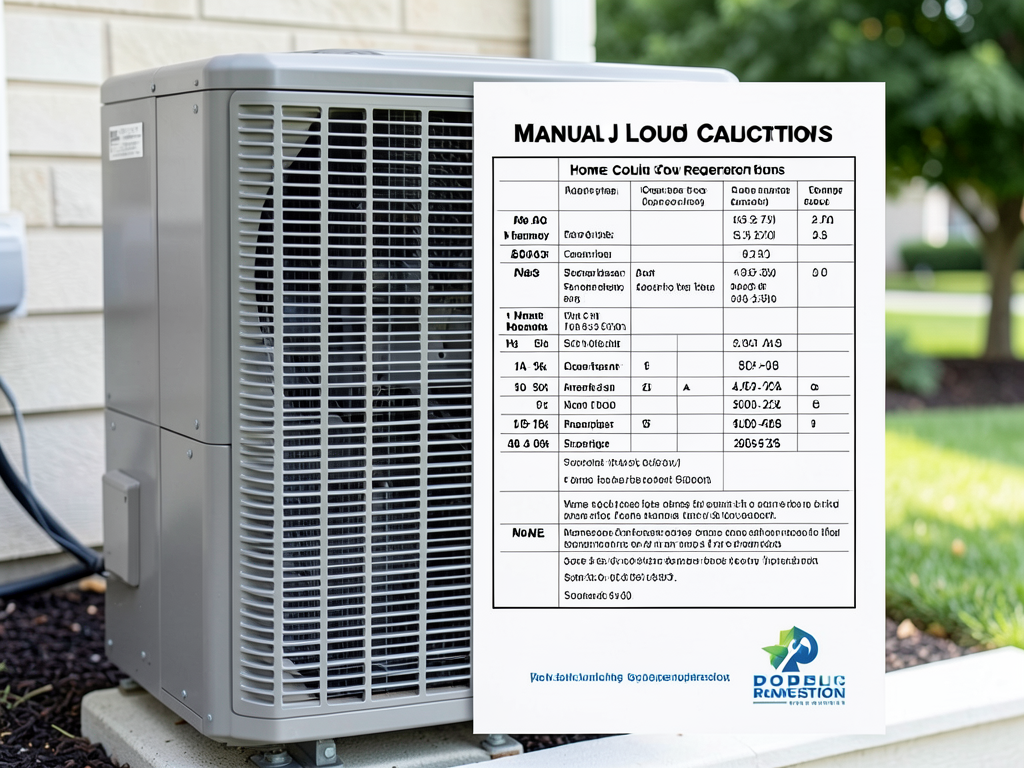
Manual J calculations factor in your home’s orientation – a west-facing home in Brushy Creek absorbs significantly more afternoon heat than a north-facing one. Window specifications matter tremendously: double-pane, low-E windows reject heat differently than single-pane windows from the 1970s. Ceiling height affects volume – a 10-foot ceiling room requires 25% more cooling than an 8-foot ceiling room of the same footprint. Even factors like the number of occupants, kitchen appliances, and electronics generate heat that your AC must overcome.
According to the Air Conditioning Contractors of America (ACCA), Manual J calculations should be performed for every new installation or major system change. This standard, outlined in Manual J Residential Load Calculation, ensures your system is neither oversized nor undersized. An oversized unit short-cycles and wastes energy, while an undersized unit runs constantly and can’t maintain comfort – both scenarios cost you money and comfort.. Read more about What Austin families should know about the transition away from R-410A refrigerant.
The Hidden Costs of an Undersized AC System
Beyond uncomfortable temperatures and high bills, an undersized AC unit creates several expensive problems that many homeowners don’t anticipate. Understanding these risks helps justify the investment in proper sizing.
Compressor strain is the most critical issue. Your AC’s compressor is designed to operate within specific temperature and pressure ranges. When an undersized unit runs constantly trying to meet cooling demands, it operates outside these optimal parameters. The compressor overheats, oil breaks down, and electrical components fail prematurely. In Central Texas heat, this strain can cut a compressor’s 15-20 year lifespan to just 5-7 years.
Evaporator coil freezing is another common problem. When an undersized unit runs too long, the evaporator coil can get so cold that condensation freezes on its surface. This ice buildup restricts airflow, forcing the system to work even harder until it shuts down completely. You might notice reduced airflow from vents, followed by the system icing over completely – a clear sign of sizing issues compounded by restricted airflow.
Frequent repairs become the norm with undersized systems. Components wear out faster when operating outside design parameters. You might find yourself calling for service multiple times each summer for issues like capacitor failure, contactor wear, or refrigerant leaks. These service calls, combined with the higher electricity costs, often exceed what you’d pay for a properly sized system over the same timeframe. Emergency AC Repair Services for Homes in West Lake Hills.
What to Do If Your AC is Too Small
If you’ve identified the symptoms of an undersized AC unit, you have several options depending on your situation and budget. Not every problem requires complete system replacement – sometimes the issue is airflow rather than capacity.
Ductwork inspection should be your first step. Poor duct design, leaks, or inadequate return air can make a properly sized system appear undersized. A professional assessment using duct blaster testing can identify leaks that reduce your system’s effective capacity by 20-40%. In many Brushy Creek homes, especially older ones, ductwork running through unconditioned attics loses significant cooling to the surrounding space before it ever reaches your rooms. Fast and Professional Furnace Repair in Georgetown During the Winter Chill.
Supplemental cooling offers a targeted solution for specific problem areas. Mini-split heat pumps can cool individual rooms or zones without replacing your entire system. This approach works well for home additions, converted spaces, or rooms with unusual heat gain that the main system can’t handle. Modern mini-splits offer SEER2 ratings up to 28, making them incredibly efficient for spot cooling in Brushy Creek’s climate. Modern HVAC Solutions for Historic Homes in Tarrytown and Old West Austin.
System replacement becomes necessary when your AC is genuinely undersized for your home’s total cooling load. This decision requires a complete Manual J calculation to determine the correct tonnage. Current Austin Energy and Texas rebates can offset $500-2,000 of replacement costs when installing high-efficiency systems. The investment typically pays for itself through lower energy bills within 3-5 years, especially given Brushy Creek’s long cooling season.
Before making any decisions, have a licensed HVAC contractor perform a comprehensive load calculation. This assessment should include measuring your home’s square footage, evaluating insulation levels, checking window specifications, and considering your home’s unique characteristics. The calculation provides the data you need to make an informed decision about repair versus replacement. Local AC Repair and Cooling Experts in South Lamar and Barton Hills.
Protect Your Investment: Professional Assessment Matters
DIY diagnosis of AC sizing issues has limitations. While you can identify symptoms, determining the exact cause requires professional tools and expertise. A proper assessment includes measuring airflow at each vent, checking refrigerant charge, evaluating ductwork integrity, and performing the Manual J calculation. Emergency Ductwork Repair.
Brushy Creek’s specific climate factors into these calculations. Our region’s high humidity means your AC needs adequate dehumidification capacity, not just cooling capacity. The 100+ degree days we experience several times each summer create cooling loads that might not be apparent during milder spring weather. A system that seems adequate in April can fail completely by July without proper sizing.
Consider the age and condition of your current system. If your AC is over 10 years old and showing sizing symptoms, replacement often makes more financial sense than repairs. New systems offer SEER2 ratings up to 26, compared to 10-14 for older units, meaning 40-60% energy savings. When combined with proper sizing, this efficiency gain can dramatically reduce your summer electricity bills.
Don’t wait until your system fails completely. An undersized AC working overtime during a Brushy Creek summer is a ticking time bomb. The stress on components increases daily, and a complete failure often happens on the hottest day when you need cooling most. Early intervention prevents emergency replacements and gives you time to explore all your options.
Frequently Asked Questions
How do I know if my AC is the right size?
A properly sized AC unit cools your home to the set temperature within a reasonable timeframe, cycles on and off rather than running constantly, maintains indoor humidity around 45-55%, and keeps energy bills consistent with similar homes. If you’re experiencing constant running, hot spots, high humidity, or unexpectedly high bills, your system may be undersized.
Can I just add refrigerant to make my AC cool better?
No. Low refrigerant indicates a leak that needs repair, not a symptom of undersizing. Adding refrigerant without fixing leaks is illegal under EPA regulations and won’t solve sizing issues. An undersized AC has inadequate cooling capacity, not inadequate refrigerant charge.
How much does it cost to replace an undersized AC unit?
Replacement costs vary based on home size, system efficiency, and installation complexity. In the Austin area, a proper replacement typically ranges from $4,000 to $12,000. Current rebates through Austin Energy and manufacturer promotions can reduce this cost significantly. A professional load calculation provides accurate sizing recommendations before you invest in replacement.
Take Action Before the Heat Hits
Don’t let another summer pass with an undersized AC system making your Brushy Creek home uncomfortable and expensive to cool. The warning signs are clear: constant running, humidity problems, hot spots, and high bills all point to sizing issues that won’t fix themselves.
Call (737) 316-0777 today to schedule your professional AC assessment. Our NATE-certified technicians will perform a complete Manual J load calculation, inspect your ductwork, and provide honest recommendations about repair versus replacement. We’ll help you understand exactly what your home needs to stay comfortable through the hottest Texas summers.
Pick up the phone and call (737) 316-0777 before the next 100-degree day hits. Your comfort and your wallet will thank you. We serve Brushy Creek and all surrounding Austin communities with prompt, professional HVAC service that gets it right the first time.
{
“@context”: “https://schema.org”,
“@type”: “BlogPosting”,
“headline”: “How to tell if your AC unit is the wrong size for your Brushy Creek home”,
“description”: “Is your AC running constantly or struggling to cool? Learn the 5 signs your unit is too small for your Brushy Creek home and how to fix it before summer hits.”,
“wordCount”: 1984,
“datePublished”: “2026-03-22T10:31:00.000Z”,
“dateModified”: “2026-03-22T10:31:00.000Z”,
“inLanguage”: “en-US”,
“mainEntityOfPage”: {
“@type”: “WebPage”,
“@id”: “https://allprohvacaustin.com”
},
“publisher”: {
“@type”: “LocalBusiness”,
“name”: “All Pro HVAC Austin”,
“url”: “https://allprohvacaustin.com”
},
“author”: {
“@type”: “Organization”,
“name”: “All Pro HVAC Austin”,
“url”: “https://allprohvacaustin.com”
},
“image”: {
“@type”: “ImageObject”,
“url”: “https://allprohvacaustin.com/wp-content/uploads/2026/03/how-to-tell-if-your-ac-unit-is-the-wrong-size-for-1.png”
}
}
{
“@context”: “https://schema.org”,
“@type”: “HVACBusiness”,
“name”: “All Pro HVAC Austin”,
“url”: “https://allprohvacaustin.com”,
“address”: {
“@type”: “PostalAddress”,
“addressLocality”: “Austin”
},
“areaServed”: {
“@type”: “City”,
“name”: “Austin”
}
}
{
“@context”: “https://schema.org”,
“@type”: “FAQPage”,
“mainEntity”: [
{
“@type”: “Question”,
“name”: “How do I know if my AC is the right size?”,
“acceptedAnswer”: {
“@type”: “Answer”,
“text”: “A properly sized AC unit cools your home to the set temperature within a reasonable timeframe, cycles on and off rather than running constantly, maintains indoor humidity around 45-55%, and keeps energy bills consistent with similar homes. If you’re experiencing constant running, hot spots, high humidity, or unexpectedly high bills, your system may be undersized.”
}
},
{
“@type”: “Question”,
“name”: “Can I just add refrigerant to make my AC cool better?”,
“acceptedAnswer”: {
“@type”: “Answer”,
“text”: “No. Low refrigerant indicates a leak that needs repair, not a symptom of undersizing. Adding refrigerant without fixing leaks is illegal under EPA regulations and won’t solve sizing issues. An undersized AC has inadequate cooling capacity, not inadequate refrigerant charge.”
}
},
{
“@type”: “Question”,
“name”: “How much does it cost to replace an undersized AC unit?”,
“acceptedAnswer”: {
“@type”: “Answer”,
“text”: “Replacement costs vary based on home size, system efficiency, and installation complexity. In the Austin area, a proper replacement typically ranges from $4,000 to $12,000. Current rebates through Austin Energy and manufacturer promotions can reduce this cost significantly. A professional load calculation provides accurate sizing recommendations before you invest in replacement.”
}
}
]
}
{
“@context”: “https://schema.org”,
“@type”: “BreadcrumbList”,
“itemListElement”: [
{
“@type”: “ListItem”,
“position”: 1,
“name”: “Home”,
“item”: “https://allprohvacaustin.com”
},
{
“@type”: “ListItem”,
“position”: 2,
“name”: “Blog”,
“item”: “https://allprohvacaustin.com/blog”
},
{
“@type”: “ListItem”,
“position”: 3,
“name”: “How to tell if your AC unit is the wrong size for your Brushy Creek home”
}
]
}
{
“@context”: “https://schema.org”,
“@type”: “Service”,
“serviceType”: “HVAC”,
“provider”: {
“@type”: “LocalBusiness”,
“name”: “All Pro HVAC Austin”,
“url”: “https://allprohvacaustin.com”
},
“areaServed”: {
“@type”: “City”,
“name”: “Austin”
},
“description”: “Is your AC running constantly or struggling to cool? Learn the 5 signs your unit is too small for your Brushy Creek home and how to fix it before summer hits.”
}