
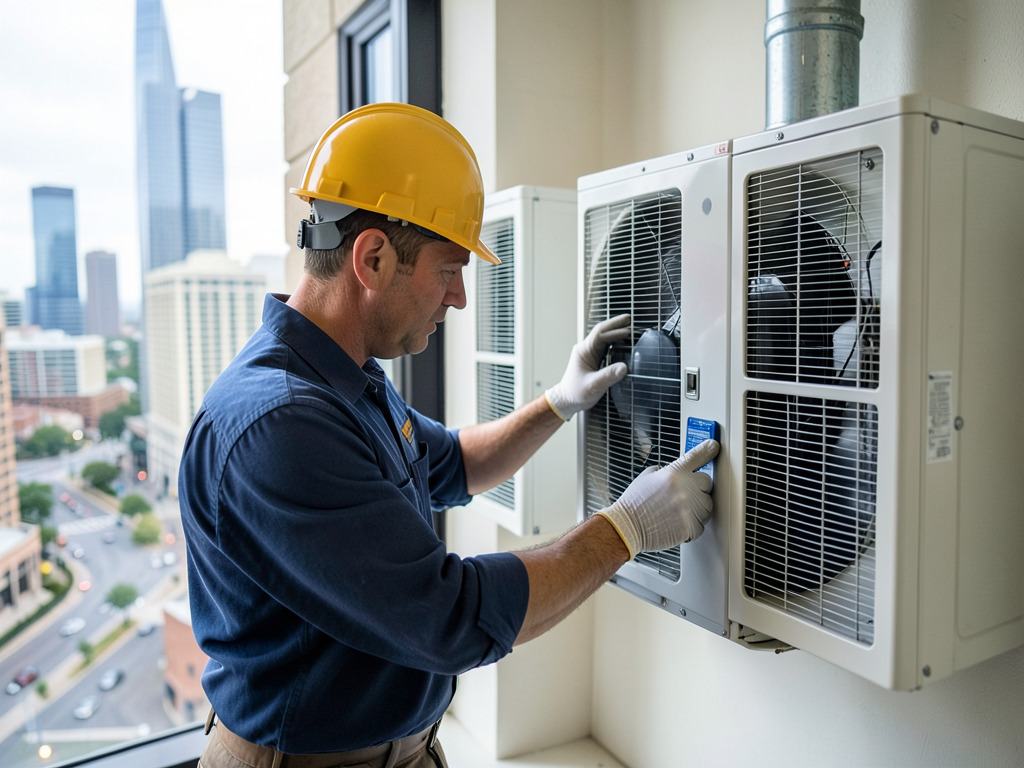
Beating the Urban Heat Island Effect in Downtown Austin High Rise Condos
Downtown Austin’s concrete jungle creates a unique cooling challenge for high-rise condo owners. The urban heat island effect makes the 78701 zip code up to 5 degrees hotter than surrounding areas putting extra strain on already complex HVAC systems. Understanding how this phenomenon affects your building’s cooling performance is the first step to staying comfortable in your downtown Austin condo.. Read more about Integrating Your HVAC with Local Austin Smart Home Systems for Maximum Savings.
Unique Challenges of High-Rise HVAC Systems in 78701
High-rise condos in downtown Austin face cooling challenges that suburban homes never encounter. Your unit likely connects to a chilled water loop or uses a water-source heat pump rather than a standard split system. These systems must combat not only outdoor heat but also heat gain from surrounding buildings asphalt and glass facades that reflect sunlight throughout the day.
The density of downtown development means your HVAC unit works harder than a similar unit in a standalone home. Heat radiates from concrete structures well into the night preventing the temperature drop that helps suburban systems recover. This constant thermal load requires specialized maintenance and sometimes system upgrades to maintain efficiency.
Systems We Service Chilled Water Fan Coils and Heat Pumps
Most downtown Austin high-rises use one of three cooling system types. Chilled water systems circulate cold water through a building-wide loop to fan coil units in each condo. Water-source heat pumps extract heat from a central cooling tower and can reverse for heating. Some newer buildings use variable refrigerant flow (VRF) systems that offer zoned cooling with individual temperature control. Geothermal Heating & Cooling.
Each system has unique maintenance requirements. Chilled water fan coils need regular condensate pan cleaning to prevent overflow in humid Austin summers. Water-source heat pumps require annual cleaning of the water-side coils to maintain efficiency. VRF systems need specialized refrigerant pressure checks that differ from standard AC units.
Understanding the Austin ‘Urban Heat Island’ Effect
The urban heat island effect occurs when buildings roads and other infrastructure absorb and re-emit more heat than natural landscapes. Downtown Austin’s extensive concrete and asphalt surfaces can be 2 to 5 degrees Fahrenheit warmer than rural areas. This temperature difference means your HVAC system runs longer cycles and experiences more wear during peak summer months.
Buildings in the Rainey Street District and Second Street District feel this effect most intensely due to their proximity to Lady Bird Lake and the concentration of glass high-rises. The reflected heat from neighboring buildings can create microclimates where outdoor temperatures remain elevated even after sunset forcing your system to work overtime.
Why Downtown Austin Condos Require Specialized HVAC Care
Standard residential HVAC technicians often lack experience with high-rise specific systems. Your downtown condo may have a First Co. or Magic Chef fan coil unit that requires different diagnostic procedures than a typical residential air handler. The confined mechanical spaces in high-rises also demand technicians who understand building access protocols and freight elevator requirements.
The Texas Department of Licensing and Regulation (TDLR) requires specific certifications for technicians working on commercial and multi-family HVAC systems. These certifications ensure technicians understand the safety protocols for working in confined spaces and around building-wide mechanical systems that could affect multiple units if improperly serviced.
Navigating HOA and Building Management Requirements
Most downtown Austin high-rises have strict protocols for HVAC service. Building management must approve all vendor access and many require proof of insurance and specific certifications before allowing work to begin. The Independent The Austonian and other luxury towers often have dedicated engineering staff who must coordinate any system modifications.
HOA regulations frequently dictate specific HVAC brands or prohibit certain modifications to maintain building-wide efficiency. Some buildings require annual maintenance contracts with pre-approved vendors. Understanding these requirements before scheduling service can prevent delays and ensure your technician arrives prepared with the proper documentation.
Emergency Cooling Repair for Austin High-Rises
When your downtown condo’s cooling fails during a summer heatwave every minute matters. High-rise HVAC emergencies require rapid response because heat buildup can damage sensitive electronics and create unsafe living conditions. Our technicians carry specialized tools for fan coil diagnostics and have relationships with building management to expedite access.
Common high-rise cooling emergencies include frozen coils from restricted airflow condensate pump failures that cause water damage and control board malfunctions in water-source heat pumps. We stock common replacement parts for major brands used in downtown Austin buildings to minimize downtime during repairs. Emergency AC Repair Services for Homes in West Lake Hills.
Maintaining Your Downtown Condo’s Cooling System
Regular maintenance prevents most high-rise HVAC emergencies. Schedule professional cleaning of your fan coil unit’s condensate drain line annually to prevent algae buildup that causes overflows. Check your thermostat’s calibration monthly as high-rise units often experience communication issues with building automation systems. Fast and Professional Furnace Repair in Georgetown During the Winter Chill.
Replace your unit’s air filter every 30 to 60 days during peak cooling season. Downtown Austin’s urban environment creates more dust and pollutants than suburban areas clogging filters faster. Clean filters improve airflow and reduce strain on your system extending its lifespan and maintaining efficiency.
Energy Efficiency in Glass-Walled Downtown Units
Floor-to-ceiling windows create stunning views but also significant heat gain. Modern high-rises often include low-emissivity glass but the intense Texas sun still drives up cooling costs. Consider adding smart thermostats that learn your schedule and adjust temperatures based on occupancy patterns to offset this heat gain. Modern HVAC Solutions for Historic Homes in Tarrytown and Old West Austin.
Some buildings offer energy dashboards that show real-time consumption data. Using this information to identify peak usage times can help you adjust habits and reduce costs. Many downtown buildings also participate in Austin Energy’s demand response programs offering incentives for reducing usage during peak demand periods.
Common Downtown Austin HVAC Brands and Their Characteristics
Several brands dominate the downtown Austin high-rise market. First Co. units are common in older buildings and known for reliability but may lack modern efficiency features. Daikin and Mitsubishi VRF systems offer superior zoning but require specialized diagnostic equipment. Trane and Carrier provide robust commercial-grade equipment suitable for Austin’s climate extremes.
Each brand has specific maintenance requirements. First Co. fan coils need regular bearing lubrication and belt tension checks. VRF systems require refrigerant pressure monitoring and line set insulation inspection. Understanding your unit’s brand helps technicians arrive prepared with the right tools and parts.
Seasonal Switchover Issues in Older Downtown Buildings
Older downtown buildings often experience timing issues when switching between cooling and heating modes. These buildings may use a central plant that serves all units creating a lag when outdoor temperatures fluctuate rapidly during spring and fall. Your unit might blow warm air for several minutes before switching to cooling mode.
Some buildings still use steam heating systems that require complete shutdown before cooling can begin. This process can take 24 to 48 hours leaving residents uncomfortable during unseasonable weather. Understanding your building’s seasonal transition schedule helps you prepare for these temporary comfort disruptions.
Condensate Drainage and Indoor Air Quality
Austin’s high humidity creates unique challenges for high-rise condensate drainage. Your unit produces significant moisture that must be properly removed to prevent mold growth and water damage. Many downtown buildings have aging drainage systems that struggle with the volume of condensate produced during peak summer months.
Standing water in condensate pans creates ideal conditions for microbial growth. These organisms can spread through your building’s ventilation system affecting indoor air quality for multiple units. Regular cleaning of drain pans and lines prevents these issues and maintains healthy indoor air quality in your downtown condo.
Cost Factors for Downtown HVAC Service
Service calls in downtown Austin high-rises often cost more than suburban visits due to building access requirements and parking challenges. Technicians may need to reserve freight elevator time or obtain special badges for building entry. These logistical requirements add to the overall service cost but ensure proper access and safety compliance.
Emergency services during evenings or weekends typically incur premium rates due to the additional coordination required with building management. However the faster response time often justifies the cost when dealing with heat-related emergencies in downtown living spaces.
Future-Proofing Your Downtown Condo’s HVAC
Many downtown buildings are upgrading to more efficient systems to meet Austin’s growing sustainability goals. If your building still uses older fan coil units consider discussing upgrade options with your HOA. Modern high-efficiency units can reduce energy consumption by 20 to 30 percent while providing better temperature control and quieter operation.
Some buildings are exploring geothermal options for new construction or major renovations. While not feasible for all high-rises these systems can dramatically reduce cooling costs and environmental impact. Understanding your building’s long-term HVAC plans helps you make informed decisions about unit-level upgrades.
Frequently Asked Questions
Why is my downtown condo always warmer than my friend’s house in the suburbs?
The urban heat island effect and heat gain from surrounding buildings make downtown condos naturally warmer. Your HVAC system also works harder due to constant thermal radiation from concrete and asphalt surfaces that remain hot even after sunset.
How often should I have my high-rise HVAC system serviced?
Schedule professional maintenance twice yearly – once before cooling season and once before heating season. High-rise systems in downtown Austin face more stress than suburban units and benefit from more frequent professional attention.
Can I replace my fan coil unit with a standard residential AC system?
Most high-rise buildings prohibit unit-level system changes due to building-wide infrastructure requirements. Your condo likely connects to a central chilled water loop or cooling tower that wouldn’t support a standalone system. Always check with building management before considering any HVAC modifications.
Conclusion
Living in a downtown Austin high-rise offers incredible views and urban convenience but it also means dealing with unique cooling challenges. The urban heat island effect combined with complex building-wide HVAC systems requires specialized knowledge and maintenance approaches that differ significantly from suburban home cooling.
Understanding your system type building requirements and the environmental factors affecting your comfort helps you make informed decisions about maintenance and upgrades. Whether you need emergency repairs or routine maintenance working with technicians who understand downtown Austin’s high-rise HVAC landscape ensures your system operates efficiently year-round. Local AC Repair and Cooling Experts in South Lamar and Barton Hills.
Don’t let cooling issues ruin your downtown living experience. Call (737) 316-0777 today to schedule your inspection and keep your condo comfortable through Austin’s hottest months. Our technicians understand the unique challenges of 78701 cooling and arrive prepared to handle any high-rise HVAC situation.
{
“@context”: “https://schema.org”,
“@type”: “BlogPosting”,
“headline”: “Beating the Urban Heat Island Effect in Downtown Austin High Rise Condos”,
“description”: “Learn how downtown Austin’s concrete jungle affects your condo’s cooling. Get expert HVAC tips for high-rise living in the 78701 area.”,
“wordCount”: 1755,
“datePublished”: “2026-06-02T12:40:00.000Z”,
“dateModified”: “2026-06-02T12:40:00.000Z”,
“inLanguage”: “en-US”,
“mainEntityOfPage”: {
“@type”: “WebPage”,
“@id”: “https://allprohvacaustin.com”
},
“publisher”: {
“@type”: “LocalBusiness”,
“name”: “All Pro HVAC Austin”,
“url”: “https://allprohvacaustin.com”
},
“author”: {
“@type”: “Organization”,
“name”: “All Pro HVAC Austin”,
“url”: “https://allprohvacaustin.com”
},
“image”: {
“@type”: “ImageObject”,
“url”: “https://allprohvacaustin.com/wp-content/uploads/2026/03/beating-the-urban-heat-island-effect-in-downtown-a-1.png”
}
}
{
“@context”: “https://schema.org”,
“@type”: “HVACBusiness”,
“name”: “All Pro HVAC Austin”,
“url”: “https://allprohvacaustin.com”,
“address”: {
“@type”: “PostalAddress”,
“addressLocality”: “Austin”
},
“areaServed”: {
“@type”: “City”,
“name”: “Austin”
}
}
{
“@context”: “https://schema.org”,
“@type”: “FAQPage”,
“mainEntity”: [
{
“@type”: “Question”,
“name”: “Why is my downtown condo always warmer than my friend’s house in the suburbs?”,
“acceptedAnswer”: {
“@type”: “Answer”,
“text”: “The urban heat island effect and heat gain from surrounding buildings make downtown condos naturally warmer. Your HVAC system also works harder due to constant thermal radiation from concrete and asphalt surfaces that remain hot even after sunset.”
}
},
{
“@type”: “Question”,
“name”: “How often should I have my high-rise HVAC system serviced?”,
“acceptedAnswer”: {
“@type”: “Answer”,
“text”: “Schedule professional maintenance twice yearly – once before cooling season and once before heating season. High-rise systems in downtown Austin face more stress than suburban units and benefit from more frequent professional attention.”
}
},
{
“@type”: “Question”,
“name”: “Can I replace my fan coil unit with a standard residential AC system?”,
“acceptedAnswer”: {
“@type”: “Answer”,
“text”: “Most high-rise buildings prohibit unit-level system changes due to building-wide infrastructure requirements. Your condo likely connects to a central chilled water loop or cooling tower that wouldn’t support a standalone system. Always check with building management before considering any HVAC modifications.”
}
}
]
}
{
“@context”: “https://schema.org”,
“@type”: “BreadcrumbList”,
“itemListElement”: [
{
“@type”: “ListItem”,
“position”: 1,
“name”: “Home”,
“item”: “https://allprohvacaustin.com”
},
{
“@type”: “ListItem”,
“position”: 2,
“name”: “Blog”,
“item”: “https://allprohvacaustin.com/blog”
},
{
“@type”: “ListItem”,
“position”: 3,
“name”: “Beating the Urban Heat Island Effect in Downtown Austin High Rise Condos”
}
]
}
{
“@context”: “https://schema.org”,
“@type”: “Service”,
“serviceType”: “HVAC”,
“provider”: {
“@type”: “LocalBusiness”,
“name”: “All Pro HVAC Austin”,
“url”: “https://allprohvacaustin.com”
},
“areaServed”: {
“@type”: “City”,
“name”: “Austin”
},
“description”: “Learn how downtown Austin’s concrete jungle affects your condo’s cooling. Get expert HVAC tips for high-rise living in the 78701 area.”
}