
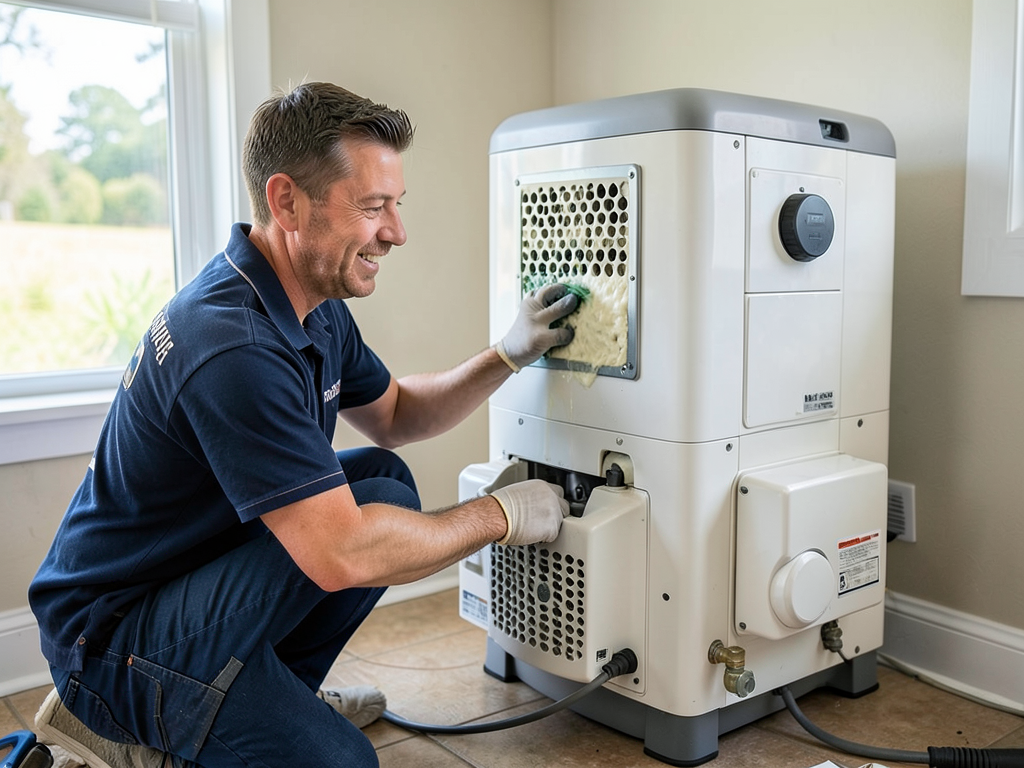
Dealing with Hard Water Scale in Your Whole Home Humidifier in Round Rock
Round Rock’s hard water creates constant scale buildup in whole home humidifiers that reduces efficiency and damages components. You’ll notice white mineral deposits on the water panel, decreased moisture output, and strange gurgling sounds from your unit. This guide explains how to clean and maintain your humidifier properly while showing when you need professional service from All Pro HVAC Austin. Fast and Professional Furnace Repair in Georgetown During the Winter Chill.
Why Round Rock’s Water Creates Special Humidifier Problems
Round Rock’s water comes from the Edwards Aquifer and contains high levels of calcium and magnesium. These minerals form scale that coats the evaporator pad and clogs small water passages. The scale acts like insulation, preventing proper heat transfer and reducing moisture output by up to 40 percent.. Read more about Is a heat pump water heater worth the upgrade for your Gracywoods property?.
Local homeowners notice scale buildup faster than in other Texas cities because Round Rock’s water hardness measures between 15-20 grains per gallon. This mineral concentration means you’ll need to clean your humidifier every 30-60 days during winter operation instead of the typical 90-day schedule recommended elsewhere. Local AC Repair and Cooling Experts in South Lamar and Barton Hills.
Warning Signs Your Humidifier Needs Immediate Attention
Your humidifier shows several clear symptoms when scale takes over. The unit makes gurgling or bubbling sounds as water struggles to flow through clogged passages. You’ll see white crusty deposits on the water panel that feel rough like sandpaper. The humidistat may show inaccurate readings because scale affects the internal sensors.
Water may leak from the bottom of your unit as scale blocks normal drainage paths. Your home feels drier than the humidistat setting indicates because mineral buildup prevents proper evaporation. These problems worsen during cold snaps when your humidifier works hardest to maintain comfort.
Step-by-Step DIY Cleaning Process
Turn off your furnace and humidifier before starting any maintenance. Remove the water panel carefully and inspect for scale deposits. Use white vinegar in a spray bottle to dissolve mineral buildup. Let the panel soak for 15-20 minutes then scrub gently with a soft brush.
Clean the orifice where water enters the humidifier using a straightened paperclip to clear any mineral blockages. Check the drain line for clogs by pouring water through it. Replace the water panel if it shows cracks or severe scaling that cleaning cannot remove.
Test the solenoid valve by listening for a clicking sound when you adjust the humidistat. No click means the valve may need replacement. Set your humidistat between 30-40 percent relative humidity for Texas winters to prevent window condensation while maintaining comfort.
Professional Maintenance vs. DIY Cleaning
| Maintenance Task | DIY Frequency | Professional Service |
|---|---|---|
| Water panel replacement | Every 1-2 months | Check during annual tune-up |
| Scale removal from components | Every 30-60 days | Deep cleaning once yearly |
| Solenoid valve testing | Monthly | Replace if needed |
| Never | Annual safety check | |
| Drain line clearing | Every 60 days | Professional snaking |
Scale Prevention Strategies That Actually Work
Install a whole-house water softener to reduce mineral content before it reaches your humidifier. This investment cuts cleaning frequency by 75 percent and extends component life by several years. Use distilled water in your humidifier if you cannot install a softener immediately.
Run your humidifier only when needed instead of continuous operation. Most Round Rock homes need humidification from November through March when outdoor temperatures drop below 40 degrees. Turn off the unit during mild weather to prevent unnecessary scale formation.
Clean or replace your furnace filter monthly during winter. A dirty filter reduces airflow across the humidifier, causing water to pool and accelerate scale formation. Check your home’s relative humidity with a digital hygrometer to avoid over-humidification that leads to condensation and mold growth.
When to Call All Pro HVAC Austin
Call (737) 316-0777 when your humidifier makes loud banging or whistling sounds. These noises indicate scale has damaged internal components beyond simple cleaning. Water pooling around your furnace or water stains on ceilings below the unit require immediate professional attention.
Schedule service if your home feels excessively dry despite proper humidistat settings. This symptom suggests scale has completely blocked water flow or damaged the evaporator pad. Strange odors from your humidifier vents indicate mold growth in scale deposits that requires professional cleaning.
Professional service includes pressure testing water lines, checking electrical connections, and calibrating humidistats for accurate readings. Technicians use commercial-grade descaling solutions that remove buildup without damaging plastic components. They also inspect your furnace integration to ensure proper operation. Modern HVAC Solutions for Historic Homes in Tarrytown and Old West Austin.
Choosing the Right Replacement Parts
Buy OEM water panels from your humidifier manufacturer rather than generic replacements. Generic panels often use lower-quality media that absorbs minerals faster and requires more frequent changes. Aprilaire, Honeywell, and Carrier all offer specific replacement pads designed for their equipment.
Consider antimicrobial water panels that resist mold and bacteria growth. These panels cost 20-30 percent more but last longer in Round Rock’s mineral-rich water. Some newer models feature scale-resistant coatings that shed mineral deposits instead of absorbing them.
Check your humidifier model number before ordering parts. Most units have a metal nameplate with the model and serial number. Using incorrect parts can cause water leaks, poor performance, or even damage your furnace.
Energy Efficiency and Cost Savings
A clean humidifier uses 15-20 percent less electricity than a scaled unit because it transfers heat more efficiently. You’ll see this difference on your utility bills during peak winter months. Scale buildup forces your furnace to work harder to maintain temperature, increasing gas or electric consumption.
Regular maintenance prevents expensive emergency repairs. Replacing a damaged solenoid valve costs $150-250 while cleaning a scaled unit prevents this failure. Water damage from neglected humidifiers can cost thousands in ceiling repairs and mold remediation. EPA Indoor Air Quality.
Energy Star estimates that proper humidity levels allow you to lower your thermostat by 2-3 degrees while maintaining comfort. This adjustment saves approximately 5-10 percent on heating costs throughout winter. Geothermal Heating & Cooling.
Common Mistakes That Worsen Scale Problems
Using harsh chemical cleaners like bleach or commercial lime removers damages plastic components and rubber seals. These chemicals create microscopic cracks that trap minerals and accelerate future scale formation. Stick to white vinegar or commercial humidifier cleaners designed for scale removal.
Ignoring small leaks allows minerals to concentrate in standing water, creating thicker scale deposits. Fix leaks immediately to prevent mineral concentration. Running your humidifier with a dirty filter reduces airflow and creates conditions where scale forms faster.
Setting humidistats too high causes condensation on windows and walls. This moisture combines with minerals in the air to create stubborn deposits that are harder to clean. Keep settings between 30-40 percent relative humidity for optimal comfort and scale prevention.
Seasonal Maintenance Calendar for Round Rock Homes
November: Clean or replace water panel before winter operation begins. Check all electrical connections and test the solenoid valve. Set humidistat to 35 percent and monitor for the first week.
January: Deep clean all components using vinegar solution. Check drain line for clogs. Inspect for any water leaks around the unit. Adjust humidistat based on outdoor temperature.
March: Final cleaning before shutting down for summer. Replace water panel if it shows significant scale. Check all mounting brackets and ensure proper drainage.
April-October: Clean the exterior of your humidifier and check for any signs of moisture or damage. This off-season maintenance prevents surprises when winter returns.
Understanding Your Humidifier Type
Bypass humidifiers use your furnace’s blower to move air through the water panel. These units are simpler but can develop scale in the bypass duct if not cleaned regularly. Fan-powered humidifiers have their own blower and work independently of your furnace operation.
Steam humidifiers create actual steam rather than relying on evaporation. While more expensive, they resist scale better because the heating elements can be cleaned more thoroughly. However, steam units still develop scale in water lines and drain components.
Aprilaire models commonly found in Round Rock homes use evaporative technology with aluminum water panels. Honeywell units often feature slide-out water panels for easier cleaning. Carrier systems may include automatic flushing cycles that reduce manual maintenance needs.
Environmental Factors Affecting Humidifier Performance
Round Rock’s winter humidity levels typically range from 30-50 percent, making humidification necessary but requiring careful control. Outdoor temperatures below 40 degrees require higher indoor humidity to prevent static electricity and dry skin. However, temperatures above 50 degrees may cause window condensation if humidity settings are too high.
Wind direction affects how quickly your home loses moisture. North winds during cold fronts increase heat loss and dry indoor air faster. South winds bring moisture but may carry allergens that your humidifier’s air filter should capture.
Indoor air quality impacts humidifier scale formation. Cooking, showering, and even breathing add moisture to your home. A properly sized humidifier should maintain 30-40 percent relative humidity without overcompensating for these natural moisture sources.
Long-Term Benefits of Professional Maintenance
Professional technicians identify potential problems before they cause system failures. They check for proper water pressure, electrical safety, and component wear that homeowners might miss. This preventative approach extends your humidifier’s life by 3-5 years compared to units that receive only DIY maintenance.
Technicians calibrate humidistats for your specific home conditions. They consider factors like insulation levels, window quality, and occupancy patterns to set optimal humidity levels. This customization prevents both over-humidification and insufficient moisture output.
Professional service includes documentation of your system’s condition over time. This history helps identify patterns like increasing scale formation that might indicate changing water quality or component wear. It also provides valuable information for warranty claims if needed.
Protecting Your Investment
Your whole home humidifier represents a $300-800 investment plus installation costs. Regular maintenance protects this investment by preventing scale-related damage that voids warranties. Most manufacturers require documented maintenance to honor claims for premature component failure.
Consider the age of your home when planning maintenance. Older Round Rock homes built before 1980 may have different ductwork configurations that affect humidifier performance. These homes often benefit from professional assessment to ensure proper installation and operation. Emergency Ductwork Repair.
Water quality testing can reveal whether your home’s mineral content is increasing over time. This information helps you plan for more frequent maintenance or consider water treatment options before scale problems become severe.
Frequently Asked Questions
How often should I clean my whole home humidifier in Round Rock?
Clean your humidifier every 30-60 days during winter operation. Round Rock’s hard water causes faster scale buildup than other areas, requiring more frequent maintenance than the typical 90-day schedule.
Can I use tap water in my humidifier?
Yes, but Round Rock’s hard tap water creates more scale than distilled water. If you cannot install a water softener, use distilled water or clean your unit more frequently to prevent scale damage.
What’s the best way to remove scale from my humidifier?
Use white vinegar to dissolve mineral deposits. Soak components for 15-20 minutes, then scrub gently with a soft brush. Avoid harsh chemicals that can damage plastic parts and create cracks where minerals accumulate.
Ready to Solve Your Humidifier Scale Problems?
Scale buildup in your whole home humidifier doesn’t have to be a constant battle. All Pro HVAC Austin understands Round Rock’s unique water quality challenges and offers professional cleaning services that restore your system to peak efficiency. Our technicians use commercial-grade descaling solutions and inspect every component to ensure proper operation.
Don’t wait until scale causes expensive damage or leaves your home uncomfortably dry. Call (737) 316-0777 today to schedule your professional humidifier maintenance. We’ll clean your system thoroughly, check for potential problems, and provide tips specific to your home’s needs. Your comfort is worth the call.
Pick up the phone and call (737) 316-0777 before the next cold snap hits. Our team is ready to help Round Rock homeowners maintain healthy indoor humidity levels all winter long. For more information, visit ASHRAE Technical Resources.
{
“@context”: “https://schema.org”,
“@type”: “BlogPosting”,
“headline”: “Dealing with Hard Water Scale in Your Whole Home Humidifier in Round Rock”,
“description”: “Learn how Round Rock’s hard water affects your whole home humidifier and what to do about scale buildup. Expert tips from All Pro HVAC Austin.”,
“wordCount”: 1987,
“datePublished”: “2026-05-07T14:25:00.000Z”,
“dateModified”: “2026-05-07T14:25:00.000Z”,
“inLanguage”: “en-US”,
“mainEntityOfPage”: {
“@type”: “WebPage”,
“@id”: “https://allprohvacaustin.com”
},
“publisher”: {
“@type”: “LocalBusiness”,
“name”: “All Pro HVAC Austin”,
“url”: “https://allprohvacaustin.com”
},
“author”: {
“@type”: “Organization”,
“name”: “All Pro HVAC Austin”,
“url”: “https://allprohvacaustin.com”
},
“image”: {
“@type”: “ImageObject”,
“url”: “https://allprohvacaustin.com/wp-content/uploads/2026/03/dealing-with-hard-water-scale-in-your-whole-home-h-1.png”
}
}
{
“@context”: “https://schema.org”,
“@type”: “HVACBusiness”,
“name”: “All Pro HVAC Austin”,
“url”: “https://allprohvacaustin.com”,
“address”: {
“@type”: “PostalAddress”,
“addressLocality”: “Austin”
},
“areaServed”: {
“@type”: “City”,
“name”: “Austin”
}
}
{
“@context”: “https://schema.org”,
“@type”: “FAQPage”,
“mainEntity”: [
{
“@type”: “Question”,
“name”: “How often should I clean my whole home humidifier in Round Rock?”,
“acceptedAnswer”: {
“@type”: “Answer”,
“text”: “Clean your humidifier every 30-60 days during winter operation. Round Rock’s hard water causes faster scale buildup than other areas, requiring more frequent maintenance than the typical 90-day schedule.”
}
},
{
“@type”: “Question”,
“name”: “Can I use tap water in my humidifier?”,
“acceptedAnswer”: {
“@type”: “Answer”,
“text”: “Yes, but Round Rock’s hard tap water creates more scale than distilled water. If you cannot install a water softener, use distilled water or clean your unit more frequently to prevent scale damage.”
}
},
{
“@type”: “Question”,
“name”: “What’s the best way to remove scale from my humidifier?”,
“acceptedAnswer”: {
“@type”: “Answer”,
“text”: “Use white vinegar to dissolve mineral deposits. Soak components for 15-20 minutes, then scrub gently with a soft brush. Avoid harsh chemicals that can damage plastic parts and create cracks where minerals accumulate.”
}
},
{
“@type”: “Question”,
“name”: “Ready to Solve Your Humidifier Scale Problems?”,
“acceptedAnswer”: {
“@type”: “Answer”,
“text”: “Scale buildup in your whole home humidifier doesn’t have to be a constant battle. All Pro HVAC Austin understands Round Rock’s unique water quality challenges and offers professional cleaning services that restore your system to peak efficiency. Our technicians use commercial-grade descaling solutions and inspect every component to ensure proper operation.”
}
}
]
}
{
“@context”: “https://schema.org”,
“@type”: “BreadcrumbList”,
“itemListElement”: [
{
“@type”: “ListItem”,
“position”: 1,
“name”: “Home”,
“item”: “https://allprohvacaustin.com”
},
{
“@type”: “ListItem”,
“position”: 2,
“name”: “Blog”,
“item”: “https://allprohvacaustin.com/blog”
},
{
“@type”: “ListItem”,
“position”: 3,
“name”: “Dealing with Hard Water Scale in Your Whole Home Humidifier in Round Rock”
}
]
}
{
“@context”: “https://schema.org”,
“@type”: “Service”,
“serviceType”: “HVAC”,
“provider”: {
“@type”: “LocalBusiness”,
“name”: “All Pro HVAC Austin”,
“url”: “https://allprohvacaustin.com”
},
“areaServed”: {
“@type”: “City”,
“name”: “Austin”
},
“description”: “Learn how Round Rock’s hard water affects your whole home humidifier and what to do about scale buildup. Expert tips from All Pro HVAC Austin.”
}