
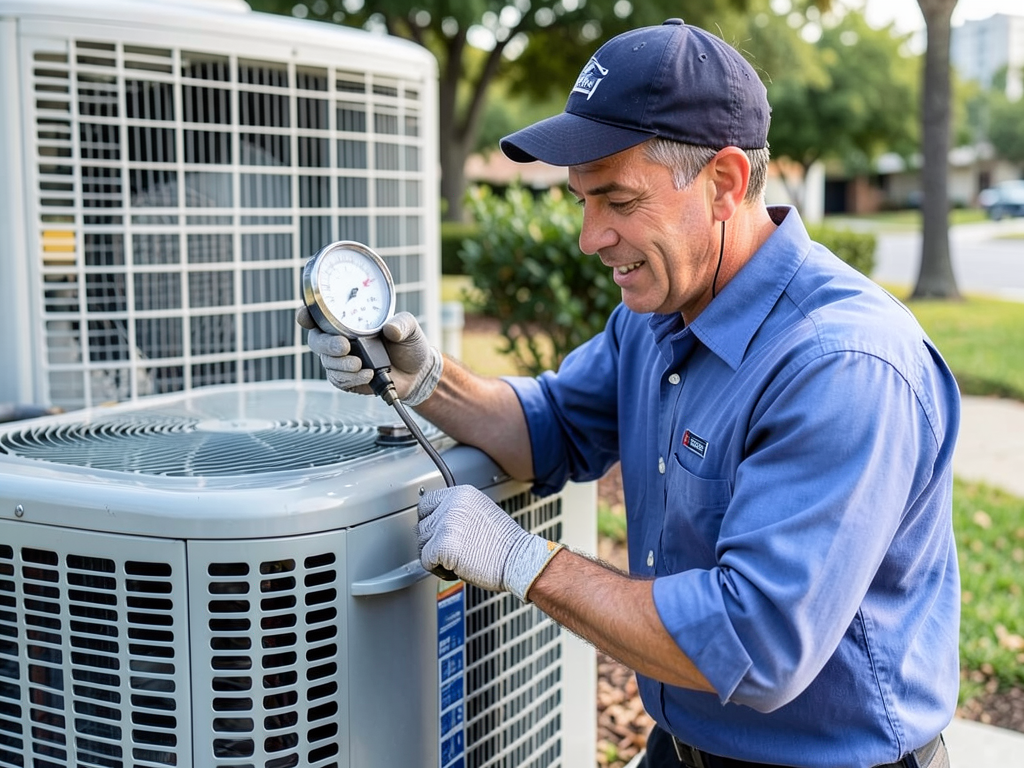
What Austin families should know about the transition away from R-410A refrigerant
The EPA’s 2025 manufacturing ban on R-410A refrigerant creates a critical window for Austin homeowners. By January 1 2025 new residential air conditioning units can no longer be built with R-410A. However you can still install R-410A units through December 31 2026 using existing inventory. This transition affects equipment costs maintenance and your home’s cooling performance during Austin’s brutal 100-degree summers. EPA HFC phase-down regulations.
New systems will use R-454B or R-32 refrigerants which have a Global Warming Potential under 700 compared to R-410A’s 2088. These A2L refrigerants are mildly flammable requiring updated safety standards and technician training. For Austin families this means higher upfront costs but lower environmental impact and potential energy savings over time.. Read more about Managing Your HVAC System as a Remote Landlord in Riverside and Montopolis.
The clock is ticking. If your system is over 10 years old or showing signs of failure now is the time to evaluate whether to repair with expensive R-410A or invest in a new compliant system before inventory runs out. Emergency AC Repair Services for Homes in West Lake Hills.
Key Deadlines: The 2025 Manufacturing Ban vs. 2026 Installation Deadline
January 1 2025 marks the manufacturing cutoff. No new R-410A residential AC units can be produced. This creates immediate inventory pressure as contractors rush to secure remaining stock.
January 1 2026 is the installation deadline. Any R-410A units manufactured before 2025 can still be installed through 2026. After that date only new A2L-compliant systems will be available.
This creates a two-year transition period where Austin homeowners face critical decisions. Do you buy a discounted R-410A unit now or wait for the newer technology? The answer depends on your current system’s condition and your long-term plans for your home.
Local HVAC distributors report R-410A inventory already showing strain with some models becoming scarce in the Austin market. Contractors recommend securing quotes and making decisions before summer 2025 when demand peaks. Local AC Repair and Cooling Experts in South Lamar and Barton Hills.
Why is R-410A Going Away Understanding the AIM Act
The American Innovation and Manufacturing Act of 2020 mandates an 85% reduction in HFC production by 2036. R-410A a hydrofluorocarbon refrigerant has a Global Warming Potential of 2088 meaning one pound traps as much heat as 2088 pounds of CO2 over 100 years.
The EPA’s Technology Transition Rule establishes a 700 GWP cap for new residential systems. R-454B clocks in at 466 while R-32 measures 675 both well under the threshold. These refrigerants also improve energy efficiency by 5-10% compared to R-410A.
For Austin this transition matters because our air conditioning runs nearly year-round. The environmental impact of thousands of R-410A systems operating in 100-degree heat adds up quickly. The new refrigerants help reduce that carbon footprint while maintaining cooling performance.
Technicians must complete specialized A2L safety training to handle these mildly flammable refrigerants. This training requirement has created a temporary shortage of qualified installers in some Austin neighborhoods as the industry adapts.
Meet the Successors: R-454B and R-32 Refrigerants
R-454B (Opteon XL41) dominates the market as the primary R-410A replacement. It offers similar cooling capacity with a 466 GWP rating. Equipment using R-454B requires updated components including spark-proof electrical parts and specialized leak detectors.
R-32 appears in some high-efficiency systems particularly mini-splits. With a 675 GWP rating it sits just under the 700 threshold. R-32 systems often achieve SEER2 ratings 1-2 points higher than comparable R-454B units.
Both refrigerants operate at slightly lower pressures than R-410A. In Austin’s extreme heat this means minimal performance difference. However technicians report A2L systems may require slightly larger condenser coils to achieve the same cooling output.
The mildly flammable classification requires specific handling procedures. Systems must include leak detection sensors and proper ventilation. Austin homeowners should verify their contractor carries A2L certification before installation.
How This Impacts Austin HVAC Costs and Maintenance
New A2L-compliant systems cost 15-30% more than current R-410A units. The price increase covers specialized components safety features and technician training. For a typical 3-ton system expect to pay $6500-$9000 versus $5000-$7000 for R-410A.
R-410A refrigerant prices continue climbing as supply tightens. A standard recharge that cost $100 in 2020 now runs $300-$500. By 2026 prices could double again making major repairs on older systems economically questionable. 24/7 Emergency AC Repair.
Maintenance costs for A2L systems remain similar to current rates. However finding qualified technicians becomes crucial. Not all Austin HVAC companies have completed A2L certification creating potential service delays.
Energy savings partially offset the higher equipment costs. A2L systems achieve better SEER2 ratings particularly important in Austin’s cooling-dominated climate. Over a 15-year lifespan these savings can recover much of the initial price premium.
Should You Replace Your AC Before 2025
If your system is under 8 years old and functioning well repairing with R-410A remains the most cost-effective option through 2026. The limited installation window provides flexibility without rushing into new technology.
Signs you should consider replacement now include frequent repairs rising energy bills or a system over 12 years old. These systems face diminishing returns on repair investments as R-410A becomes scarce and expensive.
Consider your long-term plans. If you’ll move within 3-5 years a repaired system makes sense. If you plan to stay longer the energy savings and reliability of a new A2L system provide better value.
Current R-410A inventory varies by manufacturer and model. Popular 14-16 SEER units remain widely available but specialized high-efficiency models show strain. Act quickly if you need a specific configuration.
Ask contractors about dry-ship options. These units ship without refrigerant allowing installation with either R-410A or A2L depending on availability. This flexibility helps navigate the transition period.
Frequently Asked Questions About the Refrigerant Transition
Can I still get my R-410A system repaired after 2026
Yes. The ban affects new manufacturing not existing systems. You can continue repairing R-410A units as long as refrigerant remains available. However prices will likely increase significantly as reclamation becomes the primary supply source.
Are A2L refrigerants safe for my home
Yes when properly installed. A2L systems include multiple safety features like leak detectors spark-proof components and proper ventilation. The mildly flammable classification requires specific handling but poses minimal risk in residential settings.
Will my energy bills increase with a new system
Energy bills typically decrease 10-20% with new A2L systems due to improved efficiency. The SEER2 ratings often exceed older units by 1-3 points. In Austin’s climate these savings add up quickly over the cooling season.
How do I find a qualified A2L technician in Austin
Verify EPA Section 608 certification plus A2L-specific training. Ask contractors about their experience with R-454B and R-32 systems. The best technicians complete ongoing manufacturer training to stay current with evolving technology.
What about heat pumps Does this affect them too
Yes. The 2025 standards apply to all new residential HVAC equipment including heat pumps. Heat pump technology continues advancing with some A2L models achieving heating capacities competitive with natural gas furnaces even in Austin’s mild winters. Fast and Professional Furnace Repair in Georgetown During the Winter Chill.
Making Your Decision: Next Steps for Austin Homeowners
Start with a professional assessment of your current system. A qualified technician can evaluate repair costs remaining lifespan and efficiency compared to new options. This analysis provides the data needed for an informed decision.
Request quotes for both repair and replacement options. Include both R-410A inventory availability and A2L system pricing. Compare total costs including potential energy savings over your expected ownership period.
Consider timing. If you need immediate replacement inventory remains strong for most standard configurations. If you can wait 2-3 months prices may stabilize as manufacturers adjust to new production realities.
Factor in rebates and incentives. Austin Energy offers rebates for high-efficiency systems that often apply to A2L equipment. Federal tax credits through 2032 can offset 30% of installation costs up to $2000 for heat pumps.
The transition creates both challenges and opportunities. While upfront costs increase the long-term benefits of improved efficiency and environmental impact make A2L systems a smart investment for most Austin families.
Call (737) 316-0777 today to schedule your free assessment and lock in current pricing before inventory shifts further. Our NATE-certified technicians can help you navigate this transition with confidence. For more information, visit AHRI refrigerant transition guidelines.
You may also find this helpful. Why getting a second opinion on your AC compressor replacement could save you thousands.
You may also find this helpful. Comparing Lennox and Carrier for Your Next Northwest Hills HVAC Replacement.
{
“@context”: “https://schema.org”,
“@type”: “BlogPosting”,
“headline”: “What Austin families should know about the transition away from R-410A refrigerant”,
“description”: “The 2025 R-410A phase-out impacts Austin AC costs. Learn about new refrigerants, installation deadlines, and how this affects your home’s cooling system.”,
“wordCount”: 1373,
“datePublished”: “2026-04-11T13:49:00.000Z”,
“dateModified”: “2026-04-11T13:49:00.000Z”,
“inLanguage”: “en-US”,
“mainEntityOfPage”: {
“@type”: “WebPage”,
“@id”: “https://allprohvacaustin.com”
},
“publisher”: {
“@type”: “LocalBusiness”,
“name”: “All Pro HVAC Austin”,
“url”: “https://allprohvacaustin.com”
},
“author”: {
“@type”: “Organization”,
“name”: “All Pro HVAC Austin”,
“url”: “https://allprohvacaustin.com”
},
“image”: {
“@type”: “ImageObject”,
“url”: “https://allprohvacaustin.com/wp-content/uploads/2026/03/what-austin-families-should-know-about-the-transit-1.png”
}
}
{
“@context”: “https://schema.org”,
“@type”: “HVACBusiness”,
“name”: “All Pro HVAC Austin”,
“url”: “https://allprohvacaustin.com”,
“address”: {
“@type”: “PostalAddress”,
“addressLocality”: “Austin”
},
“areaServed”: {
“@type”: “City”,
“name”: “Austin”
}
}
{
“@context”: “https://schema.org”,
“@type”: “BreadcrumbList”,
“itemListElement”: [
{
“@type”: “ListItem”,
“position”: 1,
“name”: “Home”,
“item”: “https://allprohvacaustin.com”
},
{
“@type”: “ListItem”,
“position”: 2,
“name”: “Blog”,
“item”: “https://allprohvacaustin.com/blog”
},
{
“@type”: “ListItem”,
“position”: 3,
“name”: “What Austin families should know about the transition away from R-410A refrigerant”
}
]
}
{
“@context”: “https://schema.org”,
“@type”: “Service”,
“serviceType”: “HVAC”,
“provider”: {
“@type”: “LocalBusiness”,
“name”: “All Pro HVAC Austin”,
“url”: “https://allprohvacaustin.com”
},
“areaServed”: {
“@type”: “City”,
“name”: “Austin”
},
“description”: “The 2025 R-410A phase-out impacts Austin AC costs. Learn about new refrigerants, installation deadlines, and how this affects your home’s cooling system.”
}