
Maximizing Your Austin Energy Rebates for a High Efficiency HVAC Upgrade
If you live in Austin and plan to replace your HVAC system in 2026, you can save up to $2,500 through Austin Energy’s rebate program. These rebates reward homeowners who install high-efficiency systems that reduce energy consumption and help Austin meet its climate goals. The process requires working with a participating contractor and meeting specific efficiency standards, but the savings make it worthwhile. Austin Energy official website.
Austin Energy offers rebates through its Home Performance with ENERGY STAR program, which combines HVAC upgrades with other energy improvements like attic insulation and duct sealing. The program targets homes that need efficiency improvements and provides financial incentives for completing comprehensive upgrades. Most homeowners receive between $500 and $2,500 depending on the scope of work and equipment efficiency. ENERGY STAR program information.
Current Austin Energy HVAC Rebate Amounts and Programs
Austin Energy’s rebate structure in 2026 focuses on SEER2 ratings and system performance. SEER2 measures cooling efficiency under more realistic conditions than the old SEER standard. The higher your system’s SEER2 rating, the larger your rebate.. Read more about Integrating Your HVAC with Local Austin Smart Home Systems for Maximum Savings.
For air conditioning systems, rebates start at $400 for units with SEER2 ratings between 15 and 16.5. Systems rated 16.5 to 17.5 SEER2 qualify for $600 rebates. The most efficient systems, those rated 17.5 SEER2 and above, receive $800 in rebates. Heat pump systems follow a similar structure with slightly higher amounts due to their year-round efficiency benefits.
Ductless mini-split systems receive special consideration. Units with SEER2 ratings of 18 or higher qualify for $500 rebates, while those rated 20+ SEER2 receive $750. These systems work well for room additions or homes where traditional ductwork installation is impractical.
Beyond equipment rebates, Austin Energy offers bonus incentives for comprehensive energy improvements. Adding attic insulation to meet R-38 standards while replacing your HVAC can increase your total rebate by $300 to $500. Duct sealing and repair work qualifies for additional $200 to $400 rebates when performed with HVAC replacement. Emergency AC Repair Services for Homes in West Lake Hills.
The program also includes a Smart Thermostat Power Partner rebate of $50 for qualifying devices that help reduce peak energy demand. This rebate applies to both new installations and replacements of existing programmable thermostats.
Eligibility Requirements for Austin Residents
To qualify for Austin Energy rebates, your home must be located within Austin Energy’s service territory. This includes most of Austin and parts of surrounding Travis County. Your home must also be a single-family residence, duplex, or small multifamily building with three or fewer units.
Your home needs to pass an initial energy assessment to determine eligibility. This assessment, conducted by an Austin Energy participating contractor, evaluates your current system’s efficiency, insulation levels, and overall home performance. Homes built before 2000 typically qualify more easily since they often have lower efficiency standards than current building codes.
The ECAD (Energy Conservation Audit and Disclosure) ordinance affects many Austin homes. Properties over 10 years old must have an energy audit before sale or major renovation. This audit becomes part of your rebate application, showing where improvements are needed. Homes that already meet high efficiency standards might qualify for smaller rebates since they need fewer improvements.
Your existing HVAC system must be at least 10 years old to qualify for replacement rebates. Newer systems might still qualify if they’re significantly undersized or have major efficiency problems. The assessment determines whether replacement makes economic sense compared to repair. Local AC Repair and Cooling Experts in South Lamar and Barton Hills.
Income-qualified homeowners may access enhanced rebates through the Single-Family Efficiency Program. This program offers up to $4,000 in combined rebates for qualifying households, making high-efficiency systems accessible to more Austin residents.
How to Qualify: The Home Performance with ENERGY STAR Process
The qualification process starts with selecting an Austin Energy participating contractor. These contractors have completed training on energy efficiency standards and understand the rebate application process. They handle most paperwork and ensure your installation meets all program requirements.
Your contractor schedules an initial assessment that typically takes 2-3 hours. During this visit, they inspect your current system, measure insulation levels, check ductwork for leaks, and evaluate your home’s overall energy performance. They use specialized equipment like blower doors to test air leakage and infrared cameras to identify insulation gaps.
Based on the assessment, your contractor creates a recommended improvement plan. This plan outlines the proposed HVAC system, any additional upgrades like insulation or duct sealing, and the expected energy savings. You review this plan and approve the scope of work before any installation begins.
After installation, your contractor schedules a quality assurance inspection with Austin Energy. This inspection verifies that all work meets program standards and that the new system performs as expected. The inspector checks refrigerant charge, airflow, and overall system operation.
Once the inspection passes, your contractor submits the rebate application. Processing typically takes 4-6 weeks, though complex applications might take longer. You receive your rebate as a check directly from Austin Energy, not from your contractor.
The entire process from initial assessment to rebate payment usually takes 8-12 weeks. Summer months often have longer wait times due to high demand, so planning your upgrade during shoulder seasons can speed up the process.
SEER2 vs. SEER: Technical Requirements for Maximum Savings
SEER2 represents a significant change in how cooling efficiency is measured. Unlike the old SEER standard, SEER2 tests systems under more realistic conditions including higher external static pressure and different airflow rates. This change means a 16 SEER system from 2022 might only qualify as 15 SEER2 in 2026.
The technical difference affects both performance ratings and rebate eligibility. A system that earned a $600 rebate under the old SEER standard might only qualify for $400 under SEER2 if its rating drops when tested under the new conditions. This makes understanding SEER2 ratings crucial for maximizing your rebate.
Variable-speed compressors offer the best combination of efficiency and comfort. These systems can operate at multiple speeds rather than just on/off, maintaining more consistent temperatures while using less energy. Most variable-speed systems achieve SEER2 ratings of 18 or higher, qualifying for the maximum rebates.
Two-stage systems provide a middle ground between single-stage and variable-speed units. They operate at high and low speeds, offering better efficiency than single-stage systems while costing less than variable-speed units. Two-stage systems typically achieve SEER2 ratings of 16-18, qualifying for moderate rebates.
Heat pump technology has advanced significantly, with many 2026 models achieving SEER2 ratings above 20. These systems provide both heating and cooling, eliminating the need for separate furnace equipment. The combined heating and cooling efficiency often results in greater overall energy savings than traditional split systems. Fast and Professional Furnace Repair in Georgetown During the Winter Chill.
Proper system sizing becomes even more critical with SEER2 requirements. Oversized systems cycle on and off frequently, reducing efficiency and comfort. Your contractor should perform detailed load calculations using Manual J procedures to ensure your new system matches your home’s exact requirements.
Why You Must Use an Austin Energy Participating Contractor
Austin Energy participating contractors have completed specialized training on energy efficiency standards and rebate program requirements. They understand the technical specifications needed to qualify for maximum rebates and can guide you through the entire process. Using a non-participating contractor typically results in lost rebate opportunities.
These contractors have access to proprietary software that calculates energy savings and rebate amounts. This software considers your specific home characteristics, local climate data, and current energy rates to provide accurate savings estimates. Non-participating contractors lack this specialized tools.
Participating contractors handle all rebate paperwork and submissions. They know exactly what documentation Austin Energy requires and ensure your application meets all deadlines and requirements. This expertise prevents common application errors that can delay or deny rebates.
Quality assurance inspections are only performed on work completed by participating contractors. These inspections verify that installations meet both Austin Energy standards and manufacturer specifications. Skipping this inspection can void warranties and disqualify you from rebates.
Many participating contractors offer financing options through Velocity Credit Union, Austin Energy’s financing partner. These loans often feature low interest rates and terms that align with your expected energy savings, making high-efficiency upgrades more affordable. Affordable AC Tune-Ups and Maintenance for Pflugerville Homeowners.
Emergency service availability varies among participating contractors. Some maintain 24/7 emergency response teams specifically trained on energy-efficient systems. This becomes important if issues arise during the rebate process or after installation.
Frequently Asked Questions About Austin HVAC Incentives
How long do Austin Energy rebates take to process?
Most rebate applications process within 4-6 weeks after your contractor submits them. Complex applications involving multiple upgrades might take up to 8 weeks. Your contractor can track application status and notify you when your rebate check is ready.
Can I combine Austin Energy rebates with federal tax credits?
Yes, Austin Energy rebates and federal tax credits can be combined for maximum savings. The federal 25C tax credit covers 30% of costs up to $2,000 for qualifying high-efficiency HVAC equipment. However, you cannot receive double credit for the same expense.
What if my home doesn’t qualify for the maximum rebate?
Even if your home doesn’t qualify for maximum rebates, you can still receive partial rebates for qualifying equipment. The assessment helps identify which improvements will provide the best return on investment. Sometimes smaller rebates combined with energy savings still make upgrades worthwhile.
Do I need to replace my entire HVAC system to get a rebate?
No, you can often receive rebates for partial system replacements. However, replacing both indoor and outdoor units together typically provides better efficiency and qualifies for larger rebates. Your contractor can explain which combinations maximize your savings.
Are there rebates for commercial properties?
Austin Energy offers separate rebate programs for commercial properties through its Commercial HVAC Program. These programs have different requirements and rebate structures than residential programs. Commercial property owners should contact Austin Energy directly for current commercial incentives.
What happens if I sell my home before receiving the rebate?
Rebate checks are issued to the property owner listed on the application. If you sell your home before receiving the rebate, the check typically goes to the new owner. Some homeowners negotiate rebate assignment during the sales process to ensure they receive the benefit of their investment.
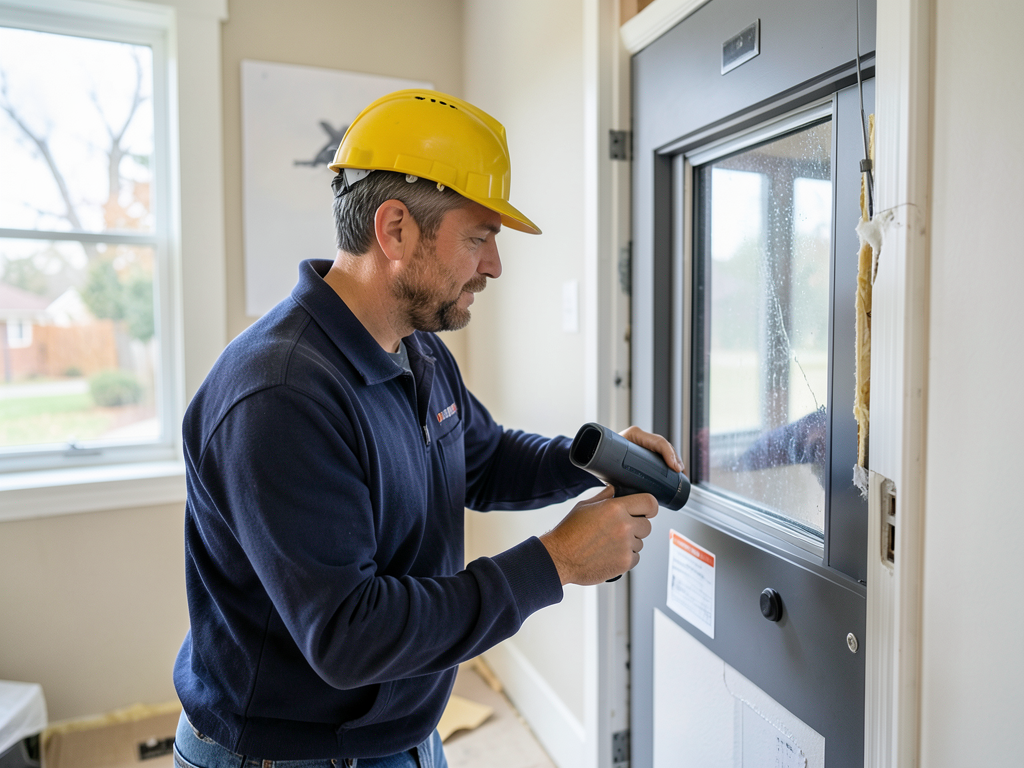
Diagram showing the Austin Energy rebate application process from initial assessment through final rebate check, including quality assurance inspection steps.
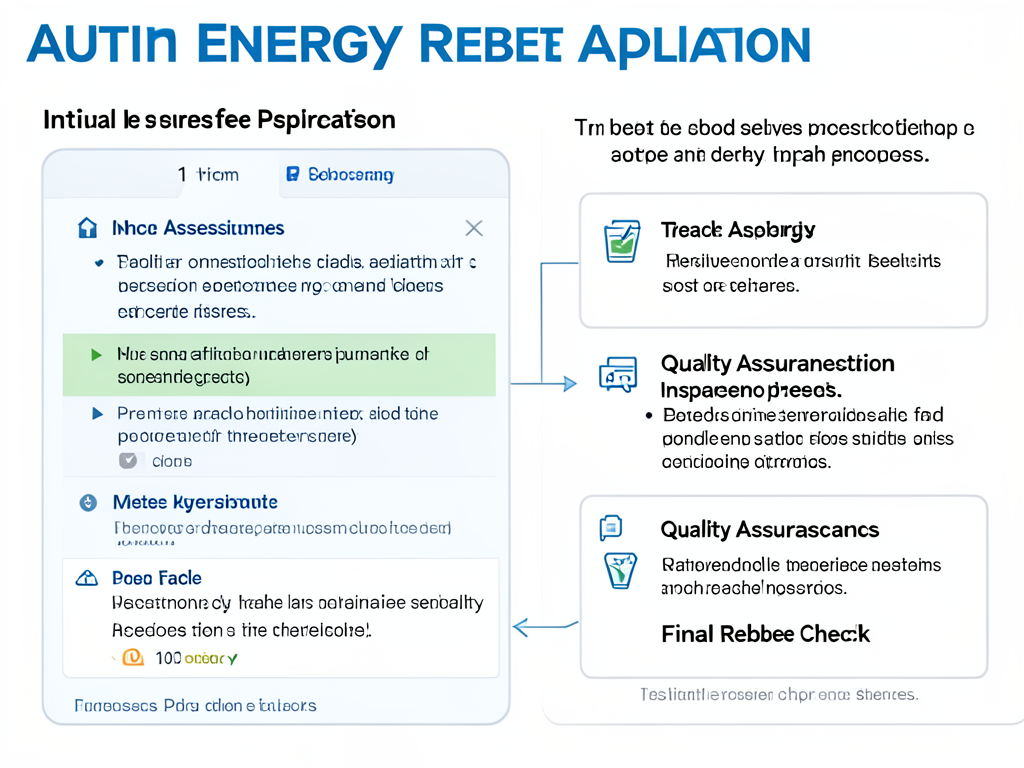
Photo of a technician using a blower door and infrared camera during an energy assessment to identify air leaks and insulation gaps in an Austin home.
Photo of a variable-speed air conditioning unit with SEER2 rating label visible, showing the efficiency information needed for rebate qualification.
Making Your Decision: Costs vs. Long-Term Savings
High-efficiency HVAC systems cost more upfront than standard units, but Austin Energy rebates significantly reduce this gap. A high-efficiency system that costs $7,000 might qualify for $1,500 in rebates, bringing the net cost to $5,500. The energy savings over the system’s lifetime often exceed the initial price difference.
Consider the total cost of ownership rather than just the purchase price. A high-efficiency system might cost $1,500 more initially but could save $300-400 annually on energy bills. Over a 15-year system life, that’s $4,500-6,000 in energy savings, plus the upfront rebate.
Climate considerations matter in Austin. Our hot summers mean air conditioning runs frequently, making efficiency improvements more valuable here than in cooler climates. A 15% efficiency improvement might save $200 annually in Boston but $400-500 in Austin due to longer cooling seasons.
Maintenance costs also factor into your decision. High-efficiency systems often include better filtration, reducing dust and allergens in your home. Some variable-speed systems run longer at lower speeds, improving air circulation and potentially reducing the need for additional air purification equipment.
Consider your plans for staying in your home. If you plan to move within five years, the energy savings might not offset the higher initial cost. However, the rebate and improved comfort could make the investment worthwhile even for shorter ownership periods.
Getting Started with Your HVAC Upgrade
The first step is scheduling an energy assessment with an Austin Energy participating contractor. This assessment costs around $100-200 but provides valuable information about your home’s efficiency and potential improvements. Many contractors waive this fee if you proceed with recommended upgrades.
During your assessment, ask about financing options. Velocity Credit Union offers loans specifically for energy efficiency improvements with terms that often make monthly payments lower than your expected energy savings. This means your upgrade could pay for itself immediately through reduced utility bills.
Consider timing your upgrade carefully. Summer months have the highest demand for HVAC services, often resulting in longer wait times and higher prices. Planning your upgrade during spring or fall can provide better scheduling flexibility and potentially lower costs.
Ask your contractor about warranty coverage and maintenance requirements. High-efficiency systems often require specific maintenance procedures to maintain their rated efficiency. Understanding these requirements upfront helps ensure you get the expected performance and energy savings.
Finally, verify all rebate paperwork before your contractor submits it. While participating contractors handle most paperwork, reviewing it ensures all information is accurate and complete. This prevents processing delays and ensures you receive the maximum rebate amount for which you qualify.
Ready to start saving with Austin Energy rebates? Call (737) 316-0777 today to schedule your energy assessment and learn exactly how much you can save on your high-efficiency HVAC upgrade. Our team of Austin Energy participating contractors will guide you through every step of the process, from initial assessment to final rebate check.
Comparing Your Options: Standard vs. High-Efficiency Systems
| System Type | Typical SEER2 Rating | Austin Energy Rebate | Estimated Annual Energy Savings* | Payback Period |
|---|---|---|---|---|
| Standard Efficiency | 14-15 | $0 | $0 | N/A |
| High Efficiency | 16-17 | $400-600 | $150-250 | 5-7 years |
| Premium Efficiency | 18+ | $800+ | $250-400 | 4-5 years |
*Based on average Austin home using 24,000 BTU cooling capacity, 1,500 cooling hours annually
Additional Energy Improvements That Boost Your Rebate
Combining HVAC replacement with other energy improvements maximizes both your rebate and your home’s efficiency. Attic insulation often provides the best return on investment when paired with new HVAC equipment. Many Austin homes have only R-19 insulation when R-38 is recommended for our climate.
Duct sealing and repair can recover up to 30% of lost cooling capacity in older homes. Leaking ducts force your HVAC system to work harder, reducing efficiency and comfort. Austin Energy offers separate rebates for duct improvements that combine with HVAC rebates for total savings up to $1,000.
Air sealing around windows, doors, and other openings reduces the load on your HVAC system. While smaller individually, these improvements add up and often qualify for bonus rebates when combined with major upgrades.
Smart thermostats help optimize your system’s operation, potentially saving an additional 10-15% on heating and cooling costs. The $50 Power Partner rebate makes these devices essentially free when installed with qualifying HVAC equipment. Geothermal Heating & Cooling.
Window film or solar screens can reduce heat gain through windows, another factor that affects HVAC sizing and efficiency. These improvements might qualify for additional rebates depending on your specific situation and the scope of your energy assessment.
{
“@context”: “https://schema.org”,
“@type”: “BlogPosting”,
“headline”: “Maximizing Your Austin Energy Rebates for a High Efficiency HVAC Upgrade”,
“description”: “Learn how to qualify for Austin Energy HVAC rebates in 2026. Get up to $2,500 back on high-efficiency systems with the Home Performance with ENERGY STAR program.”,
“wordCount”: 2525,
“datePublished”: “2026-05-25T11:10:00.000Z”,
“dateModified”: “2026-05-25T11:10:00.000Z”,
“inLanguage”: “en-US”,
“mainEntityOfPage”: {
“@type”: “WebPage”,
“@id”: “https://allprohvacaustin.com”
},
“publisher”: {
“@type”: “LocalBusiness”,
“name”: “All Pro HVAC Austin”,
“url”: “https://allprohvacaustin.com”
},
“author”: {
“@type”: “Organization”,
“name”: “All Pro HVAC Austin”,
“url”: “https://allprohvacaustin.com”
},
“image”: {
“@type”: “ImageObject”,
“url”: “https://allprohvacaustin.com/wp-content/uploads/2026/03/maximizing-your-austin-energy-rebates-for-a-high-e-1.png”
}
}
{
“@context”: “https://schema.org”,
“@type”: “HVACBusiness”,
“name”: “All Pro HVAC Austin”,
“url”: “https://allprohvacaustin.com”,
“address”: {
“@type”: “PostalAddress”,
“addressLocality”: “Austin”
},
“areaServed”: {
“@type”: “City”,
“name”: “Austin”
}
}
{
“@context”: “https://schema.org”,
“@type”: “FAQPage”,
“mainEntity”: [
{
“@type”: “Question”,
“name”: “How long do Austin Energy rebates take to process?”,
“acceptedAnswer”: {
“@type”: “Answer”,
“text”: “Most rebate applications process within 4-6 weeks after your contractor submits them. Complex applications involving multiple upgrades might take up to 8 weeks. Your contractor can track application status and notify you when your rebate check is ready.”
}
},
{
“@type”: “Question”,
“name”: “Can I combine Austin Energy rebates with federal tax credits?”,
“acceptedAnswer”: {
“@type”: “Answer”,
“text”: “Yes, Austin Energy rebates and federal tax credits can be combined for maximum savings. The federal 25C tax credit covers 30% of costs up to $2,000 for qualifying high-efficiency HVAC equipment. However, you cannot receive double credit for the same expense.”
}
},
{
“@type”: “Question”,
“name”: “What if my home doesn’t qualify for the maximum rebate?”,
“acceptedAnswer”: {
“@type”: “Answer”,
“text”: “Even if your home doesn’t qualify for maximum rebates, you can still receive partial rebates for qualifying equipment. The assessment helps identify which improvements will provide the best return on investment. Sometimes smaller rebates combined with energy savings still make upgrades worthwhile.”
}
},
{
“@type”: “Question”,
“name”: “Do I need to replace my entire HVAC system to get a rebate?”,
“acceptedAnswer”: {
“@type”: “Answer”,
“text”: “No, you can often receive rebates for partial system replacements. However, replacing both indoor and outdoor units together typically provides better efficiency and qualifies for larger rebates. Your contractor can explain which combinations maximize your savings.”
}
},
{
“@type”: “Question”,
“name”: “Are there rebates for commercial properties?”,
“acceptedAnswer”: {
“@type”: “Answer”,
“text”: “Austin Energy offers separate rebate programs for commercial properties through its Commercial HVAC Program. These programs have different requirements and rebate structures than residential programs. Commercial property owners should contact Austin Energy directly for current commercial incentives.”
}
},
{
“@type”: “Question”,
“name”: “What happens if I sell my home before receiving the rebate?”,
“acceptedAnswer”: {
“@type”: “Answer”,
“text”: “Rebate checks are issued to the property owner listed on the application. If you sell your home before receiving the rebate, the check typically goes to the new owner. Some homeowners negotiate rebate assignment during the sales process to ensure they receive the benefit of their investment.”
}
}
]
}
{
“@context”: “https://schema.org”,
“@type”: “BreadcrumbList”,
“itemListElement”: [
{
“@type”: “ListItem”,
“position”: 1,
“name”: “Home”,
“item”: “https://allprohvacaustin.com”
},
{
“@type”: “ListItem”,
“position”: 2,
“name”: “Blog”,
“item”: “https://allprohvacaustin.com/blog”
},
{
“@type”: “ListItem”,
“position”: 3,
“name”: “Maximizing Your Austin Energy Rebates for a High Efficiency HVAC Upgrade”
}
]
}
{
“@context”: “https://schema.org”,
“@type”: “Service”,
“serviceType”: “HVAC”,
“provider”: {
“@type”: “LocalBusiness”,
“name”: “All Pro HVAC Austin”,
“url”: “https://allprohvacaustin.com”
},
“areaServed”: {
“@type”: “City”,
“name”: “Austin”
},
“description”: “Learn how to qualify for Austin Energy HVAC rebates in 2026. Get up to $2,500 back on high-efficiency systems with the Home Performance with ENERGY STAR program.”
}